As Amazon Associates, we earn from qualifying purchases. This means we may receive a small commission at no extra cost to you if you click through and make a purchase.
As an Amazon Associate we earn from qualifying purchases. Links on this page are affiliate links.
Understanding Sensor Resolution for Buyers
Sensor resolution is the total number of individual light-sensitive pixels on a camera's imaging sensor. You will see this spec listed in megapixels, or MP. It is a fundamental metric for image detail. Higher numbers generally mean more detail, but the relationship is not linear.
The spec is measured by counting every photosite on the chip. A listing might show 24.2 MP or 26 MP. These small differences matter less than the overall category. Most modern mirrorless bodies fall between 24 and 26 megapixels. This range offers a practical balance for most users.
Why does this number matter to you? It determines the maximum size you can print an image without losing sharpness. It also affects how much you can crop a photo while retaining usable detail. If you plan to print large posters or crop heavily for sports, a higher resolution helps. For web use or standard prints, the difference is often invisible.
When you browse listings, look for the exact megapixel count. You will see values like 24.1 MP, 24.2 MP, or 26 MP. Do not assume a 26 MP sensor is vastly superior to a 24 MP one in every way. The pixel size also plays a role. Smaller pixels on the same sensor size can struggle in low light compared to larger pixels.
This guide to sensor resolution explained highlights that the spec is just one part of the puzzle. Lens quality, sensor size, and image processing matter just as much. A 24.2 MP camera with a great lens will often outperform a 26 MP camera with a poor lens. Check the full sensor dimensions, not just the pixel count. This gives you a better picture of low-light performance.
Buyers should match the resolution to their workflow. If you shoot for Instagram, a 24 MP sensor is plenty. If you need flexibility for large prints, aim for the higher end of the 26 MP range. The specific number, whether it is 24.1 MP or 26 MP, is less important than understanding how it fits your needs.
Compare Sensor Resolution Options
24.1 MP
This resolution provides ample detail for standard prints and digital use. Cameras like the Canon EOS R100 offer this spec. It suits beginners who prioritize portability and ease of use. The 24.1 MP count balances file size with image quality. You get clean images without excessive data. This level is sufficient for social media and web sharing. It avoids the heavy processing load of higher counts. Choose this if you want a straightforward entry into mirrorless photography. The focus remains on handling and kit inclusion rather than maximum pixel density.
24.2 MP
The Canon EOS R50 uses a 24.2 MP sensor. This slight increase over 24.1 MP offers marginal detail gains. It supports solid 4K video capture. This spec fits creators who value subject tracking and autofocus speed. You get reliable performance for vlogging and casual content. The resolution is high enough for detailed stills. It does not compromise speed for pixel count. This option is ideal for users who shoot in good light. It provides a balanced approach for everyday shooting. You benefit from fast operation and practical image quality.
26 MP
The Sony a6700 and ZV-E10 II feature 26 MP sensors. This higher resolution captures more fine detail. It suits video creators needing precise AI tracking. You gain extra cropping flexibility in post-production. The 26 MP count supports high-quality image processing. This spec is beneficial for those who prioritize detail. It handles 4K 120p or 60p video well. Choose this if you need robust resolution for professional work. The trade-off is slightly larger file sizes. You get enhanced clarity for stills and video alike.
Is Higher Resolution Worth It?
Who needs it
You should prioritize higher sensor resolution, such as 26 MP or 24.2 MP, if you plan to crop images heavily or print large formats. More pixels provide greater detail, allowing you to enlarge prints without losing sharpness. This spec is critical for landscape photographers who need to capture fine textures in distant mountains or skies. It also benefits commercial photographers who require maximum flexibility in post-production. If you shoot in challenging lighting and need to isolate subjects by cropping out distractions, extra resolution gives you that margin. For digital zooming without quality loss, higher megapixels are essential. You will appreciate the ability to reframe shots after the fact. This spec matters most when image fidelity and enlargement potential are your primary goals. It ensures your images remain crisp at various output sizes.
Who can skip it
You can ignore higher resolution if you primarily share images on social media or view them on screens. Standard 24.1 MP sensors deliver sufficient detail for web use and small prints. Lower resolution often means smaller file sizes, which helps with faster burst shooting and less storage consumption. This is ideal for action photography where speed matters more than extreme detail. You might also prefer simpler workflows with less data to manage. If you do not plan to print larger than standard sizes, the extra pixels offer little benefit. Prioritize lens quality, autofocus speed, or low-light performance instead. These factors often impact image quality more than marginal resolution gains. For beginners, ease of use and portability are usually more valuable than high megapixel counts. Focus on mastering composition and lighting rather than chasing higher numbers. Your camera choice should match your actual output needs.
Sensor Resolution Glossary
Megapixel (MP)
A megapixel equals one million pixels. This unit measures the total pixel count on the sensor. It indicates the maximum detail level an image can hold.
Sensor Format
This refers to the physical size of the imaging sensor. Common formats include APS-C and Full Frame. Larger sensors generally capture more light and detail.
Pixel Density
This is the number of pixels packed into a specific area. High density can increase detail but may affect low-light performance and noise levels.
Cropping
Cropping removes edges from an image to focus on a subject. Higher resolution allows more cropping without losing significant detail or sharpness in the final output.
Print Size
This is the physical dimensions of a printed photograph. Higher resolution supports larger prints while maintaining clarity. It ensures sharp results for large format displays.
File Size
This is the storage space an image takes up on a memory card. Higher resolution images contain more data. They result in larger files that require more storage.
Image Detail
This refers to the fine textures and edges visible in a photo. Higher sensor resolution captures more subtle details. It enhances the clarity of complex subjects like foliage.
| # | Product | Best for | Price |
|---|---|---|---|
| 1 | Canon EOS R50 24.2MP APS-C Mirrorless Camera | vlogging and beginner content creation | |
| 2 | Canon EOS R100 with 18-45mm Lens Kit | beginners seeking a portable entry-level kit | |
| 3 | Sony a6700 APS-C Mirrorless Camera | 4K 120p video and 26 MP stills | |
| 4 | Canon EOS R50 with 18-45mm Lens Kit | vlogging and casual content creation | |
| 5 | Canon EOS R100 APS-C Mirrorless Camera | portable everyday shooting and vlogging | |
| 6 | Sony ZV-E10 II 26MP APS-C | Video creators needing 26 MP resolution |
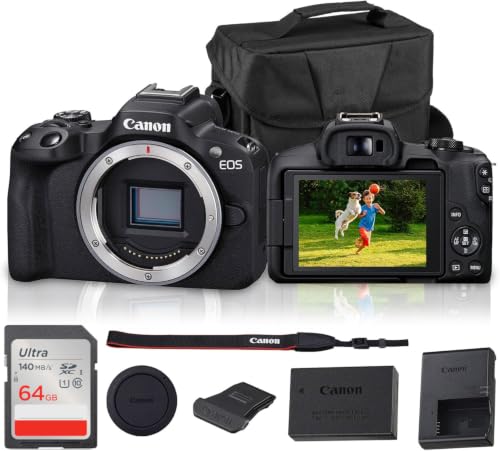
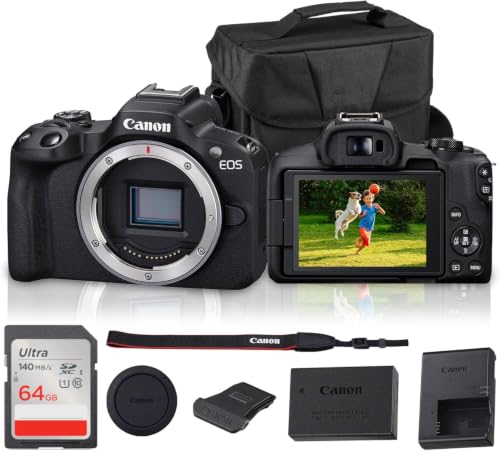
Canon EOS R50 24.2MP APS-C Mirrorless Camera
Best for: vlogging and beginner content creation
- Sensor Resolution
- 24.2 MP
- Sensor Format
- APS-C
- Max Video Resolution
- 4K
- Continuous Shooting Speed
- 15 fps
- Lens Mount
- RF and RF-S
- Recommended Usage
- Vlogging
The Canon EOS R50 is a mirrorless camera with a 24.2 MP APS-C sensor. It records 4K video at 30p and shoots bursts at 15 fps. The Dual Pixel AF II tracks subjects reliably. You get a vari-angle screen for flexible framing. This setup suits vloggers and beginners who need sharp focus and easy handling.
- 24.2 MP APS-C sensor resolution
- 4K 30p video recording capability
- 15 fps continuous shooting speed
- Dual Pixel AF II subject tracking
- 24.2 MP resolution is lower than the 26 MP option on the list
- 2 pound weight is heavier than the 24.1 MP alternative
- You want 4K video oversampled from 6K
- You need reliable subject tracking for action
- You prefer a vari-angle touchscreen
- You require the highest sensor resolution available
- You need a lighter body for travel
- You prefer a smaller sensor format
Verdict: Canon EOS R50 24.2MP APS-C delivers solid 4K video and fast autofocus for creators who value subject tracking over maximum pixel count.

Canon EOS R100 with 18-45mm Lens Kit
Best for: beginners seeking a portable entry-level kit
- Sensor Resolution
- 24.1 MP
- Sensor Format
- APS-C
- Max Video Resolution
- 4K
- Continuous Shooting Speed
- up to 6.5 shots per second
- Configuration
- Lens Kit
- Image Processor
- DIGIC 8
The Canon EOS R100 is an entry-level mirrorless camera featuring a 24.1-megapixel APS-C sensor. It pairs this sensor with the DIGIC 8 processor to deliver 4K video at 24 fps and Full HD at 60 fps. The kit includes an 18-45mm lens, making it a complete package for beginners. Its compact body weighs very little, offering excellent mobility for casual shooters who prioritize portability and straightforward operation over high-speed performance.
- 24.1-megapixel APS-C CMOS sensor for detailed images
- Compact and lightweight body for easy carrying
- DIGIC 8 processor supports 4K video recording
- Dual Pixel CMOS AF with eye detection
- Lower 24 fps 4K video frame rate compared to competitors offering 30 fps
- Slower 6.5 shots per second continuous shooting speed
- Smaller 24.1 MP sensor resolution than 26 MP alternatives
- You want a lightweight camera for travel
- You need a complete kit with an included lens
- You are starting with mirrorless photography
- You require high-speed 4K video at 30 fps
- You need fast continuous shooting for action
- You prefer the highest available sensor resolution
Verdict: Canon EOS R100 with 18-45mm Lens fits beginners who value portability and a complete lens kit over high-speed video or shooting performance.
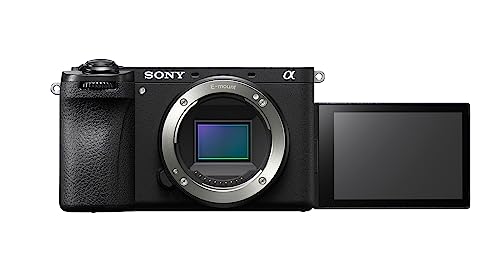
Sony a6700 APS-C Mirrorless Camera
Best for: 4K 120p video and 26 MP stills
- Sensor Resolution
- 26 MP
- Sensor Format
- APS-C
- Max Video Resolution
- 4K
- Configuration
- Body Only
- Image Processor
- BIONZ XR
- Recommended Usage
- Vlogging
The Sony a6700 features a 26.0 MP APS-C sensor with BIONZ XR processing. It records 4K video at up to 120p with 10-bit color depth. An AI processor aids subject tracking. This body-only model suits vloggers and creators needing high-resolution stills and advanced video capabilities in a compact frame.
- 26.0 MP APS-C Exmor R sensor
- 4K/60p 10-bit video recording
- 4K 120p high frame rate capture
- Dedicated AI processor for tracking
- Heavier at 14.5 ounces compared to lighter entry-level bodies
- Body-only configuration requires separate lens purchase
- You need 4K 120p slow motion
- You prioritize 26 MP resolution
- You use AI subject tracking
- You want a kit with a lens
- You prefer APS-C cameras under 12 ounces
- You need 4K 60p only
Verdict: The Sony a6700 26MP APS-C Camera delivers robust 4K 120p video and 26 MP resolution for creators who need precise AI tracking and high-quality image processing in a dedicated body.

Canon EOS R50 with 18-45mm Lens Kit
Best for: vlogging and casual content creation
- Sensor Resolution
- 24.2 MP
- Sensor Format
- APS-C
- Max Video Resolution
- 4K
- Continuous Shooting Speed
- Up to 15 fps
- Configuration
- RF-S18-45mm F4.5-6.3 IS STM Lens Kit
- Image Processor
- DIGIC X
The Canon EOS R50 is an APS-C mirrorless camera with a 24.2 MP sensor and DIGIC X processor. It captures 4K video at 30 fps and shoots up to 15 fps. The kit includes an 18-45mm lens. It suits vloggers and content creators who need reliable autofocus and a vari-angle screen for flexible shooting angles.
- 24.2 MP APS-C sensor with DIGIC X processor
- 4K video recording at up to 30 fps
- 15 fps continuous shooting with electronic shutter
- Dual Pixel CMOS AF II with subject tracking
- Lower resolution than the 26 MP Sony a6700
- Smaller sensor format than full-frame alternatives
- Limited 18-45mm lens kit focal range
- You want a lightweight camera for travel vlogging
- You need reliable eye-tracking for portraits
- You prefer a vari-angle touchscreen for low angles
- You require higher resolution than 24.2 MP
- You need 4K video at higher frame rates
- You prefer a larger APS-C sensor for better low light
Verdict: Canon EOS R50 24.2MP APS-C is a compact option for creators who prioritize autofocus speed and video flexibility over maximum resolution. It fits users who shoot primarily in good light and value portability.
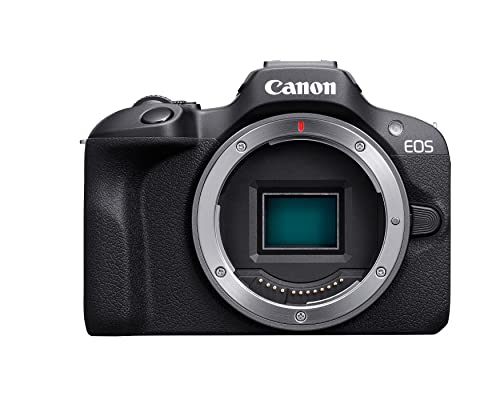
Canon EOS R100 APS-C Mirrorless Camera
Best for: portable everyday shooting and vlogging
- Sensor Resolution
- 24.1 MP
- Sensor Format
- APS-C
- Max Video Resolution
- 4K
- Continuous Shooting Speed
- up to 6.5 shots per second
- Lens Mount
- RF Mount
- Image Processor
- DIGIC 8
The Canon EOS R100 is a compact APS-C mirrorless camera featuring a 24.1 MP sensor and DIGIC 8 processor. It captures 4K video and uses Dual Pixel CMOS AF for subject detection. Weighing 1.2 pounds, it is the lightest in its series. This model suits users prioritizing portability and straightforward operation for content creation.
- 24.1 MP APS-C CMOS sensor for high image quality
- Dual Pixel CMOS AF with auto subject detection
- Compact body weighs only 1.2 pounds
- Captures 4K video resolution
- Continuous shooting up to 6.5 shots per second
- 24.1 MP resolution is lower than the 26 MP sensor on the Sony a6700
- 6.5 shots per second continuous speed is slower than typical faster models
- 1.2 pound weight is heavier than some ultra-light competitors
- You want the smallest and lightest EOS R series body for mobility
- You need reliable eye detection autofocus for portraits
- You prioritize a lightweight setup for travel or daily carry
- You require 4K video at 60 frames per second
- You need a resolution higher than 24.1 megapixels for large prints
- You prefer a camera with a significantly faster burst shooting speed
Verdict: The Canon EOS R100 APS-C Mirrorless Camera is a lightweight entry point for beginners who value portability over high-speed performance. It fits users who need a simple, compact tool for everyday shooting rather than professional-grade speed or resolution.

Sony ZV-E10 II 26MP APS-C
Best for: Video creators needing 26 MP resolution
- Sensor Resolution
- 26 MP
- Sensor Format
- APS-C
- Max Video Resolution
- 4K
- Continuous Shooting Speed
- 11 fps
- Lens Mount
- Sony E-mount
- Configuration
- with 16-50mm Lens
The Sony ZV-E10 II is an APS-C mirrorless camera with a 26-megapixel Exmor R CMOS sensor. It uses the BIONZ XR processor to handle 4K video at 60p and continuous shooting at 11 fps. This kit includes the E PZ 16-50mm lens. The body weighs 14.1 ounces. You get real-time eye autofocus for humans, animals, and birds. It suits creators who need high resolution and smooth motion capture.
- 26 MP APS-C Exmor R CMOS sensor
- 4K 60p video recording capability
- 11 fps continuous shooting with AF/AE tracking
- Real-time Eye AF for humans, animals, and birds
- 14.1 ounces weight is heavier than the 24.1 MP Canon EOS R100
- 11 fps burst speed is lower than the 24.2 MP Canon EOS R50
- 4K 60p frame rate is lower than the 26 MP Sony a6700
- You need 26 MP resolution for detailed stills
- You shoot 4K video at 60p for smooth motion
- You want real-time eye autofocus for subjects
- You prioritize the lightest possible camera body
- You require higher burst speeds than 11 fps
- You need 4K video at higher than 60p
Verdict: Sony ZV-E10 II 26MP APS-C Camera offers strong resolution and fast autofocus for video creators. You should choose it if you value 26 MP detail and 4K 60p capture over the lightest weight or highest burst speed.
Specifications side by side
| Spec | Canon EOS R50 24.2MP APS-C Mirrorless Camera | Canon EOS R100 with 18-45mm Lens Kit | Sony a6700 APS-C Mirrorless Camera | Canon EOS R50 with 18-45mm Lens Kit | Canon EOS R100 APS-C Mirrorless Camera | Sony ZV-E10 II 26MP APS-C |
|---|---|---|---|---|---|---|
| Sensor Format | APS-C | APS-C | APS-C | APS-C | APS-C | APS-C |
| Sensor Resolution | 24.2MP | 24.1 megapixel | 26.0 MP | 24.2 MP | 24.1 MP | 26 MP |
| Max Video Resolution | 4K | 4K | 4K | 4K | 4K | 4K |
| Continuous Shooting Speed | 15 fps | up to 6.5 shots per second | – | Up to 15 fps | up to 6.5 shots per second | 11 fps |
| Lens Mount | RF and RF-S | – | – | – | RF Mount | Sony E-mount |
| Configuration | – | Lens Kit | Body Only | RF-S18-45mm F4.5-6.3 IS STM Lens Kit | – | with 16-50mm Lens |
| Image Processor | – | DIGIC 8 | BIONZ XR | DIGIC X | DIGIC 8 | BIONZ XR |
| Video Resolution | 4K | 4K | 4K | 4K | 4K | – |
| Recommended Usage | Vlogging | – | Vlogging | Photography, Vlogging, Content Creation | Content Creation | – |
| Included Lens | – | 18-45mm Lens | – | 18-45mm Lens | – | 16-50mm Lens |
| Autofocus Technology | Dual Pixel AF | – | – | – | – | – |
| Color | Black | Black | Black | Black | Black | White |
| Sensor Size | APS-C Sensor | APS-C Sensor | APS-C Sensor | APS-C Sensor | – | APS-C Sensor |
| Connectivity | – | Wi-Fi | – | – | Wi-Fi | – |
| Focal Length | – | – | – | – | – | 50mm |
| Maximum Aperture | – | f/4 | – | f/4 | – | – |
| Intended Use | Video | Video | Video | Video | Video | Video |
| Dimensions | 8 × 7 × 6 inches | 2.7 × 4.6 × 3.4 inches | 4.8 × 2.72 × 2.5 inches | 2.71 × 4.58 × 3.37 inches | 2.71 × 4.28 × 3.37 inches | 2.9 × 4.52 × 2.65 inches |
| Weight | 2 pounds | – | 14.5 ounces | 1 pounds | 1.2 pounds | 14.1 ounces |
| Model | 5811C002_EDIP_1 | 6052C012 | ILCE6700/B | 5811C012 | 6052C002 | ZVE10M2KW |
| Size | – | – | – | – | – | w/16-50mm F3.5-5.6 lens |
Frequently asked questions
Does 24.2 MP offer enough detail for social media?
Yes. A 24.2 MP sensor captures sufficient detail for digital platforms. The Canon EOS R50 uses this resolution. It delivers solid image quality for creators who value subject tracking. This spec balances file size with clarity for online sharing.
What is the difference between 24.1 MP and 26 MP sensors?
The difference is pixel count. The Sony a6700 offers 26 MP, while the Canon EOS R100 provides 24.1 MP. Higher counts allow for more aggressive cropping. The Sony model supports 4K 120p video, offering robust processing for high-quality image capture.
Can I crop images from a 24.1 MP camera?
You can crop images from a 24.1 MP sensor. The Canon EOS R100 body-only kit includes this resolution. It provides ample detail for standard prints. This count balances file size with image quality, making it suitable for beginners seeking portability.
Which camera has the highest resolution in this list?
The Sony a6700 and Sony ZV-E10 II both feature 26 MP sensors. These models offer the highest pixel count here. The ZV-E10 II includes a 16-50mm lens. The a6700 is designed for precise AI tracking and high-quality image processing.
Is APS-C sensor size related to resolution?
Sensor size and resolution are distinct specs. All listed cameras use APS-C sensors. However, they vary in megapixels. The Sony ZV-E10 II combines APS-C format with 26 MP. This setup supports strong resolution for video creators needing detail.
Does higher megapixel count affect video quality?
Megapixels primarily impact still image detail. Video quality depends on resolution standards like 4K. The Canon EOS R50 captures 4K video with 24.2 MP. The Sony a6700 offers 4K 120p with 26 MP. Both specs support high-quality video capture.
Is 26 MP too much for everyday shooting?
No. 26 MP provides greater detail for enlargement. The Sony ZV-E10 II offers this resolution. It suits creators who value detail over lightest weight. You should choose it if you need precise tracking and high-quality image processing for your content.