As Amazon Associates, we earn from qualifying purchases. This means we may receive a small commission at no extra cost to you if you click through and make a purchase.
As an Amazon Associate we earn from qualifying purchases. Links on this page are affiliate links.
This guide compares the ricoh vs fujifilm point and shoot camera options for photographers who value portability and image quality. Both brands offer compact digital cameras with fixed lenses, but they target different shooting styles. The Ricoh GR IIIx focuses on a natural 40mm perspective for street photography, while the Fujifilm X100VI emphasizes high-resolution imaging and advanced video capabilities. We break down the key specifications to help you decide which tool fits your workflow.
Sensor Resolution
not listed
40.2 MP
Lens Focal Length
40mm
23mm
Video Resolution
not listed
6.2K
Image Stabilization
not listed
5-axis IBIS
Autofocus
not listed
Intelligent AI with face & eye detection
Viewfinder/Display
not listed
Hybrid viewfinder and flip-out display
Choose the first if
- You prefer a 40mm focal length that mimics the natural field of view of the human eye.
- You want a camera that emphasizes quick response and portability for snapshot photography.
- You are looking for a compact body that pairs well with a genuine leather case.
Choose the second if
- You need high-resolution 40.2 MP images with natural color reproduction.
- You shoot video and require 6.2K resolution and 5-axis image stabilization.
- You rely on intelligent AI autofocus for tracking people, animals, or vehicles.
Verdict
Choose the Ricoh GR IIIx if you prioritize a natural perspective and a minimalist approach to street photography. Select the Fujifilm X100VI if you need higher resolution, advanced autofocus, and robust video features for versatile content creation.
Ricoh vs Fujifilm Spec Comparison
sensor resolution
Edge: Fujifilm X100VI 40MP APS-C Camera
The Fujifilm X100VI features a high-resolution 40.2-megapixel APS-C sensor. This large sensor captures significant detail, making it ideal for cropping or large prints. The Ricoh GR IIIx data does not list its specific megapixel count or sensor resolution. Without these numbers, you cannot compare the raw pixel density or potential for heavy post-processing adjustments between the two cameras. The Fujifilm specification provides a clear advantage in stated image detail capacity.
video resolution
Edge: Fujifilm X100VI 40MP APS-C Camera
The Fujifilm X100VI supports 6.2K video recording, which offers high detail for content creation and social media. This resolution exceeds standard 4K, providing more flexibility for digital zooming in post-production. The Ricoh GR IIIx specifications do not mention video capabilities or resolution limits. If you plan to shoot video, the Fujifilm data confirms it handles high-resolution footage, while the Ricoh data leaves its video performance unknown.
lens focal length
Edge: Tie
The Ricoh GR IIIx is equipped with a 40mm fixed lens. This focal length closely mimics the natural field of view of the human eye, which is excellent for street photography and snap shots. The Fujifilm X100VI uses a 23mm fixed lens. This wider angle is better for landscapes or tight indoor spaces. The choice depends on whether you prefer a natural perspective or a wider view, making this a tie based on preference.
image stabilization
Edge: Fujifilm X100VI 40MP APS-C Camera
The Fujifilm X100VI includes 5-axis in-body image stabilization (IBIS). This system compensates for camera shake up to six aperture stops, allowing for sharper handheld shots in low light. The Ricoh GR IIIx data does not list any image stabilization features. Without confirmed stabilization specs for the Ricoh, the Fujifilm offers a clear advantage for handheld shooting in challenging lighting conditions.
autofocus technology
Edge: Fujifilm X100VI 40MP APS-C Camera
The Fujifilm X100VI utilizes intelligent AI autofocus that detects and tracks people, animals, and vehicles. This technology maintains focus precisely during fast movements. The Ricoh GR IIIx specifications do not describe its autofocus system or subject detection capabilities. You cannot verify if the Ricoh offers similar advanced tracking. The Fujifilm data confirms advanced AI tracking, giving it the edge for action or moving subjects.
display and viewfinder
Edge: Fujifilm X100VI 40MP APS-C Camera
The Fujifilm X100VI offers a hybrid viewfinder and a flip-out display. This combination provides flexibility for composing images from various angles, including high or low perspectives. The Ricoh GR IIIx data does not mention a flip-out screen or hybrid viewfinder type. If you need to shoot from awkward angles, the Fujifilm specifications confirm the necessary hardware, while the Ricoh data leaves this feature unspecified.
portability and size
Edge: Tie
The Fujifilm X100VI measures 5.04 by 2.18 by 2.94 inches and weighs 1.06 pounds. The Ricoh GR IIIx data lists a height of 2.4 inches but does not provide full dimensions or weight. The Fujifilm is described as a full-size compact, while the Ricoh is noted as a compact camera. The Ricoh appears smaller, but without complete weight and depth data for the Ricoh, a precise comparison is difficult. This is a tie due to incomplete data.
Which Camera Fits Your Style
Travelers wanting natural perspective
Our pick: Ricoh GR IIIx Compact Camera
The Ricoh GR IIIx uses a 40mm lens. This focal length mimics the human field of view. It helps you capture scenes naturally. The camera is designed for quick response and portability. You can snap photos rapidly without missing moments. This setup suits street photography and everyday documentation.
Shooters needing high resolution
Our pick: Fujifilm X100VI 40MP APS-C Camera
The Fujifilm X100VI features a 40.2-megapixel APS-C sensor. This high resolution captures significant detail for cropping or prints. The 23mm f/2 lens delivers sharp images. You get detailed files that retain clarity. This sensor size supports large output requirements for professional work.
Low-light handheld photographers
Our pick: Fujifilm X100VI 40MP APS-C Camera
The Fujifilm X100VI includes 5-axis in-body image stabilization. It compensates for shake up to six stops. This allows sharp handheld shots in dim environments. You do not need a tripod for evening scenes. The stabilization works with the fixed lens for reliable results.
Content creators needing video
Our pick: Fujifilm X100VI 40MP APS-C Camera
The Fujifilm X100VI records 6.2K video. It supports 20 film simulations for creative looks. The flip-out display helps with self-recording. You can compose shots from various angles easily. The AI autofocus tracks subjects during movement. This versatility suits social media and influencer content creation.
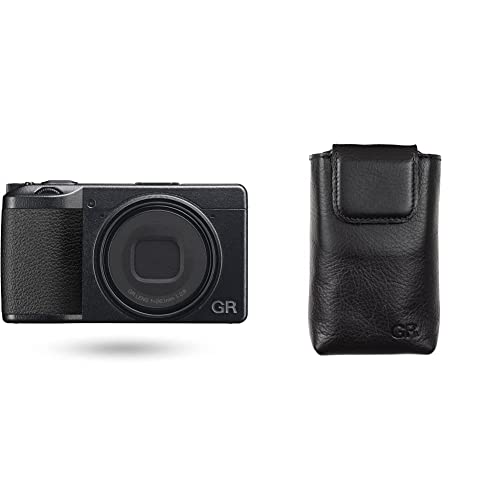
The Ricoh GR IIIx is a compact digital camera featuring a fixed 40mm lens. This focal length offers a field of view similar to human vision, making it versatile for everyday snapshots. It includes a genuine leather soft case for portability. You get high image quality and quick response in a small package. This model suits those who prefer a specific perspective for street or travel photography.
- Fixed 40mm lens provides a natural angle of view close to human vision
- Includes a luxury genuine leather soft case for protection
- Compact design supports portability and quick snap shooting
- Delivers high image quality with quick response times
- Fixed 40mm lens limits you to one perspective instead of zooming
- Included leather soft case adds bulk compared to camera-only versions
- You want a fixed focal length that mimics natural human vision
- You prefer carrying a protective leather case with your camera
- You need a compact camera for quick snapshot opportunities
- You require a zoom lens for flexible framing options
- You prefer a smaller footprint without an attached case
- You need interchangeable lenses for different shooting scenarios
Verdict: Ricoh GR IIIx with Leather Case is ideal for photographers who value a natural 40mm perspective and want immediate protection. It fits those who prioritize portability and a specific field of view over zoom versatility.

Fujifilm X100VI 40MP APS-C Camera
Best for: high-resolution fixed-lens photography
- Sensor Resolution
- 40.2 MP
- Sensor Size
- APS-C
- Maximum Aperture
- f/2
- Video Resolution
- 6.2K
- Image Stabilization
- 5-axis IBIS
- Color
- Silver
The Fujifilm X100VI is a compact APS-C camera with a fixed 23mm f/2 lens. It delivers 40.2 MP images and records 6.2K video. The 5-axis IBIS stabilizes handheld shots up to 6 stops. You get a flip-out display and hybrid viewfinder for flexible composition. The AI autofocus tracks subjects precisely. This silver model weighs 1.06 pounds and measures 5.04 by 2.94 by 2.18 inches.
- 40.2 MP APS-C sensor for high resolution
- 5-axis IBIS stabilizes up to 6 stops
- 6.2K video recording capability
- Hybrid viewfinder with flip-out display
- Fixed 23mm lens limits focal length options
- Heavier at 1.06 pounds than typical compacts
- Larger dimensions at 5.04 by 2.94 by 2.18 inches
- You want high-resolution 40.2 MP images
- You need reliable 5-axis image stabilization
- You prefer a fixed 23mm f/2 lens
- You need interchangeable lenses
- You require a lighter compact under 1 pound
- You prefer a smaller body under 2 inches wide
Verdict: Fujifilm X100VI Silver 40.2 MP suits photographers who prioritize image quality and stabilization in a fixed-lens body. It fits those who value the 40.2 MP sensor and 6.2K video over portability.
Specifications side by side
| Spec | Ricoh GR IIIx Compact Camera | Fujifilm X100VI 40MP APS-C Camera |
|---|---|---|
| Sensor Resolution | – | 40.2 MP |
| Sensor Size | – | APS-C |
| Maximum Aperture | – | f/2 |
| Video Resolution | – | 6.2K |
| Image Stabilization | – | 5-axis IBIS |
| Color | with leather soft case | Silver |
| Dimensions | – | 2.18 × 5.04 × 2.94 inches |
| Weight | – | 1.06 pounds |
| Size | with leather soft case | full-size |
| Model | GR IIIx | 74487 |
Frequently asked questions
Which camera offers better image stabilization for handheld shooting?
The Fujifilm X100VI includes in-body image stabilization to help reduce blur from camera shake. This feature supports sharper photos in lower light or when shooting without a tripod. The Ricoh GR IIIx does not list specific stabilization technology in its published specifications, so you may need to rely on faster shutter speeds to maintain clarity.
Can I shoot 4K or higher resolution video with these cameras?
The Fujifilm X100VI supports 6.2K video recording, providing high-resolution footage for detailed video projects. The Ricoh GR IIIx specifications do not mention video resolution capabilities, so its video performance remains unclear from the available data. If high-definition video is a priority, the Fujifilm model offers a clear advantage in recorded quality.
How do the physical sizes of these cameras compare?
The Fujifilm X100VI measures 5.04 inches wide, 2.94 inches high, and 2.18 inches long, weighing 1.06 pounds. The Ricoh GR IIIx is described as having a leather soft case, indicating a compact form factor. You should consider the Fujifilm’s larger, full-size body versus the Ricoh’s portable design when choosing a camera for daily carry.
Which camera is better for street photography with a natural perspective?
The Ricoh GR IIIx is specifically noted for its natural 40mm perspective, which mimics the human field of view. This focal length helps capture scenes naturally without distortion. The Fujifilm X100VI focuses on high-resolution 40MP fixed-lens photography. If you prioritize a specific field of view and immediate portability, the Ricoh model aligns better with your needs.
What sensor resolution does the Fujifilm X100VI provide?
The Fujifilm X100VI features a 40.2-megapixel APS-C sensor. This high resolution captures significant detail, making it suitable for cropping or large prints. The Ricoh GR IIIx data does not list its specific megapixel count. For maximum image detail and flexibility in post-processing, the Fujifilm sensor offers a tangible benefit over the unspecified Ricoh specs.
Is the Fujifilm X100VI available in silver?
Yes, the Fujifilm X100VI is available in a silver color option. This aesthetic choice suits photographers who value a classic look alongside the camera’s technical features. The Ricoh GR IIIx is listed with a leather soft case, but specific body color options are not detailed in the provided specifications. You can choose the silver finish for a distinct style.


