As Amazon Associates, we earn from qualifying purchases. This means we may receive a small commission at no extra cost to you if you click through and make a purchase.
As an Amazon Associate we earn from qualifying purchases. Links on this page are affiliate links.
When you compare a tamron vs VILTROX camera lens, you are looking at two very different tools. Both brands prioritize optical quality and autofocus performance. The main difference lies in their design and application. The Tamron is a versatile zoom lens with image stabilization. The VILTROX is a compact prime lens with a wide aperture. You need to decide which form factor fits your shooting style.
Lens Type
Zoom
Prime
Focal Length
24-70mm
13mm
Maximum Aperture
f/2.8
f/1.4
Lens Mount
Nikon
Sony E-Mount
Sensor Format
Full Frame (implied by mount/zoom range)
APS-C
Image Stabilization
Yes (VC)
Not listed
Choose the first if
- You need a versatile focal range for portraits and landscapes.
- You shoot with Nikon cameras and want built-in image stabilization.
- You prefer a zoom lens for varied shooting distances.
Choose the second if
- You use Sony E-mount cameras with APS-C sensors.
- You need a wide-angle perspective for architecture or vlogging.
- You want a bright aperture for low-light conditions and background blur.
Verdict
Choose the Tamron if you need a flexible zoom range and stabilization for Nikon systems. Pick the VILTROX if you are on Sony APS-C and want a sharp, wide prime lens. Your choice depends entirely on your camera mount and preferred focal length.
Tamron vs Viltrox Lens Comparison
Lens type and focal length
Edge: Tamron 24-70mm F/2.8 G2 for Nikon
The Tamron 24-70mm is a versatile zoom lens with a variable focal range. This allows you to capture wide landscapes at 24mm and tighter portraits at 70mm without changing glass. In contrast, the Viltrox 13mm is a fixed ultra-wide prime lens. It offers a single, very short focal length ideal for expansive scenes, architecture, or tight indoor spaces. The Tamron provides flexibility for varied shooting scenarios. The Viltrox delivers a specialized, extreme wide-angle perspective that cannot be adjusted. You must choose between the adaptability of a zoom range or the specific character of a prime focal length.
Maximum aperture
Edge: Viltrox 13mm f/1.4 APS-C Wide Lens
Aperture controls light intake and depth of field. The Tamron features a constant f/2.8 maximum aperture throughout its entire zoom range. This is a standard professional speed for zoom lenses, allowing decent low-light performance and background separation. The Viltrox boasts a much wider f/1.4 maximum aperture. This larger opening lets in significantly more light, making it superior for dim environments. It also creates a shallower depth of field, producing a softer bokeh effect compared to the Tamron. If you prioritize low-light capability and artistic background blur, the Viltrox specification is clearly stronger.
Image stabilization
Edge: Tamron 24-70mm F/2.8 G2 for Nikon
Image stabilization helps reduce blur from camera shake, especially in low light or at slower shutter speeds. The Tamron includes dedicated Vibration Compensation (VC) technology rated at 5 CIPA stops. This is a significant advantage for handheld shooting, allowing you to use slower shutter speeds without introducing blur. The Viltrox product data does not list any internal image stabilization system. You would need to rely on in-body stabilization from your Sony camera body or use a tripod for steady shots. For handheld video or low-light photography, the Tamron offers a clear technical advantage.
Autofocus technology
Edge: Tie
Both lenses feature autofocus, but their implementation differs. The Tamron uses a USD (Ultrasonic Silent Drive) motor paired with a dedicated MPU to improve accuracy and speed. This system is designed for fast and precise focusing on Nikon cameras. The Viltrox employs an STM (Stepping Motor) autofocus system. STM motors are known for smooth and quiet operation, which is particularly beneficial for video recording as they minimize noise. The Viltrox also notes that it effectively eliminates focus breathing during video capture. For stills, the Tamron offers high speed. For video, the Viltrox offers smoother transitions.
Minimum focus distance
Edge: Viltrox 13mm f/1.4 APS-C Wide Lens
Minimum focus distance determines how close you can get to your subject while still maintaining a sharp image. The Tamron allows you to focus as close as 0.38 meters, or 15 inches. This is useful for standard close-up shots. The Viltrox achieves a closer minimum focus distance of 0.22 meters. This allows you to get nearer to your subject, which can enhance the perspective in ultra-wide shots or create more intimate portraits. The Viltrox specification provides a slight edge for close-proximity shooting, allowing for greater creative framing options.
Build and coating
Edge: Tamron 24-70mm F/2.8 G2 for Nikon
Build quality affects durability and image clarity. The Tamron features a fluorine coating on the front element, which repels water and oil, making it easier to clean. It also has moisture-resistant construction, adding protection against the elements. The Tamron uses Eband coating to reduce flare and ghosting. The Viltrox utilizes an advanced optical design with two aspherical elements and four ED (extra-low dispersion) elements to reduce aberrations and color fringing. While the Viltrox focuses on optical correction elements, the Tamron emphasizes physical protection and anti-reflective coatings for challenging lighting conditions.
Which lens fits your Nikon or Sony setup
Nikon shooters needing versatile zoom with stabilization
Our pick: Tamron 24-70mm F/2.8 G2 for Nikon
You need a flexible zoom range for Nikon cameras. The Tamron 24-70mm f/2.8 covers wide to portrait angles. It features five stops of image stabilization. The fluorine coating protects against moisture. Autofocus speed is high with dedicated MPU. This lens handles varied shooting conditions well.
Sony APS-C users wanting ultra-wide prime shots
Our pick: Viltrox 13mm f/1.4 APS-C Wide Lens
You shoot with Sony E-mount APS-C bodies. The Viltrox 13mm f/1.4 offers a true ultra-wide perspective. The bright aperture helps in low light. It minimizes focus breathing for video work. Four ED elements reduce color fringing. You get sharp images from 0.22m minimum distance.
Photographers prioritizing constant aperture versatility
Our pick: Tamron 24-70mm F/2.8 G2 for Nikon
You prefer a constant f/2.8 aperture throughout the zoom range. This allows consistent exposure when changing focal lengths. The 24-70mm range suits events and travel. Image stabilization helps in handheld situations. The robust construction includes moisture-resistant seals. You gain reliability across different lighting scenarios.
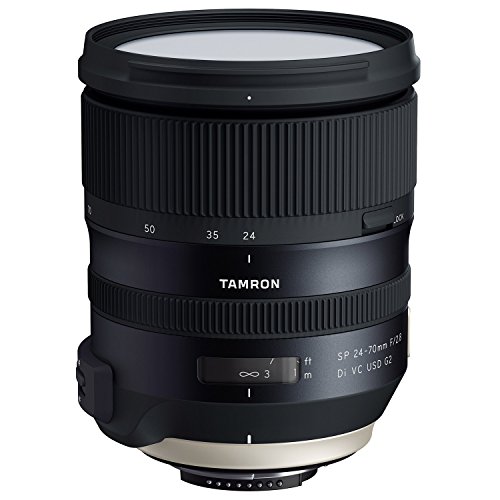
Tamron 24-70mm F/2.8 G2 for Nikon
Best for: Nikon photographers needing stabilized versatility
- Lens Mount
- Nikon
- Focal Length
- 24-70mm
- Maximum Aperture
- f/2.8
- Lens Type
- Zoom
- Minimum Focus Distance
- 0.38 m (15 in)
- Recommended Usage
- Photography
This Tamron zoom lens covers 24-70mm with a constant f/2.8 aperture for Nikon mounts. It features 5 CIPA-rated stops of image stabilization and fast autofocus via a dedicated MPU. The fluorine coating and moisture-resistant construction help protect the lens in various conditions. You will get a versatile range suitable for portraits and landscapes. The 0.38m minimum focus distance allows for closer subjects.
- 5 CIPA-rated stops of image stabilization
- Constant f/2.8 maximum aperture
- Dedicated MPU for fast autofocus
- Fluorine coating for easy cleaning
- Heavier build at 1.98 pounds
- Larger dimensions at 4.3 inches long
- Fixed f/2.8 aperture limits background blur compared to primes
- You need image stabilization for handheld shooting
- You shoot portraits and landscapes with a Nikon camera
- You want a versatile 24-70mm range
- You require a lighter lens under 1.5 pounds
- You need a wider f/1.4 aperture for low light
- You shoot with Sony E-mount cameras
Verdict: Tamron 24-70mm F/2.8 G2 Nikon is a solid choice for Nikon users who prioritize stabilization and versatility. It suits photographers who carry a heavy lens for better handling and optical performance.

Viltrox 13mm f/1.4 APS-C Wide Lens
Best for: APS-C wide-angle photography and video
- Lens Mount
- Sony E-Mount
- Focal Length
- 13mm
- Maximum Aperture
- f/1.4
- Sensor Format
- APS-C
- Lens Type
- Ultra-wide angle prime
- Minimum Focus Distance
- 0.22m
This is a Viltrox 13mm f/1.4 ultra-wide prime lens for Sony E-mount APS-C cameras. It features a bright maximum aperture of f/1.4 and an STM autofocus motor. The optical design includes 14 elements in 11 groups, with two aspherical and four ED elements to reduce aberrations. It weighs 2.14 pounds and focuses as close as 0.22m. You get a wide field of view with strong low-light capability and smooth video performance.
- Bright f/1.4 maximum aperture for low light and bokeh
- STM autofocus motor provides fast and responsive focusing
- Four ED elements reduce chromatic aberrations
- Minimum focusing distance of 0.22m allows close-up shots
- Optimized for video with reduced focus breathing
- Heavier build at 2.14 pounds compared to lighter primes
- APS-C sensor format limits use on full-frame bodies
- Fixed focal length restricts framing flexibility
- You shoot landscapes or architecture with an APS-C Sony camera
- You need a wide angle with strong low-light performance
- You prioritize sharpness and minimal distortion in wide shots
- You use a full-frame Sony E-mount camera
- You require a zoom lens for variable framing
- You need a lightweight lens for extended handheld use
Verdict: Viltrox 13mm F1.4 APS-C Prime Lens delivers wide-angle sharpness and low-light capability for APS-C users. It suits photographers who value optical clarity and fast autofocus in a fixed focal length.
Specifications side by side
| Spec | Tamron 24-70mm F/2.8 G2 for Nikon | Viltrox 13mm f/1.4 APS-C Wide Lens |
|---|---|---|
| Lens Mount | Nikon | Sony E-Mount |
| Focal Length | 24-70mm | 13mm |
| Maximum Aperture | f/2.8 | f/1.4 |
| Sensor Format | – | APS-C |
| Lens Type | Zoom | Ultra-wide angle prime |
| Minimum Focus Distance | 0.38 m (15 in) | 0.22m |
| Recommended Usage | Photography | – |
| Color | Black | Black |
| Sensor Size | – | APS-C Sensor |
| Intended Use | Portraits, Landscapes | – |
| Dimensions | 4.3 × 3.5 × 3.5 inches | 3.54 × 2.91 × 2.91 inches |
| Weight | 1.98 pounds | 2.14 pounds |
| Size | Nikon | 13mm F1.4 E |
| Model | AFA032N700 | 13mm F1.4 Lens E-Mount |
Frequently asked questions
Is the Tamron 24-70mm F/2.8 G2 compatible with Sony cameras?
No, this specific model is designed for Nikon mounts. The product data lists the size as Nikon and the model number AFA032N700 indicates Nikon compatibility. If you shoot with Sony, you would need a different version of this lens or choose the Viltrox option instead.
Does the Viltrox 13mm lens work on full-frame sensors?
No, the Viltrox 13mm f/1.4 is intended for APS-C sensors. The attributes specify APS-C sensor format and size. Using it on a full-frame camera would result in significant vignetting. It mounts to Sony E-mount cameras and provides a wide-angle view suitable for APS-C bodies.
Which lens is lighter to carry for travel?
The Tamron 24-70mm F/2.8 G2 is lighter. It weighs 1.98 pounds. The Viltrox 13mm f/1.4 weighs 2.14 pounds. The difference is small, but the Tamron offers a zoom range that reduces the need to carry multiple prime lenses.
Can I use the Viltrox 13mm for portraits?
It can work for tight portraits due to its wide perspective and f/1.4 aperture. The fast aperture allows for background blur in low light. However, the 13mm focal length is quite wide for standard portraits. You must stand close to your subject to fill the frame.
Does the Tamron lens include image stabilization?
Yes, the Tamron 24-70mm F/2.8 G2 features image stabilization. The verdict highlights stabilization as a key priority for this lens. This helps reduce blur from camera shake, especially at slower shutter speeds. The Viltrox 13mm is a prime lens with no mentioned stabilization system.
What is the maximum aperture of the Viltrox 13mm?
The Viltrox 13mm has a maximum aperture of f/1.4. This wide opening lets in more light, aiding low-light performance. It also helps isolate subjects from the background. The Tamron 24-70mm maintains a constant f/2.8 aperture throughout its zoom range.
Is the Tamron 24-70mm a prime or zoom lens?
It is a zoom lens. The focal length ranges from 24mm to 70mm. This flexibility allows you to adjust your framing without moving. The Viltrox 13mm is a prime lens with a fixed focal length, requiring you to change your position to compose shots.
Does the Viltrox lens have a fluorine coating?
The provided data does not mention a fluorine coating for the Viltrox 13mm. The Tamron 24-70mm description notes a fluorine coating for protection. You should check the Viltrox specifications sheet directly if this feature is critical for your shooting environment.


