As Amazon Associates, we earn from qualifying purchases. This means we may receive a small commission at no extra cost to you if you click through and make a purchase.
As an Amazon Associate we earn from qualifying purchases. Links on this page are affiliate links.
This comparison examines the tamron vs sony camera lens options for Nikon and Sony shooters. Both are 24-70mm zooms with a constant f/2.8 aperture, ideal for portraits and landscapes. The primary difference lies in their mount compatibility and weight. The Tamron model weighs 1.98 pounds and includes dedicated image stabilization. The Sony version is significantly lighter at 1 pound and features Sony’s OSS system. You must choose based on your camera brand and priority for size versus stabilization features.
Lens Mount
Nikon
Sony FE
Weight
1.98 pounds
1 pound
Image Stabilization
VC (5 CIPA-rated stops)
OSS
Minimum Focus Distance
0.38 m (15 in)
not listed
Autofocus Technology
MPU with USD
Four XD Linear Motors
Choose the first if
- You shoot with a Nikon camera and need reliable built-in image stabilization.
- You prioritize a lens with a specified minimum focus distance of 0.38 m.
- You prefer the Tamron brand's specific coating and moisture-resistant construction.
Choose the second if
- You use a Sony E-mount camera and want the lightest F2.8 standard zoom.
- You need fast, quiet autofocus with XD Linear Motors for video or high-speed photography.
- You value reduced size and volume for better mobility in various situations.
Verdict
Choose the Tamron if you need Nikon compatibility and robust image stabilization. Pick the Sony if you want a lighter, more compact lens for Sony E-mount systems with advanced autofocus tracking.
Tamron vs Sony Lens Specs
Weight and size
Edge: Sony FE 24-70mm F2.8 GM II
The Sony FE 24-70mm F2.8 GM II is significantly lighter and more compact than the Tamron option. Sony lists its weight at just 1 pound, making it the lightest in its class. In contrast, the Tamron 24-70mm F/2.8 G2 weighs 1.98 pounds. This nearly two-pound difference matters for handheld shooting or long events. The Tamron measures 3.5 inches in width and height with a length of 4.3 inches. Sony’s dimensions are 4.72 inches by 4.72 inches, but its overall volume is reduced by approximately 18% compared to its predecessor. You will feel the difference in balance when holding the camera for extended periods.
Image stabilization
Edge: Tamron 24-70mm F/2.8 G2 for Nikon
Tamron includes dedicated vibration compensation technology rated at 5 CIPA stops. This provides a high level of image stabilization for handheld shots in lower light. The Sony lens offers Optical SteadyShot (OSS) stabilization, which helps reduce camera shake. However, the Tamron data explicitly highlights its 5-stop rating as a class-leading feature. This specific rating gives you a clear advantage in knowing how much slower you can shoot handheld without blur. Sony’s stabilization is present, but the Tamron specification provides a more detailed metric for stabilization performance. If you rely on a specific stop rating for planning your shots, Tamron offers that clarity.
Autofocus technology
Edge: Sony FE 24-70mm F2.8 GM II
Sony uses four XD Linear Motors and a floating focus mechanism for fast, precise, and quiet autofocus. This system supports tracking at up to 30 frames per second and 4K 120p video. Tamron utilizes a dedicated MPU and a high-performance MPU for AF to improve speed and accuracy. It also features a new VC auto detect mode. Sony’s motor technology is designed for extreme speed and silence, which is critical for video work. Tamron’s MPU approach focuses on accuracy and stabilization integration. For users prioritizing the fastest possible subject tracking and silent operation, Sony’s linear motors provide a distinct technical advantage.
Minimum focus distance
Edge: Tamron 24-70mm F/2.8 G2 for Nikon
The Tamron lens has a specified minimum focus distance of 0.38 meters, or 15 inches. This allows you to get relatively close to your subject for portraits or details. The Sony data does not explicitly list a minimum focus distance value. Without this specific number from Sony, we cannot directly compare the closest focusing capability. Tamron provides a clear metric for how near you can get to a subject. This specification is useful for determining if the lens meets your macro or close-up needs. Sony’s lack of listed data here leaves this aspect unverified in the comparison.
Lens mount compatibility
Edge: Tie
These lenses are designed for different camera systems. The Tamron 24-70mm F/2.8 G2 is built for the Nikon mount. It is not compatible with Sony E-mount cameras without an adapter, and even then, features may vary. The Sony FE 24-70mm F2.8 GM II is designed for the Sony E-mount, specifically for full-frame sensors. You must choose the lens that matches your camera body. If you shoot Nikon, the Tamron is the direct option. If you shoot Sony, the Sony lens is the native choice. This is the most critical factor in your decision.
Which 24-70mm f/2.8 lens fits you
Nikon shooters needing image stabilization
Our pick: Tamron 24-70mm F/2.8 G2 for Nikon
This Tamron lens is designed for Nikon mounts. It includes dedicated VC image stabilization rated at 5 stops. This helps you shoot handheld in low light. The fluorine coating repels moisture. You get reliable autofocus accuracy for portraits and landscapes without needing a camera body with stabilization.
Sony shooters wanting light weight
Our pick: Sony FE 24-70mm F2.8 GM II
The Sony GM II is the lightest in its class at just 1 pound. It fits Sony FE mounts. You get high resolution with extreme aspherical elements. The XD linear motors provide fast, quiet autofocus. It is also shorter and more compact. This makes it easier to carry for all-day shooting.
Video creators on Sony cameras
Our pick: Sony FE 24-70mm F2.8 GM II
This lens supports 4K 120p video on compatible bodies. Advanced design reduces focus breathing and axial shift. You get smooth zooming for movie imagery. The quiet operation and fast tracking help you capture clean footage. The constant f/2.8 aperture ensures consistent exposure while you zoom through the 24-70mm range.
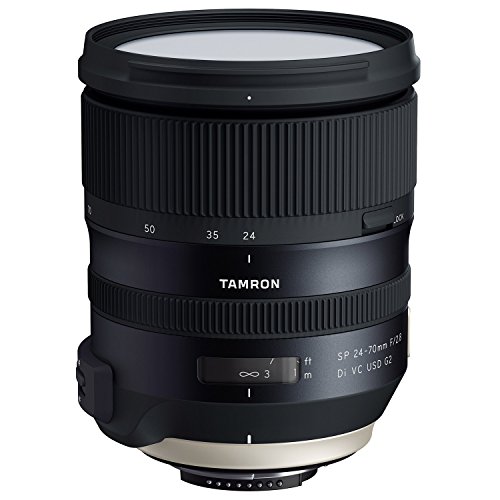
Tamron 24-70mm F/2.8 G2 for Nikon
Best for: Nikon photographers needing stabilized zoom
- Lens Mount
- Nikon
- Focal Length
- 24-70mm
- Maximum Aperture
- f/2.8
- Lens Type
- Zoom
- Minimum Focus Distance
- 0.38 m (15 in)
- Recommended Usage
- Photography
This Tamron zoom lens offers a versatile 24-70mm focal length with a constant f/2.8 maximum aperture. It includes 5-stop image stabilization and a fluorine-coated, moisture-resistant build. The lens features a minimum focus distance of 0.38 meters. It is designed for photography tasks like portraits and landscapes. You get reliable autofocus performance and reduced flare through specialized coatings. It suits Nikon users seeking a balanced standard zoom.
- Constant f/2.8 maximum aperture for low light
- 5-stop image stabilization for handheld shooting
- Fluorine coating and moisture-resistant construction
- Minimum focus distance of 0.38 meters
- Heavier at 1.98 pounds compared to Sony alternative
- Larger physical dimensions than compact lenses
- Nikon mount limits use on Sony cameras
- You shoot with Nikon DSLR or mirrorless cameras
- You need image stabilization for handheld video
- You want a versatile 24-70mm range
- You own a Sony E-mount camera
- You prefer lighter gear under 1.5 pounds
- You need autofocus on Sony bodies
Verdict: Tamron 24-70mm f/2.8 G2 for Nikon provides solid stabilization and aperture control for Nikon shooters. It fits users who prioritize image stabilization and weather resistance over weight savings.

Sony FE 24-70mm F2.8 GM II
Best for: Sony full-frame users needing a lightweight f/2.8 zoom
- Lens Mount
- Sony FE
- Focal Length
- 24-70mm
- Maximum Aperture
- F2.8
- Sensor Format
- Full Frame
- Lens Type
- Standard Zoom
- Image Stabilization
- OSS
This Sony FE 24-70mm F2.8 GM II is a standard zoom lens built for full-frame cameras. It features a constant f/2.8 maximum aperture and Optical SteadyShot (OSS) image stabilization. The lens weighs 1 pound and measures 8.39 inches in length. It uses four XD Linear Motors for fast autofocus. You get high resolution and smooth bokeh. This lens suits photographers who need a lightweight, fast zoom for both stills and video.
- Constant f/2.8 maximum aperture throughout the 24-70mm range
- Weighs just 1 pound, making it the lightest in its class
- Features Optical SteadyShot (OSS) image stabilization
- Uses four XD Linear Motors for precise and quiet autofocus
- Weighs 1 pound, which is heavier than the Tamron 24-70mm F/2.8 G2
- Measures 8.39 inches in length, making it bulkier than the Tamron G2
- You need a lightweight standard zoom for full-frame Sony cameras
- You shoot both stills and 4K video with fast autofocus
- You want a constant f/2.8 aperture for low-light performance
- You use a Nikon mount camera
- You need a lens lighter than 1 pound
- You require a shorter lens than 8.39 inches
Verdict: Sony FE 24-70mm F2.8 GM II Lens offers high resolution and fast autofocus in a compact body. It fits users who prioritize weight savings and optical performance on Sony full-frame bodies.
Specifications side by side
| Spec | Tamron 24-70mm F/2.8 G2 for Nikon | Sony FE 24-70mm F2.8 GM II |
|---|---|---|
| Lens Mount | Nikon | Sony FE |
| Focal Length | 24-70mm | 24-70mm |
| Maximum Aperture | f/2.8 | F2.8 |
| Sensor Format | – | Full Frame |
| Lens Type | Zoom | Standard Zoom |
| Image Stabilization | – | OSS |
| Minimum Focus Distance | 0.38 m (15 in) | – |
| Recommended Usage | Photography | – |
| Color | Black | Black |
| Intended Use | Portraits, Landscapes | – |
| Dimensions | 4.3 × 3.5 × 3.5 inches | 8.39 × 4.72 × 4.72 inches |
| Weight | 1.98 pounds | 1 pounds |
| Size | Nikon | Lens Only |
| Model | AFA032N700 | SEL2470GM2 |
Frequently asked questions
Which lens is better for Sony E-mount cameras?
The Sony FE 24-70mm F2.8 GM II is the correct choice. It features a Sony E mount, ensuring full compatibility with your camera body. The Tamron option listed is designed specifically for Nikon mounts and will not fit Sony cameras without incompatible adapters.
How much lighter is the Sony lens compared to the Tamron?
The Sony lens weighs 1 pound, while the Tamron lens weighs 1.98 pounds. This means the Sony option is nearly half the weight of the Tamron. You will notice a significant difference in carry comfort during long shooting sessions or travel.
Does the Tamron lens offer image stabilization?
Yes, the Tamron 24-70mm F/2.8 G2 includes VC image stabilization. This feature helps you shoot handheld in low light by reducing camera shake. The Sony lens relies on in-body stabilization or steady hands, as the data does not list optical stabilization for it.
What is the maximum aperture for both lenses?
Both lenses share a maximum aperture of f/2.8. This constant aperture allows for consistent exposure across the entire 24-70mm focal range. You can achieve shallow depth of field for portraits or let in more light for indoor events with either lens.
Is the Tamron lens weather resistant?
Yes, the Tamron lens features weather resistance and a fluorine coating. This helps repel moisture and dust, making it suitable for outdoor photography in challenging conditions. The data confirms these protective features for the Tamron model, providing durability for field use.
Which lens is more compact for travel?
The Sony FE 24-70mm F2.8 GM II is more compact. It weighs only 1 pound and is designed for lightweight carry. The Tamron lens is heavier at 1.98 pounds and includes stabilization hardware, making it bulkier to pack in your camera bag.
Can I use the Tamron lens on a Sony camera?
No, the Tamron lens listed is built for Nikon mounts. It has a Nikon size designation and specific mount mechanics. You cannot mount it directly on a Sony E-mount camera. You must choose the Sony lens for native compatibility and autofocus performance.
What focal lengths do these lenses cover?
Both lenses cover a focal length of 24-70mm. This range is versatile for portraits, landscapes, and general photography. You get a wide-angle start for landscapes and a short telephoto end for portraits, all within a single zoom lens for both brands.


