As Amazon Associates, we earn from qualifying purchases. This means we may receive a small commission at no extra cost to you if you click through and make a purchase.
As an Amazon Associate we earn from qualifying purchases. Links on this page are affiliate links.
You are comparing tamron vs sirui camera lens options for different shooting needs. Both brands offer high-quality optics for full-frame sensors. The Tamron 24-70mm F/2.8 G2 is a versatile zoom lens with image stabilization. The Sirui VP-1 24mm T1.4 is a dedicated cine prime lens. The main difference lies in their design: one prioritizes zoom flexibility and stabilization, while the other focuses on fast apertures and interchangeable mounts for video production.
Lens Type
Zoom
Cine Prime
Focal Length
24-70mm
24mm
Maximum Aperture
f/2.8
T1.4
Image Stabilization
Yes (VC)
Not listed
Mount System
Nikon
E/RF/Z/L (Interchangeable)
Weight
1.98 pounds
Not listed
Choose the first if
- You need a versatile focal range for photography.
- You require built-in image stabilization.
- You shoot primarily with Nikon cameras.
Choose the second if
- You prioritize fast low-light performance.
- You want interchangeable mounts for different camera systems.
- You are filming with gimbal or handheld video setups.
Verdict
Choose the Tamron if you need a flexible zoom range with stabilization for photography. Pick the Sirui if you need a fast prime lens with interchangeable mounts for video work. Each tool serves a distinct purpose in your kit.
Tamron vs Sirui Lens Comparison
Lens Type and Flexibility
Edge: Tamron 24-70mm F/2.8 G2 for Nikon
The Tamron 24-70mm F/2.8 G2 is a zoom lens, offering a versatile focal range from 24mm to 70mm. This allows you to adjust your framing without moving your feet, which is useful for events or travel where you cannot change positions frequently. In contrast, the Sirui VP-1 24mm T1.4 is a fixed focal length prime lens. You must physically move to change your composition. While the Sirui is part of a cine series with interchangeable mounts for E, RF, Z, and L systems, it only provides one specific angle of view. The Tamron gives you multiple perspectives in one barrel, whereas the Sirui demands you carry multiple primes for different shots.
Aperture and Low Light
Edge: Sirui VP-1 24mm T1.4 Cine Lens
Aperture determines how much light reaches the sensor and affects background blur. The Tamron lens has a maximum aperture of f/2.8. This is a consistent speed across its entire zoom range. The Sirui VP-1 features a much wider T1.4 aperture. A T-stop accounts for light transmission, making T1.4 significantly brighter than f/2.8. This allows the Sirui to perform better in low-light conditions without raising the ISO as high. It also creates a shallower depth of field, producing softer, dreamier background separation. If you shoot in dim environments or want strong bokeh, the Sirui’s wider opening provides a clear optical advantage over the Tamron’s narrower f/2.8 limit.
Image Stabilization
Edge: Tamron 24-70mm F/2.8 G2 for Nikon
Vibration can cause blur in handheld shots, especially at slower shutter speeds. The Tamron 24-70mm G2 includes dedicated Vibration Compensation (VC) technology. It offers 5 CIPA-rated stops of image stabilization, which helps keep images sharp when you are not using a tripod. The Sirui VP-1 24mm T1.4 is a cine prime lens. The provided data does not list any built-in image stabilization for this model. You must rely on your camera body’s internal stabilization or external rigging to counteract shake. For handheld video or stills where a tripod is impractical, the Tamron’s internal stabilization provides a significant practical benefit that the Sirui lacks.
Build and Weight
Edge: Sirui VP-1 24mm T1.4 Cine Lens
Physical construction affects how a lens feels and balances on your camera. The Tamron 24-70mm G2 weighs 1.98 pounds and measures 4.3 inches in length. It features a moisture-resistant construction and fluorine coating for weather protection. The Sirui VP-1 weighs approximately 600 grams, which is roughly 1.32 pounds. It is built from durable aluminum alloy. The Sirui is lighter and more compact, making it easier to handle for extended periods or when using gimbals. However, the Tamron’s weather sealing offers better protection against dust and moisture. If you prioritize lightweight portability, the Sirui is lighter. If you need weather resistance, the Tamron is superior.
Autofocus Technology
Edge: Tamron 24-70mm F/2.8 G2 for Nikon
How the lens finds focus impacts shooting speed and accuracy. The Tamron G2 uses an ultrasonic motor (USD) with a dedicated micro-processing unit (MPU). This setup dramatically improves autofocus accuracy and speed, making it suitable for capturing fast-moving subjects. The Sirui VP-1 is a cine lens. The data does not mention any autofocus motor or system. Cine lenses typically rely on manual focus for precise control over focus pulls. If you need automatic subject tracking or quick adjustments, the Tamron’s USD motor is essential. The Sirui requires you to manually adjust the focus ring, which is a different workflow entirely.
Which Lens Suits Your Shooting Style
Photographers needing versatility and stabilization
Our pick: Tamron 24-70mm F/2.8 G2 for Nikon
The Tamron 24-70mm F/2.8 G2 provides a flexible zoom range from 24mm to 70mm. It includes dedicated image stabilization rated at 5 CIPA stops, helping you shoot handheld in lower light. The f/2.8 maximum aperture remains consistent across the zoom range, and the fluorine coating offers moisture resistance for outdoor photography.
Filmmakers prioritizing low-light performance
Our pick: Sirui VP-1 24mm T1.4 Cine Lens
The Sirui VP-1 24mm T1.4 Cine Lens features a fast T1.4 aperture, allowing you to capture more light for better performance in dim conditions. This wide aperture creates distinct subject separation with soft bokeh. The lens uses aspherical and ED glass elements to ensure edge-to-edge sharpness, which is critical for high-resolution video work.
Creators switching between camera systems
Our pick: Sirui VP-1 24mm T1.4 Cine Lens
The Sirui lens supports an interchangeable mount system with pre-installed E mount and user-swappable RF, Z, and L mounts. This versatility lets you adapt the lens to different camera bodies without buying new glass. The consistent design across the lens series ensures uniform size and gear position, simplifying workflow for multi-camera productions.
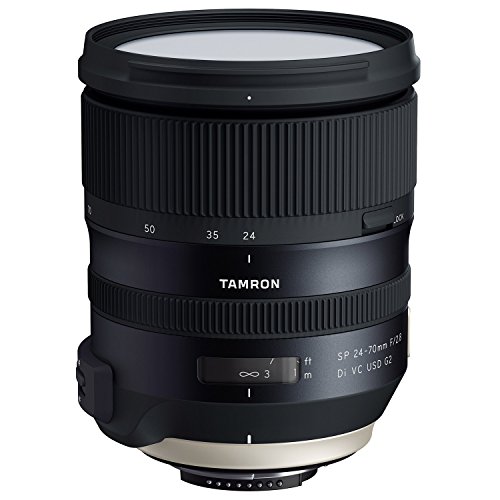
Tamron 24-70mm F/2.8 G2 for Nikon
Best for: Nikon photographers needing versatile zoom
- Lens Mount
- Nikon
- Focal Length
- 24-70mm
- Maximum Aperture
- f/2.8
- Lens Type
- Zoom
- Minimum Focus Distance
- 0.38 m (15 in)
- Recommended Usage
- Photography
This Tamron zoom lens covers a 24-70mm focal range with a constant f/2.8 maximum aperture. It features 5 stops of image stabilization and a fluorine coating for weather resistance. The lens weighs 1.98 pounds and measures 4.3 inches long. It is designed for photography tasks like portraits and landscapes on Nikon mount cameras.
- Constant f/2.8 maximum aperture
- 5 stops of image stabilization
- 24-70mm versatile focal range
- Fluorine and moisture-resistant coating
- Heavier build at 1.98 pounds
- Longer length at 4.3 inches
- Fixed Nikon mount compatibility
- You need a standard zoom for Nikon DSLRs
- You shoot portraits and landscapes in variable light
- You want built-in image stabilization
- You shoot with Sony or Canon cameras
- You prefer ultra-lightweight glass
- You need a prime lens for sharper backgrounds
Verdict: Tamron 24-70mm F/2.8 G2 for Nikon delivers reliable stabilization and a versatile zoom range for Nikon users. It suits photographers who prioritize image stability and weather sealing over minimal weight.

Sirui VP-1 24mm T1.4 Cine Lens
Best for: cinematic video and low-light shooting
- Lens Mount
- E/RF/Z/L Mount
- Focal Length
- 24mm
- Maximum Aperture
- T1.4
- Sensor Format
- Full Frame
- Lens Type
- Cine Prime
- Color
- Black
This Sirui VP-1 is a 24mm full-frame cine prime lens with a T1.4 aperture. It features interchangeable mounts for E, RF, Z, and L systems, allowing you to switch between camera brands easily. The aluminum alloy body weighs around 600g, making it suitable for handheld or gimbal work. You get edge-to-edge sharpness with minimal distortion, ideal for 8K storytelling and low-light shooting.
- T1.4 maximum aperture for low-light performance and background separation
- Interchangeable mount system supports E, RF, Z, and L mounts
- Full-frame sensor format with 24mm focal length
- Durable aluminum alloy construction weighing approximately 600g
- Fixed 24mm focal length limits versatility compared to zoom lenses
- Single aperture value restricts creative control over depth of field
- Heavier build at 600g may impact balance on small gimbals
- You need a dedicated wide-angle lens for cinematic video production
- You shoot with multiple camera brands and want one lens for all
- You prioritize low-light performance and shallow depth of field
- You require a zoom lens for varied framing without changing glass
- You need a lightweight lens for extended handheld travel without support
- You primarily shoot still photography requiring variable apertures
Verdict: Sirui VP-1 24mm T1.4 Cine Lens suits filmmakers who need a fast, sharp wide-angle prime for low-light scenes and multi-camera workflows. It fits users who value mount versatility and consistent lens characteristics across their kit.
Specifications side by side
| Spec | Tamron 24-70mm F/2.8 G2 for Nikon | Sirui VP-1 24mm T1.4 Cine Lens |
|---|---|---|
| Lens Mount | Nikon | E/RF/Z/L Mount |
| Focal Length | 24-70mm | 24mm |
| Maximum Aperture | f/2.8 | T1.4 |
| Sensor Format | – | Full Frame |
| Lens Type | Zoom | Cine Prime |
| Minimum Focus Distance | 0.38 m (15 in) | – |
| Recommended Usage | Photography | – |
| Color | Black | Black |
| Intended Use | Portraits, Landscapes | Portraits, Landscapes |
| Dimensions | 4.3 × 3.5 × 3.5 inches | 4.25 × 4.25 × 4.25 inches |
| Weight | 1.98 pounds | – |
| Size | Nikon | 24 mm |
| Model | AFA032N700 | – |
Frequently asked questions
Is Tamron or Sirui better for video work?
Sirui is the better choice for dedicated video production. The Sirui VP-1 24mm T1.4 is a cine prime lens designed for cinematic workflows. It features a consistent T-stop for accurate light transmission. This lens suits filmmakers who need sharp wide-angle shots in low-light conditions. Tamron focuses more on still photography versatility.
Which lens offers a wider aperture?
The Sirui VP-1 24mm T1.4 offers a wider aperture. It has a T1.4 rating, allowing more light to reach the sensor. This is ideal for low-light shooting and creative depth of field. The Tamron 24-70mm F/2.8 G2 has a maximum aperture of f/2.8. While fast, it does not match the light-gathering capability of the Sirui prime lens.
Can I use these lenses for portraits?
Both lenses are suitable for portraits. The Tamron 24-70mm F/2.8 G2 covers focal lengths often used for portrait work. Its f/2.8 aperture helps isolate subjects. The Sirui VP-1 24mm T1.4 is also listed for portrait use. Its wide angle and fast aperture allow for creative, low-light portrait shots with distinct cinematic characteristics.
Which lens is heavier to carry?
The Tamron 24-70mm F/2.8 G2 is heavier. It weighs 1.98 pounds. This includes its robust build and image stabilization mechanism. The Sirui VP-1 24mm T1.4 does not list a weight in the provided data. You should check specific mount variations for the Sirui lens if weight is a primary concern for your handheld setups.
Do I need a zoom or prime lens?
Your choice depends on your shooting style. The Tamron 24-70mm F/2.8 G2 is a zoom lens. It allows you to adjust framing from 24mm to 70mm without moving. The Sirui VP-1 24mm T1.4 is a prime lens. It offers a fixed 24mm focal length. Primes often provide sharper images and wider apertures than zooms.
Is the Tamron lens compatible with Nikon cameras?
Yes, the Tamron 24-70mm F/2.8 G2 is available for Nikon. The product data specifies it is the version for Nikon users. It includes image stabilization rated at 5 CIPA stops. This helps you shoot handheld in lower light. Ensure you select the correct mount version when purchasing to guarantee compatibility with your camera body.
Which lens is better for landscapes?
Both brands list their lenses for landscape use. The Tamron 24-70mm F/2.8 G2 offers a versatile zoom range. This allows you to capture wide scenes or tighter compositions without changing lenses. The Sirui VP-1 24mm T1.4 provides a fixed 24mm wide angle. This is excellent for expansive landscapes, especially in challenging lighting conditions.


