As Amazon Associates, we earn from qualifying purchases. This means we may receive a small commission at no extra cost to you if you click through and make a purchase.
As an Amazon Associate we earn from qualifying purchases. Links on this page are affiliate links.
You are comparing the tamron 24 70mm f 2 8 g2 di vs 50 400mm f 4 5 6 3 di iii. Both lenses include Tamron’s proprietary VC image stabilization to reduce camera shake. They also share a black finish and fluorine or moisture-resistant coatings for durability. The main difference lies in their reach and mount compatibility. One offers a versatile standard zoom for Nikon, while the other provides a massive telephoto range for Sony full-frame cameras. You must choose based on your camera system and shooting distance.
Lens Mount
Nikon
Sony FE Mount
Focal Length
24-70mm
50-400mm
Maximum Aperture
f/2.8
f/4.5-6.3
Autofocus Technology
USD with dedicated MPU
VXD linear motor
Weight
1.98 pounds
2.54 pounds
Intended Use
Portraits, Landscapes
not listed
Choose the first if
- You use a Nikon camera and need a versatile focal length for portraits or landscapes.
- You require a wider constant aperture of f/2.8 for better low-light performance.
- You prefer a lighter lens that weighs 1.98 pounds.
Choose the second if
- You use a Sony full-frame mirrorless camera.
- You need to capture distant subjects with a 50-400mm zoom range.
- You prioritize silent autofocus for video or wildlife shooting with VXD technology.
Verdict
Choose the 24-70mm if you shoot with Nikon and need a standard zoom with a wider aperture. Choose the 50-400mm if you shoot with Sony and need significant reach for distant subjects. Your camera mount and desired focal length dictate the correct choice.
Specs: Zoom Range vs Aperture
Focal length range
Edge: Tamron 50-400mm f/4.5-6.3
The Tamron 24-70mm F/2.8 G2 covers a standard zoom range from 24mm to 70mm. This range is ideal for portraits and landscapes. The Tamron 50-400mm f/4.5-6.3 offers an expansive 50mm to 400mm range. This provides an 8x zoom ratio. You get significant reach for distant subjects. The 50-400mm lens covers a much wider span of focal lengths. It replaces a 100-400mm equivalent lens. The 24-70mm lens is limited to closer subjects. If you need to capture distant wildlife or sports, the 50-400mm is the clear choice. The 24-70mm is better for general purpose work.
Maximum aperture
Edge: Tamron 24-70mm F/2.8 G2 for Nikon
The Tamron 24-70mm F/2.8 G2 maintains a constant f/2.8 maximum aperture throughout its zoom range. This allows more light to reach the sensor. It helps in low light conditions. It also creates a shallower depth of field for subject isolation. The Tamron 50-400mm f/4.5-6.3 has a variable maximum aperture. It starts at f/4.5 at 50mm and narrows to f/6.3 at 400mm. This means less light enters the lens at longer focal lengths. The 24-70mm lens is superior for low light shooting. It also offers more creative control over background blur. The 50-400mm lens is optimized for reach rather than aperture speed.
Autofocus technology
Edge: Tamron 50-400mm f/4.5-6.3
Both lenses use advanced autofocus systems for speed and accuracy. The Tamron 24-70mm F/2.8 G2 uses a dedicated MPU and VC auto detect mode 2. It focuses at a minimum distance of 0.38 meters. The Tamron 50-400mm f/4.5-6.3 uses a VXD linear motor focus mechanism. This system provides high-speed and high-precision autofocus. It is extremely quiet, which is good for silent operation. It handles moving objects like flying birds well. The 50-400mm lens is specifically noted for its ability to capture sharp images of fast-moving subjects. The 24-70mm lens focuses accurately but the VXD motor in the 50-400mm is highlighted for speed and silence.
Lens mount compatibility
Edge: Tie
The Tamron 24-70mm F/2.8 G2 is designed for Nikon mount cameras. It is not compatible with Sony or other brands without an adapter. The Tamron 50-400mm f/4.5-6.3 is designed for Sony FE Mount. It works with Sony full-frame mirrorless cameras. You must choose the lens that matches your camera body. The Nikon mount lens will not fit Sony cameras natively. The Sony mount lens will not fit Nikon cameras natively. This is a critical factor for you. Check your camera brand before buying. The 24-70mm is for Nikon users. The 50-400mm is for Sony users.
Size and weight
Edge: Tamron 24-70mm F/2.8 G2 for Nikon
The Tamron 24-70mm F/2.8 G2 is compact. It measures 3.5 by 3.5 by 4.3 inches. It weighs 1.98 pounds. The Tamron 50-400mm f/4.5-6.3 is larger. It measures 3.5 by 3.5 by 7.2 inches. It weighs 2.54 pounds. The 50-400mm lens is longer due to its zoom range. However, it is noted as compact for its class. It is similar in size to a conventional 100-400mm lens. The 24-70mm lens is lighter and shorter. It is easier to carry for long periods. The 50-400mm is heavier but offers more reach. You trade portability for zoom capability.
Which Tamron Lens Fits Your Needs
Nikon shooters needing versatile standard zoom
Our pick: Tamron 24-70mm F/2.8 G2 for Nikon
You need a fast f/2.8 aperture for low light or background blur. This 24-70mm lens covers wide to short telephoto. It offers 5 stops of image stabilization. The minimum focus distance is 0.38 meters. It weighs 1.98 pounds. This setup suits portraits and landscapes on Nikon bodies.
Sony users wanting long reach for wildlife
Our pick: Tamron 50-400mm f/4.5-6.3
You need reach for distant subjects like birds. This lens zooms from 50mm to 400mm. It uses VXD motors for fast, silent autofocus. The 8x zoom ratio is expansive. It weighs 2.54 pounds. It is compact for its range. This fits Sony full-frame mirrorless cameras perfectly.
Travelers prioritizing one lens for distance
Our pick: Tamron 50-400mm f/4.5-6.3
You want to capture faraway scenes without changing glass. The 50-400mm range handles landscapes and telephoto subjects. It includes VC stabilization for handheld shots. The VXD focus mechanism ensures sharp images of moving objects. It is lightweight for its class. This single lens replaces multiple shorter telephotos.
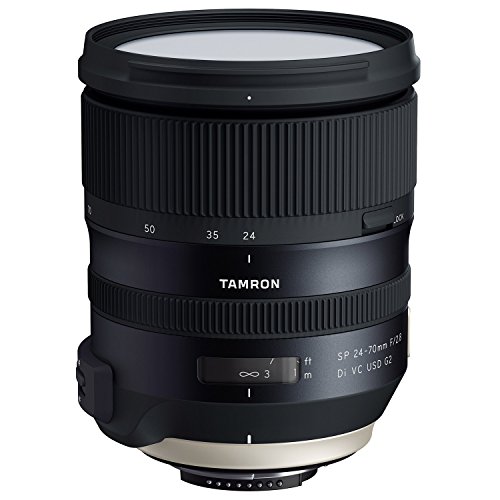
Tamron 24-70mm F/2.8 G2 for Nikon
Best for: Nikon users needing versatile wide-to-medium zoom
- Lens Mount
- Nikon
- Focal Length
- 24-70mm
- Maximum Aperture
- f/2.8
- Lens Type
- Zoom
- Minimum Focus Distance
- 0.38 m (15 in)
- Recommended Usage
- Photography
This Tamron zoom lens covers the 24-70mm range with a constant f/2.8 aperture. It includes a dedicated MPU for 5 stops of image stabilization and Eband coating to reduce flare. The fluorine coating and moisture-resistant construction protect the barrel. Weighing 1.98 pounds, it offers a minimum focus distance of 0.38 meters. It suits photographers needing versatility for portraits and landscapes on Nikon mounts.
- Constant f/2.8 maximum aperture
- 5 stops of image stabilization
- Eband coating reduces flare and ghosting
- Fluorine and moisture-resistant construction
- Heavier at 1.98 pounds
- Shorter 24-70mm focal range
- Limited to Nikon mount
- You need a fast aperture for low light
- You shoot landscapes and portraits
- You use a Nikon camera body
- You require telephoto reach beyond 70mm
- You shoot with Sony or Canon cameras
- You prioritize a lighter lens under 1.5 pounds
Verdict: Tamron 24-70mm f/2.8 G2 for Nikon delivers consistent light intake and stabilization for versatile shooting. It fits photographers who prioritize aperture speed and image quality over extreme zoom range.

Tamron 50-400mm f/4.5-6.3
Best for: wildlife and sports photography
- Lens Mount
- Sony FE Mount
- Focal Length
- 50-400mm
- Maximum Aperture
- f/4.5-6.3
- Sensor Format
- Full Frame
- Color
- Black
- Dimensions
- 7.2 × 3.5 × 3.5 inches
This Tamron lens covers 50mm to 400mm with an 8x zoom ratio. It uses a VXD motor for fast autofocus and VC stabilization to reduce blur. The build is compact, weighing 2.54 pounds. You should choose this if you need reach for wildlife or sports. It suits full-frame Sony cameras well, offering versatility in a single package.
- 8x zoom ratio from 50mm to 400mm
- VXD linear motor for high-speed autofocus
- VC image stabilization reduces camera shake
- Lightweight at 2.54 pounds for its class
- Maximum aperture narrows to f/6.3 at 400mm
- Heavier and longer than standard 24-70mm lenses
- You need long reach for distant subjects
- You shoot moving subjects like birds or athletes
- You want a single lens for travel
- You need a constant f/2.8 aperture
- You prioritize wide-angle shots over telephoto
- You need the lightest possible gear
Verdict: Tamron 50-400mm f/4.5-6.3 for Sony is ideal for photographers who prioritize reach and stabilization over maximum aperture speed.
Specifications side by side
| Spec | Tamron 24-70mm F/2.8 G2 for Nikon | Tamron 50-400mm f/4.5-6.3 |
|---|---|---|
| Lens Mount | Nikon | Sony FE Mount |
| Focal Length | 24-70mm | 50-400mm |
| Maximum Aperture | f/2.8 | f/4.5-6.3 |
| Sensor Format | – | Full Frame |
| Lens Type | Zoom | – |
| Minimum Focus Distance | 0.38 m (15 in) | – |
| Recommended Usage | Photography | – |
| Color | Black | Black |
| Intended Use | Portraits, Landscapes | – |
| Dimensions | 4.3 × 3.5 × 3.5 inches | 7.2 × 3.5 × 3.5 inches |
| Weight | 1.98 pounds | 2.54 pounds |
| Size | Nikon | Sony FE Mount |
| Model | AFA032N700 | AFA067S700 |
Frequently asked questions
Which lens is better for wildlife photography?
The Tamron 50-400mm f/4.5-6.3 is the superior choice for wildlife. Its 50mm to 400mm focal length provides significant reach for distant subjects. The 24-70mm lens lacks the necessary zoom range for this genre. You should select the 50-400mm if capturing animals or birds is your primary goal.
Does the 24-70mm lens work with Sony cameras?
The listed Tamron 24-70mm F/2.8 G2 is designed for Nikon cameras. It features a Nikon mount, as indicated by the model number AFA032N700. You cannot use this specific lens on Sony bodies without an adapter. For Sony users, the 50-400mm lens with a Sony E mount is available.
Which lens is lighter to carry?
The Tamron 24-70mm F/2.8 G2 is lighter. It weighs 1.98 pounds. The Tamron 50-400mm f/4.5-6.3 weighs 2.54 pounds. You will notice a difference in carry weight if you hike or travel frequently. The 24-70mm offers a more portable option for standard zoom needs.
What is the maximum aperture of the 50-400mm lens?
The maximum aperture is f/4.5 at the wide end. It narrows to f/6.3 at 400mm. The listed attributes also mention f/4, likely referring to a specific focal length or variant. You should expect variable aperture performance. This affects low-light capability compared to the constant f/2.8 of the other lens.
Is the 24-70mm lens good for portraits?
Yes, it is ideal for portraits. Its 24-70mm range covers short telephoto lengths perfect for people shots. The f/2.8 maximum aperture allows for shallow depth of field. You can achieve background blur easily. This lens is recommended for photographers prioritizing aperture speed and image quality.
How long is the Tamron 50-400mm lens?
The Tamron 50-400mm f/4.5-6.3 is 7.2 inches long. The 24-70mm lens is 4.3 inches long. You will need more space in your bag for the 50-400mm. The extended length accommodates the larger zoom range. Consider your storage and transport needs when choosing between these two models.


