As Amazon Associates, we earn from qualifying purchases. This means we may receive a small commission at no extra cost to you if you click through and make a purchase.
As an Amazon Associate we earn from qualifying purchases. Links on this page are affiliate links.
You are looking at the tamron 24 70mm f 2 8 g2 di vs 150 500mm f 5 6 7 di iii. Both lenses include vibration compensation for sharper handheld shots. They share a black finish and robust build features like moisture resistance. The main difference lies in their reach and mount compatibility. One offers a versatile standard zoom range for Nikon cameras. The other provides extreme telephoto reach for Sony mirrorless systems. Your choice depends on whether you need wide-angle versatility or distant subject magnification.
Lens Mount
Nikon
Sony E-mount
Focal Length
24-70mm
150-500mm
Maximum Aperture
f/2.8
f/5-6.7
Sensor Format
not listed
Full Frame
Weight
1.98 pounds
4.14 pounds
Choose the first if
- You shoot with a Nikon camera and need a versatile range for portraits and landscapes.
- You prefer a lighter lens that is easier to carry for extended periods.
- You require a wider aperture for better performance in low light conditions.
Choose the second if
- You use a Sony full-frame mirrorless camera for wildlife or sports.
- You need significant reach to capture subjects far away from your position.
- You prioritize image stabilization at extreme telephoto focal lengths.
Verdict
The Tamron 24-70mm F/2.8 G2 is the practical choice for general photography on Nikon bodies, offering speed and versatility. The Tamron 150-500mm f/5-6.7 is specialized for Sony users who need to magnify distant subjects. Select the lens that matches your camera mount and primary shooting distance.
Lens Specs and Build Comparison
Focal Length Range
Edge: Tie
The Tamron 24-70mm F/2.8 G2 Di offers a standard zoom range, covering wide-angle to short telephoto perspectives. This makes it versatile for general photography, including portraits and landscapes. In contrast, the Tamron 150-500mm f/5-6.7 Di III is an ultra-telephoto lens. It provides significant reach, ideal for distant subjects like wildlife or sports. When used on an APS-C camera, the 150-500mm lens offers a 225-750mm equivalent focal length. You choose between the versatile 24-70mm range or the extreme reach of the 150-500mm based on your shooting needs.
Maximum Aperture
Edge: Tamron 24-70mm F/2.8 G2 for Nikon
Aperture affects light gathering and background blur. The Tamron 24-70mm F/2.8 G2 maintains a constant f/2.8 maximum aperture throughout its zoom range. This allows for better performance in low light and more control over depth of field. The Tamron 150-500mm f/5-6.7 Di III has a variable maximum aperture, ranging from f/5 at the wide end to f/6.7 at the telephoto end. This narrower aperture gathers less light. If you need consistent brightness and shallow depth of field, the 24-70mm lens is the stronger choice.
Image Stabilization
Edge: Tamron 24-70mm F/2.8 G2 for Nikon
Both lenses include Vibration Compensation (VC) to help with handheld shooting. The Tamron 24-70mm F/2.8 G2 Di features a dedicated MPU that delivers up to 5 CIPA-rated stops of image stabilization. It also includes a VC auto detect mode 2 for panning. The Tamron 150-500mm f/5-6.7 Di III also provides VC, which is crucial for handheld use at 500mm. It offers three modes: standard, panning, and framing priority. While both stabilize images, the 24-70mm lens explicitly cites a 5-stop rating, providing a clear metric for stabilization performance.
Autofocus Technology
Edge: Tamron 150-500mm f/5-6.7 Di III VC VXD
Autofocus mechanisms differ between these two lenses. The Tamron 24-70mm F/2.8 G2 Di uses a High performance MPU for AF to improve accuracy and speed. It is designed for Nikon mount cameras. The Tamron 150-500mm f/5-6.7 Di III utilizes VXD (Voice-coil eXtra-torque High-torque XD) linear motor autofocus. This technology is optimized for Sony E-mount full-frame mirrorless cameras. The VXD motor typically offers fast, precise, and quiet focusing, especially beneficial for video and action. The 150-500mm lens has a more advanced autofocus system listed in its specifications.
Optical Construction
Edge: Tamron 150-500mm f/5-6.7 Di III VC VXD
Optical elements impact image quality and aberration control. The Tamron 24-70mm F/2.8 G2 Di uses Eband coating to reduce flare and ghosting. It also features fluorine coating for easy cleaning and moisture resistance. The Tamron 150-500mm f/5-6.7 Di III includes specific glass elements like XLD (eXtra Low Dispersion), LD (Low Dispersion), and GM (Glass-Molded Aspherical) elements. These elements reduce color fringing, chromatic aberrations, and distortion. The 150-500mm lens lists more specialized optical elements to maintain clarity across its long zoom range.
Physical Dimensions
Edge: Tamron 24-70mm F/2.8 G2 for Nikon
Size and weight affect portability. The Tamron 24-70mm F/2.8 G2 Di measures 3.5 x 3.5 x 4.3 inches and weighs 1.98 pounds. It is relatively compact for a constant aperture zoom. The Tamron 150-500mm f/5-6.7 Di III is significantly larger, measuring 3.7 x 3.7 x 8.3 inches and weighing 4.14 pounds. The 150-500mm lens also includes a rotating Arca-type tripod mount, indicating it is heavy enough to require stable support. The 24-70mm lens is much lighter and easier to carry for extended periods.
Which lens fits your shooting style
General photography and portrait shooters
Our pick: Tamron 24-70mm F/2.8 G2 for Nikon
The 24-70mm range covers wide to short telephoto views. Its constant f/2.8 aperture lets in more light for low light scenes. You get 5 stops of image stabilization and fast autofocus. The 0.38m minimum focus distance helps with close-up details. It is lighter and more compact for daily carry.
Wildlife and distant subject photographers
Our pick: Tamron 150-500mm f/5-6.7 Di III VC VXD
This ultra-telephoto lens reaches 500mm for faraway subjects. It includes XLD and LD elements to reduce color fringing and distortion. The VXD motor ensures smooth focusing. You can switch between standard, panning, and framing priority stabilization modes. The rotating tripod mount adds stability for heavy glass during long sessions.
Sony mirrorless full-frame owners
Our pick: Tamron 150-500mm f/5-6.7 Di III VC VXD
This lens is designed specifically for Sony E-mount full-frame cameras. It offers a 225-750mm equivalent range on APS-C bodies. The Flex Zoom Lock holds your position securely. You benefit from advanced glass elements for clarity. The design includes improved switches for better operability in the field.
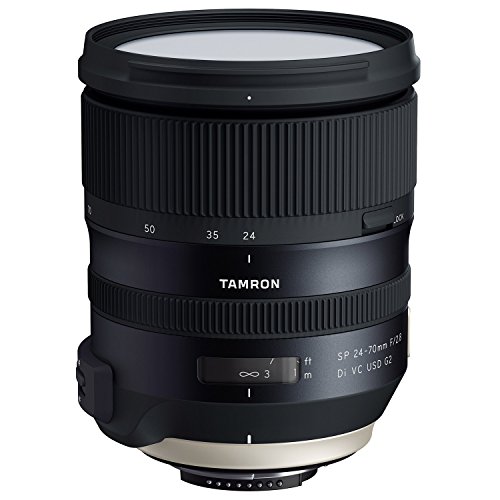
Tamron 24-70mm F/2.8 G2 for Nikon
Best for: Nikon users needing a fast standard zoom
- Lens Mount
- Nikon
- Focal Length
- 24-70mm
- Maximum Aperture
- f/2.8
- Lens Type
- Zoom
- Minimum Focus Distance
- 0.38 m (15 in)
- Recommended Usage
- Photography
This Tamron zoom lens covers a 24-70mm focal range with a constant f/2.8 maximum aperture. It includes image stabilization rated at 5 CIPA stops and features a dedicated MPU for fast autofocus. The build offers moisture resistance and a fluorine coating. It weighs 1.98 pounds and measures 4.3 inches long. This lens suits photographers needing a versatile standard zoom for Nikon cameras.
- Constant f/2.8 maximum aperture
- 5 CIPA-rated stops of image stabilization
- Minimum focus distance of 0.38 meters
- Moisture-resistant construction with fluorine coating
- Heavier build at 1.98 pounds compared to lighter alternatives
- Fixed focal length range limits reach compared to telephoto zooms
- You need a versatile standard zoom for portraits and landscapes
- You shoot in low light and require a fast f/2.8 aperture
- You use a Nikon mount camera and want image stabilization
- You require a telephoto reach beyond 70mm
- You prioritize the lightest possible lens for travel
- You shoot with Sony mount cameras
Verdict: Tamron 24-70mm f/2.8 G2 Nikon Lens provides a reliable standard zoom with strong stabilization for Nikon users. It fits photographers who need a fast, versatile lens for general purpose shooting.

Tamron 150-500mm f/5-6.7 Di III VC VXD
Best for: Sony full-frame wildlife and sports photography
- Lens Mount
- Sony E-mount
- Focal Length
- 150-500mm
- Maximum Aperture
- f/5-6.7
- Sensor Format
- Full Frame
- Lens Type
- Ultra Telephoto zoom
- Color
- Black
This Tamron lens is an ultra-telephoto zoom for Sony E-mount full-frame cameras. It covers 150-500mm, reaching 225-750mm equivalent on APS-C bodies. The variable aperture ranges from f/5 to f/6.7. It weighs 4.14 pounds and measures 8.3 inches long. Image stabilization helps with handheld shooting at long distances. This lens suits photographers who need reach for distant subjects.
- 150-500mm focal length provides significant reach
- VC image stabilization aids handheld shooting
- Specialized lens elements reduce chromatic aberration
- Includes rotating Arca-type tripod mount
- Heavier build at 4.14 pounds compared to standard zooms
- Narrower maximum aperture of f/5-6.7 limits light intake
- Longer length of 8.3 inches increases bulk
- You need extreme reach for wildlife or sports
- You shoot with Sony full-frame mirrorless cameras
- You prioritize image stabilization for handheld telephoto work
- You require a fast constant aperture for low light
- You prefer a compact and lightweight lens for travel
- You shoot with Nikon or Canon camera systems
Verdict: Tamron 150-500mm f/5-6.7 Telephoto Lens is ideal for Sony shooters who need maximum reach for distant subjects. It offers specialized stabilization and optical quality for heavy telephoto tasks.
Specifications side by side
| Spec | Tamron 24-70mm F/2.8 G2 for Nikon | Tamron 150-500mm f/5-6.7 Di III VC VXD |
|---|---|---|
| Lens Mount | Nikon | Sony E-mount |
| Focal Length | 24-70mm | 150-500mm |
| Maximum Aperture | f/2.8 | f/5-6.7 |
| Sensor Format | – | Full Frame |
| Lens Type | Zoom | Ultra Telephoto zoom |
| Minimum Focus Distance | 0.38 m (15 in) | – |
| Recommended Usage | Photography | – |
| Color | Black | Black |
| Intended Use | Portraits, Landscapes | – |
| Dimensions | 4.3 × 3.5 × 3.5 inches | 8.3 × 3.7 × 3.7 inches |
| Weight | 1.98 pounds | 4.14 pounds |
| Size | Nikon | Sony FE Mount |
| Model | AFA032N700 | AFA057S700 |
Frequently asked questions
Which lens is better for Nikon users?
The Tamron 24-70mm F/2.8 G2 is designed for Nikon cameras. It provides a versatile standard zoom range ideal for portraits and landscapes. The other option mounts only to Sony E mounts, making it incompatible with Nikon bodies without adapters that may affect performance.
What is the weight difference between these lenses?
The Tamron 24-70mm weighs 1.98 pounds, while the 150-500mm weighs 4.14 pounds. The telephoto lens is more than twice as heavy. This significant difference affects handheld comfort and requires stronger support for the longer reach lens during extended shooting sessions.
How do the focal lengths compare?
The 24-70mm offers a standard zoom range suitable for general photography. The 150-500mm provides extreme telephoto reach for distant subjects. You cannot use the 150-500mm for wide-angle shots, and the 24-70mm lacks the reach needed for wildlife or sports from afar.
Which lens has a larger physical size?
The Tamron 150-500mm is significantly larger at 8.3 inches long and 3.7 inches wide. The 24-70mm measures 4.3 inches long and 3.5 inches wide. The telephoto lens requires more space in your bag and on your camera setup.
Can I use the 150-500mm on a Nikon camera?
No, the Tamron 150-500mm f/5-6.7 Di III VC VXD is built for Sony E mount cameras. The Tamron 24-70mm F/2.8 G2 shown is for Nikon. You must match the lens mount to your camera brand for proper functionality and communication.
What are the intended uses for each lens?
The 24-70mm is best for portraits and landscapes due to its versatile focal range. The 150-500mm is intended for full-frame wildlife and sports photography. Choose the 24-70mm for general versatility and the 150-500mm for capturing distant action or animals.


