As Amazon Associates, we earn from qualifying purchases. This means we may receive a small commission at no extra cost to you if you click through and make a purchase.
As an Amazon Associate we earn from qualifying purchases. Links on this page are affiliate links.
When you compare a sony vs DJI camcorder, you are choosing between two distinct approaches to portable video. Both devices feature a 1-inch sensor and record 4K video, ensuring high image quality. The main difference lies in their form and stabilization. Sony offers a traditional compact camera with a flip screen and manual controls. DJI provides a pocket-sized gimbal camera with mechanical stabilization and a rotating display. Your choice depends on whether you prefer dedicated camera ergonomics or all-in-one portability.
Size and Form
Compact camera with flip screen
Pocket-sized gimbal camcorder
Display
3.0-inch flip screen
2-inch rotating touch screen
Stabilization
Image stabilization
3-axis mechanical stabilization
Video Frame Rate
4K
4K/120fps
Weight
10.4 ounces
6.31 ounces
Autofocus
Real Time Eye Autofocus
ActiveTrack 6.0
Choose the first if
- You want a traditional camera layout with a side flip-out screen for vlogging.
- You need a larger 3.0-inch display for better composition and review of footage.
- You prefer dedicated audio inputs like a 3.5mm mic jack and MI shoe.
Choose the second if
- You prioritize ultra-smooth footage with 3-axis mechanical stabilization.
- You need the highest frame rate option with 4K/120fps recording capability.
- You want the lightest, most portable device at 6.31 ounces.
Verdict
Choose the Sony ZV-1 if you prefer a dedicated camera body with a larger screen and flexible audio options. Choose the DJI Osmo Pocket 3 if you value mechanical stabilization, higher frame rates, and maximum portability in a smaller package.
Sony ZV-1 vs DJI Osmo Pocket 3
Sensor and Resolution
Edge: Tie
Both cameras share a 1-inch sensor size, which provides excellent low-light performance and a shallow depth of field compared to smaller sensors. The Sony ZV-1 features a 20.1MP stacked back-illuminated sensor, offering high-resolution stills alongside its video capabilities. The DJI Osmo Pocket 3 also uses a 1-inch CMOS sensor but emphasizes video frame rates, supporting 4K recording at up to 120fps. This higher frame rate allows for smoother slow-motion effects in post-production. While both deliver 4K video, the Sony provides more megapixels for photography, whereas the DJI offers greater temporal resolution for video flexibility.
Stabilization Method
Edge: DJI Osmo Pocket 3 4K Gimbal Camcorder
Image stabilization is critical for handheld vlogging. The Sony ZV-1 relies on electronic image stabilization to suppress shake, which is effective for general walking shots but may crop the image slightly. In contrast, the DJI Osmo Pocket 3 features a 3-axis mechanical gimbal stabilization system. This physical mechanism physically counteracts movement, delivering smoother footage without the digital cropping associated with electronic stabilization. The mechanical approach is particularly advantageous for active movement like hiking or dancing, where electronic systems might struggle to keep the frame level and steady.
Autofocus Technology
Edge: Tie
Both brands employ advanced autofocus systems to keep subjects sharp. The Sony ZV-1 utilizes Fast Hybrid Autofocus with Real Time Eye Autofocus and Real-time Autofocus tracking. It also includes a Product Showcase Setting that quickly shifts focus from your face to an object you hold up. The DJI Osmo Pocket 3 uses ActiveTrack 6.0, which locks onto subjects for sharp footage even during dynamic movements like jumping or spinning. While Sony offers specialized modes for product showcases and eye tracking, DJI’s ActiveTrack 6.0 provides robust subject retention for active vlogging scenarios.
Display and Form Factor
Edge: Tie
The physical design differs significantly between the two. The Sony ZV-1 is a compact camera with a 3.0-inch flip screen that tilts up and down, allowing for easy selfie composition. It measures 4.15 inches in length and weighs 10.4 ounces. The DJI Osmo Pocket 3 is a pocket-sized gimbal camcorder with a 2-inch touch screen that rotates for horizontal and vertical shooting. It is significantly smaller, measuring 1.32 inches in length and weighing only 6.31 ounces. The DJI’s rotating screen offers versatility for social media formats, while the Sony’s larger screen provides more viewing area.
Audio Capabilities
Edge: Sony ZV-1 Compact 1-Inch Sensor Camera
Audio quality is essential for vlogs. The Sony ZV-1 includes a forward-directional on-board microphone with a detachable wind screen and a standard 3.5mm mic jack, allowing for external microphone connectivity via the MI shoe or jack. This setup offers flexibility for professional audio setups. The DJI Osmo Pocket 3 features stereo recording for high-quality sound directly from the device. While the Sony provides more options for external audio gear, the DJI’s integrated stereo setup simplifies recording for creators who prefer an all-in-one solution without additional cables or accessories.
Color Science
Edge: DJI Osmo Pocket 3 4K Gimbal Camcorder
Post-production flexibility depends on the color profile recorded. The DJI Osmo Pocket 3 supports D-Log M and 10-bit color depth, allowing for up to one billion colors. This wide color gamut is ideal for advanced color grading and achieving specific visual effects during post-production. The Sony ZV-1 supports HDR features but does not explicitly list D-Log or 10-bit color depth in the provided specifications. For creators who plan to extensively color grade their footage, the DJI’s 10-bit color profile offers a significant technical advantage over the Sony’s standard recording capabilities.
Choose the camcorder that fits your workflow
You want a pocket-sized gimbal for travel
Our pick: DJI Osmo Pocket 3 4K Gimbal Camcorder
The DJI Osmo Pocket 3 weighs just 6.31 ounces and measures 5.5 inches wide. Its 3-axis mechanical stabilization keeps footage smooth while you move. The 2-inch rotating screen handles vertical video easily. ActiveTrack 6.0 keeps you centered in the frame without assistance. This compact design makes it ideal for solo creators on the go.
You need a flip screen for self-recording
Our pick: Sony ZV-1 Compact 1-Inch Sensor Camera
The Sony ZV-1 features a 3.0-inch side flip-out LCD that tilts up and down. This allows you to compose selfie shots easily. It weighs 10.4 ounces and includes a standard 3.5mm mic jack. The side-facing screen is practical for vloggers who need to check their framing while recording. This traditional layout suits users who prefer physical screen control.
You prioritize high frame rates for slow motion
Our pick: DJI Osmo Pocket 3 4K Gimbal Camcorder
The DJI Osmo Pocket 3 records 4K video at up to 120fps. This high frame rate allows for smooth slow-motion playback in post-production. The 10-bit color depth supports advanced grading with D-Log M. If you plan to create cinematic slow-motion effects, this higher maximum frame rate offers more flexibility than the standard options found in the Sony ZV-1.

Sony ZV-1 Compact 1-Inch Sensor Camera
Best for: Solo vloggers prioritizing image quality
- Video Resolution
- 4K
- Sensor Size
- 1”
- Display Size
- 3.0”
- Recommended Usage
- Vlogging, Content Creation
- Configuration
- Body Only
- Color
- Black
The Sony ZV-1 is a compact camera built for content creators. It features a 1-inch Exmor RS CMOS sensor and a 24-70mm lens with an F1.8-2.8 aperture. You get 4K video resolution and a 3.0-inch flip screen. Real-time eye autofocus helps keep you sharp. The forward-directional microphone captures clear audio. This body-only model suits vloggers who want a small, powerful tool.
- 1-inch stacked back illuminated Exmor RS CMOS sensor
- 24-70mm ZEISS lens with F1.8-2.8 aperture
- 4K video resolution capability
- Side flip-out 3.0-inch LCD screen
- Real-time eye autofocus and tracking
- Weighs 10.4 ounces, which is heavier than the DJI Osmo Pocket 3
- Body-only configuration requires purchasing accessories separately
- Maximum video resolution is 4K, lower than 6K options
- You need a compact camera with a large 1-inch sensor
- You want a flip screen for self-recording
- You prioritize autofocus speed and accuracy
- You need a camera lighter than 10.4 ounces
- You want 4K resolution as the maximum limit
- You prefer a kit that includes accessories
Verdict: The Sony ZV-1 Compact Vlogging Camera fits creators who need a powerful, sensor-rich tool in a pocketable body. Its large aperture and dedicated autofocus make it ideal for solo vloggers who value image quality over portability.
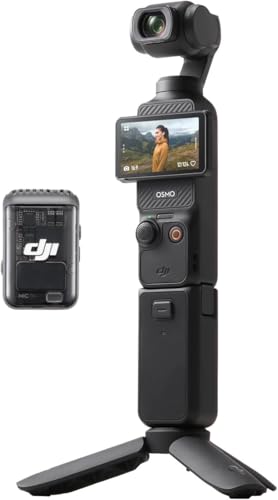
DJI Osmo Pocket 3 4K Gimbal Camcorder
Best for: portable vlogging with high-quality stabilization
- Video Resolution
- 4K
- Sensor Size
- 1-inch
- Maximum Frame Rate
- 120fps
- Display Size
- 2-inch
- Recommended Usage
- Photography, Vlogging
- Color
- Black
The DJI Osmo Pocket 3 Creator Combo is a compact vlogging camera featuring a 1-inch CMOS sensor and 4K resolution at 120fps. Its 2-inch rotating touchscreen and 3-axis mechanical stabilization ensure smooth, well-framed footage. The device weighs 6.31 ounces and measures 5.5 inches in width. It supports D-Log M color grading and stereo audio recording, making it a practical tool for content creators who prioritize image quality and portability.
- 1-inch CMOS sensor for enhanced clarity in low light
- 4K video resolution at up to 120fps
- 3-axis mechanical stabilization for smooth handheld shots
- 2-inch rotating touchscreen for flexible framing
- D-Log M and 10-bit color depth for advanced grading
- 2-inch display is smaller than typical external monitors
- 120fps maximum frame rate limits slow-motion options compared to higher-spec cameras
- 6.31-ounce weight adds bulk compared to ultra-lightweight smartphones
- You need reliable 3-axis stabilization for walking shots
- You want a compact device with a large 1-inch sensor
- You require D-Log M color profiles for post-production
- You prefer a full-sized camera with interchangeable lenses
- You need 8K video resolution for maximum detail
- You want a camera larger than 6.31 ounces for easier handling
Verdict: DJI Osmo Pocket 3 Creator Combo delivers high-quality 4K footage with a 1-inch sensor and robust stabilization. It fits creators who value portability and professional color grading in a pocket-sized body.
Specifications side by side
| Spec | Sony ZV-1 Compact 1-Inch Sensor Camera | DJI Osmo Pocket 3 4K Gimbal Camcorder |
|---|---|---|
| Video Resolution | 4K | 4K |
| Sensor Size | 1” | 1-inch |
| Maximum Frame Rate | – | 120fps |
| Display Size | 3.0” | 2-inch |
| Recommended Usage | Vlogging, Content Creation | Photography, Vlogging |
| Configuration | Body Only | – |
| Color | Black | Black |
| Display Feature | Touch Screen, Flip Screen | – |
| Intended Use | Video | – |
| Features | Touchscreen, HDR | – |
| Number of Axes | – | 3-Axis |
| Dimensions | 4.15 × 2.36 × 1.7 inches | 1.32 × 5.5 × 1.66 inches |
| Weight | 10.4 ounces | 6.31 ounces |
| Size | Compact | DJI Osmo Pocket 3 Creator Combo |
| Model | DCZV1/B | 6941565969903 |
Frequently asked questions
Which camera is better for solo vloggers who need image quality?
The Sony ZV-1 is the top choice for solo vloggers prioritizing image quality. It features a compact 1-inch sensor and a large aperture that handles low light well. Its dedicated autofocus system ensures your face stays sharp while you record. The flip screen makes framing yourself easier without needing an external monitor.
Does the DJI Osmo Pocket 3 have built-in stabilization?
Yes, the DJI Osmo Pocket 3 includes a 3-axis mechanical gimbal for robust stabilization. This keeps your 4K footage smooth even when you are walking or moving quickly. You do not need to rely on digital stabilization, which can crop your image. The mechanical movement provides professional-grade steadiness for handheld shooting.
How do the weights of these two camcorders compare?
The DJI Osmo Pocket 3 is lighter than the Sony ZV-1. It weighs just 6.31 ounces, making it highly portable for travel. The Sony ZV-1 weighs 10.4 ounces. While still compact, the Sony is slightly heavier due to its traditional camera body design. You should choose based on how much weight you want to carry.
What video resolution do both cameras support?
Both the Sony ZV-1 and the DJI Osmo Pocket 3 record 4K video. This resolution provides sharp detail for your content. The Sony ZV-1 also offers high-resolution stills with its 20.1MP sensor. The DJI model focuses on video with its 1-inch sensor, ensuring excellent color grading capabilities in your clips.
Which device has a flip screen for self-recording?
The Sony ZV-1 features a flip screen that helps you frame yourself easily. This is useful for solo vlogging where you need to see your composition. The DJI Osmo Pocket 3 has a rotating screen that can switch to vertical mode. Both designs help you manage your recording angle without external assistance.
Is the Sony ZV-1 suitable for content creation?
The Sony ZV-1 is recommended for vlogging and content creation. It includes features like touchscreen control and HDR support for better dynamic range. Its compact body fits in a pocket, making it easy to carry. The dedicated autofocus ensures you stay in focus while creating videos for social media or personal projects.
What are the dimensions of the DJI Osmo Pocket 3?
The DJI Osmo Pocket 3 measures 5.5 inches wide, 1.66 inches high, and 1.32 inches long. Its small form factor allows it to fit easily into bags or pockets. The compact size does not compromise its 1-inch sensor or 4K video capabilities. You get a powerful tool in a tiny package.


