As Amazon Associates, we earn from qualifying purchases. This means we may receive a small commission at no extra cost to you if you click through and make a purchase.
As an Amazon Associate we earn from qualifying purchases. Links on this page are affiliate links.
The sony fe 24 70mm f2 8 gm vs fe 200 600mm f 5 6 6 3 g comparison highlights two distinct Sony FE mount zooms. Both lenses feature Optical SteadyShot stabilization for handheld support. They share the same Sony E mount system. The main difference lies in their focal length and purpose. One is a standard zoom for general use, while the other is a super telephoto for distance. You need to match the spec sheet to your shooting distance.
Lens Type
Standard Zoom
Super Telephoto Zoom
Focal Length
24-70mm
200-600mm
Maximum Aperture
F2.8
f/5.6-6.3
Weight
1 pounds
4.66 pounds
Color
Black
White
Sensor Format
Full Frame
not listed
Choose the first if
- You need a versatile focal range for portraits, events, or street photography.
- You prioritize a lighter, more compact lens for extended handheld use.
- You require a constant wide aperture for low-light performance and background blur.
Choose the second if
- You shoot wildlife or sports from a significant distance.
- You need extreme reach without switching to a prime telephoto lens.
- You are less concerned with weight and size in exchange for magnification.
Verdict
The 24-70mm F2.8 GM II is the practical choice for photographers who need flexibility and speed in a manageable package. The 200-600mm f/5.6-6.3 G is the specialized tool for those who must capture subjects far away. Your decision depends entirely on whether you need a general-purpose lens or extreme reach.
Spec Comparison: Zoom Range and Weight
Zoom Range Utility
Edge: Tie
The Sony FE 24-70mm F2.8 GM II covers a standard zoom range from 24mm to 70mm. This focal length is ideal for general photography, portraits, and events where you need versatility in a compact package. In contrast, the Sony FE 200-600mm f/5.6-6.3 G is a super telephoto zoom. It starts at 200mm and extends to 600mm, designed specifically for distant subjects like wildlife or sports. You will not use the 24-70mm for long-range shooting, nor the 200-600mm for wide-angle landscape work. Each lens serves a completely different segment of the photographic spectrum.
Aperture Brightness
Edge: Sony FE 24-70mm F2.8 GM II
Aperture controls light intake and depth of field. The Sony FE 24-70mm F2.8 GM II offers a constant maximum aperture of f/2.8 across its entire zoom range. This allows for better performance in low light and more background blur. The Sony FE 200-600mm f/5.6-6.3 G has a variable maximum aperture. It starts at f/5.6 at the 200mm end and narrows to f/6.3 at 600mm. The wider aperture of the 24-70mm lens makes it superior for indoor events or dim environments. The 200-600mm lens requires more light or higher ISO settings for similar exposure.
Physical Weight
Edge: Sony FE 24-70mm F2.8 GM II
Portability is a key factor for many photographers. The Sony FE 24-70mm F2.8 GM II weighs approximately 1 pound (695 grams). It is the lightest F2.8 standard zoom in its class. The Sony FE 200-600mm f/5.6-6.3 G is significantly heavier, weighing 4.66 pounds. This substantial weight difference reflects the larger glass elements required for super telephoto reach. If you plan to handhold the lens for extended periods or travel light, the 24-70mm is much more manageable. The 200-600mm often benefits from a tripod or monopod due to its mass.
Autofocus Technology
Edge: Tie
Both lenses feature advanced autofocus systems tailored to their specific needs. The Sony FE 24-70mm F2.8 GM II utilizes four XD Linear Motors and a floating focus mechanism. This setup enables fast, precise tracking and supports high-speed shooting up to 30 frames per second. It also minimizes focus breathing for smooth video. The Sony FE 200-600mm f/5.6-6.3 G uses a Direct Drive Supersonic Wave Motor. This provides fast, quiet, and precise focus, which is critical for tracking moving subjects like birds or athletes. Both offer reliable performance, but the 24-70mm emphasizes speed for burst shooting.
Lens Construction Elements
Edge: Tie
Internal glass elements determine image quality and aberration control. The Sony FE 24-70mm F2.8 GM II includes two extreme aspherical elements and multiple ED and Super ED glass elements. These control aberrations to ensure sharp resolution even at f/2.8. The Sony FE 200-600mm f/5.6-6.3 G incorporates five ED glass elements and an aspherical element to reduce spherical aberration. It also uses Nano AR coating to suppress flare and ghosting. Both lenses use specialized glass to maintain clarity. The 24-70mm focuses on high contrast at high spatial frequencies, while the 200-600mm prioritizes reducing flare at long distances.
Choose the lens for your specific needs
Wedding and event photographers needing versatility
Our pick: Sony FE 24-70mm F2.8 GM II
You need a standard zoom for varied shooting distances. This lens covers 24-70mm with a constant f/2.8 aperture. It weighs just 1 pound, making it easy to carry all day. The fast autofocus tracks subjects up to 30 frames per second. You get high resolution and smooth bokeh for portraits and group shots without switching lenses.
Wildlife shooters requiring long reach
Our pick: Sony 200-600mm f/5.6-6.3 G OSS White
You need to capture distant subjects clearly. This super telephoto zoom extends to 600mm. It uses five ED glass elements to reduce flare and ghosting. The direct drive motor ensures fast and quiet focusing. Although it weighs 4.66 pounds, the reach allows you to photograph animals or sports from a safe distance with sharp detail throughout the zoom range.
Travelers prioritizing compact size and weight
Our pick: Sony FE 24-70mm F2.8 GM II
You want a lightweight lens that fits easily in your bag. This option is the lightest in its class at just 1 pound. It measures 8.39 inches in length, significantly shorter than the alternative. The compact design allows you to shoot diverse scenes from wide angles to short telephoto without carrying heavy gear. You gain mobility without sacrificing image quality.

Sony FE 24-70mm F2.8 GM II
Best for: portable standard zoom coverage
- Lens Mount
- Sony FE
- Focal Length
- 24-70mm
- Maximum Aperture
- F2.8
- Sensor Format
- Full Frame
- Lens Type
- Standard Zoom
- Image Stabilization
- OSS
This is a full-frame standard zoom lens with a constant f/2.8 maximum aperture and 24-70mm focal length. It features Optical SteadyShot (OSS) image stabilization and weighs 1 pound. The lens uses four XD Linear Motors for fast autofocus. It is designed for photographers who need sharp resolution and smooth bokeh in a compact, lightweight package for stills and video.
- Constant f/2.8 maximum aperture across the zoom range
- Optical SteadyShot (OSS) image stabilization
- Four XD Linear Motors for precise autofocus
- Weighs 1 pound, reducing fatigue during handheld use
- Two XA and four ED/Super ED glass elements for high resolution
- 24-70mm focal length is shorter than the 200-600mm lens on this list
- Maximum aperture of f/2.8 is wider than the f/5.6-6.3 range of the other lens
- Fixed focal length range limits reach for distant subjects
- You need a versatile focal range for portraits and events
- You prioritize a lightweight lens for travel or handheld shooting
- You require fast autofocus performance for action or video
- You need to shoot distant wildlife or sports
- You prefer a longer reach without changing lenses
- You want a constant aperture narrower than f/2.8
Verdict: Sony FE 24-70mm F2.8 GM II is a lightweight standard zoom for shooters who value portability and constant aperture speed. It suits professionals who need sharp images and reliable autofocus in a compact form factor.
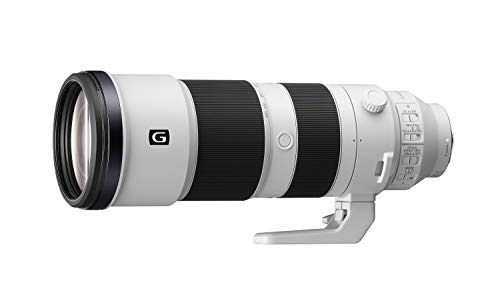
Sony 200-600mm f/5.6-6.3 G OSS White
Best for: wildlife and sports photography
- Lens Mount
- Sony FE
- Focal Length
- 200-600mm
- Maximum Aperture
- f/5.6-6.3
- Lens Type
- Super Telephoto Zoom
- Image Stabilization
- OSS
- Color
- White
This Sony super telephoto zoom lens offers a focal range of 200-600mm for distant subjects. It features a maximum aperture of f/5.6-6.3 and includes Optical SteadyShot (OSS) image stabilization. The build weighs 4.66 pounds and measures 20.1 inches long. It suits wildlife and sports photographers who need reach. The lens uses a Direct Drive Supersonic Wave Motor for focus.
- 200-600mm super telephoto zoom range
- Optical SteadyShot (OSS) image stabilization
- Direct Drive Supersonic Wave Motor for fast focus
- 5x ED glass elements reduce flare and ghosting
- Maximum aperture is f/5.6-6.3, limiting light intake
- Weight of 4.66 pounds adds bulk to your setup
- Length of 20.1 inches requires careful handling
- You shoot wildlife or sports from a distance
- You need a long focal range on a Sony FE mount
- You value optical stabilization for handheld shots
- You prefer a compact and lightweight lens
- You need a fast constant aperture for low light
- You shoot primarily indoors or in tight spaces
Verdict: Sony FE 200-600mm f/5.6-6.3 G OSS Lens is a heavy, long-reach tool for distant subjects. It fits photographers who prioritize focal length and stabilization over speed and portability.
Specifications side by side
| Spec | Sony FE 24-70mm F2.8 GM II | Sony 200-600mm f/5.6-6.3 G OSS White |
|---|---|---|
| Lens Mount | Sony FE | Sony FE |
| Focal Length | 24-70mm | 200-600mm |
| Maximum Aperture | F2.8 | f/5.6-6.3 |
| Sensor Format | Full Frame | – |
| Lens Type | Standard Zoom | Super Telephoto Zoom |
| Image Stabilization | OSS | OSS |
| Color | Black | White |
| Dimensions | 8.39 × 4.72 × 4.72 inches | 20.1 × 7.28 × 7.91 inches |
| Weight | 1 pounds | 4.66 pounds |
| Size | Lens Only | – |
| Model | SEL2470GM2 | SEL200600G |
Frequently asked questions
Which lens is lighter and easier to carry?
The Sony FE 24-70mm F2.8 GM II is significantly lighter. It weighs only 1 pound, making it ideal for all-day shooting. In contrast, the Sony FE 200-600mm f/5.6-6.3 G OSS weighs 4.66 pounds. The telephoto lens is much heavier due to its long glass. You should choose the 24-70mm if portability is your top priority.
What is the difference in zoom range between these lenses?
The zoom ranges are completely different. The FE 24-70mm covers a standard focal length from 24mm to 70mm. This is useful for general photography and portraits. The FE 200-600mm offers a super telephoto range from 200mm to 600mm. You use the latter for distant subjects like wildlife or sports, not for general shots.
Do both lenses have image stabilization?
Yes, both lenses feature Optical SteadyShot stabilization. This helps you take sharper handheld photos in lower light or at longer focal lengths. The stabilization works across the entire zoom range of each lens. This feature is built into the optical design of both the 24-70mm and the 200-600mm models.
Which lens has a faster maximum aperture?
The Sony FE 24-70mm F2.8 GM II has a much faster aperture. It maintains a constant f/2.8 maximum aperture throughout its zoom range. The FE 200-600mm has a variable aperture of f/5.6-6.3. The f/2.8 aperture lets in more light, allowing for better performance in dim environments and shallower depth of field.
Are these lenses compatible with the same camera mounts?
Yes, both lenses use the Sony E mount. This means they fit the same range of Sony mirrorless cameras. You do not need different adapters or mounts for either lens. They are designed to work seamlessly with the Sony E mount system, ensuring full electronic communication and autofocus support.
Which lens is better for wildlife photography?
The Sony FE 200-600mm f/5.6-6.3 G OSS is better for wildlife. Its 200-600mm focal length allows you to capture distant animals clearly. The 24-70mm lens lacks the reach needed for most wildlife scenarios. You should choose the telephoto lens if your primary subject is far away.
What is the physical size difference between the two lenses?
The size difference is substantial. The 24-70mm lens measures 4.72 inches in width and 8.39 inches in length. The 200-600mm lens is much larger, measuring 7.28 inches in width and 20.1 inches in length. The telephoto lens is longer and wider, reflecting its specialized long-reach design.


