As Amazon Associates, we earn from qualifying purchases. This means we may receive a small commission at no extra cost to you if you click through and make a purchase.
As an Amazon Associate we earn from qualifying purchases. Links on this page are affiliate links.
Understanding Lens Mounts for Mirrorless Cameras
A lens mount is the physical interface that connects a camera body to a lens. It ensures proper alignment, electrical communication, and mechanical stability. Without a compatible mount, you cannot attach a lens to your camera. This spec is critical for every buyer because it determines which lenses you can use with your system.
The lens mount explained involves understanding the specific standard your camera uses. Different manufacturers have created proprietary mounts to optimize performance for their sensors. For example, Sony uses the E-mount. Nikon utilizes the Z-mount. Canon offers the RF-mount for its mirrorless line and the EF-mount for its DSLRs. Each mount has unique flange distance and diameter specifications that affect lens design and optical quality.
When shopping for gear, you will see these labels on product listings. Look for terms like Sony E, Nikon Z, Canon RF, or Canon EF. These identifiers tell you exactly which ecosystem the lens belongs to. You must match the mount of the lens to the mount of your camera body. If they do not match, the lens will not fit.
Why does this matter to you? It defines your future investment. Once you choose a camera system, you are locked into its lens lineup. Some mounts have a vast selection of native lenses. Others may require adapters for older glass, which can limit autofocus speed or image stabilization features. Understanding the mount helps you plan your lens purchases over time. It also prevents you from buying incompatible equipment by mistake. Always check the mount type before adding any lens to your cart. This simple step ensures compatibility and protects your budget from wasted purchases on gear that will not work with your camera.
Compare Sony E, Nikon Z, Canon RF, Canon EF
Sony E
The Sony E mount is the standard interface for Sony’s mirrorless lineup. It supports both APS-C and full-frame sensors. You get access to a vast library of native lenses from Sony and third-party manufacturers. The mount is relatively compact, allowing for smaller camera bodies. This ecosystem suits users who want flexibility in lens choice. For example, the Sony Alpha a6400 uses this mount for compact vlogging. The Sony Alpha 7 V offers full-frame performance on the same mount. You benefit from fast autofocus systems and widespread availability. The trade-off is that you must stay within the Sony ecosystem for native lenses.
Nikon Z
Nikon Z is the mount for Nikon’s modern mirrorless cameras. It features a large diameter and short flange distance. This design allows for sharp optics and fast communication with the camera body. You can use Nikon’s professional-grade lenses with this mount. The Nikon Z 30 is a compact body using this mount, ideal for video creators. The Nikon Z 8 provides high-resolution full-frame shooting on the same mount. You get robust build quality and excellent lens options. The system is growing rapidly with new releases. The trade-off is that you need to invest in Nikon Z lenses for the best performance. Older F-mount lenses require adapters.
Canon RF
Canon RF is the mount for Canon’s current mirrorless cameras. It replaces the older EF mount for new bodies. The RF mount has a larger diameter and shorter back focus distance. This allows for faster lenses and better optical performance. You get access to Canon’s latest lens technology. The Canon EOS R50 uses this mount for entry-level users. It is designed for portability and ease of use. You benefit from advanced autofocus and video features. The ecosystem is expanding with new lenses and bodies. The trade-off is that you cannot use EF lenses without an adapter. You must commit to the RF lens lineup for native support.
Canon EF
Canon EF is the legacy mount for Canon’s DSLR cameras. It is still used by some mirrorless bodies with adapters. The mount has a long history and a huge lens selection. You can find many affordable lenses on the used market. However, it is not the native mount for new Canon mirrorless cameras. You need an adapter to use EF lenses on RF bodies. This adds bulk and may affect autofocus speed. The mount is not ideal for new buyers seeking modern features. It is best for those who already own EF lenses. You get compatibility but lose the benefits of a native mount. The trade-off is extra weight and potential performance limits.
Who Needs This Lens Mount Info
Who needs it
You need to pay close attention to the lens mount if you plan to build a system around interchangeable lenses. The mount dictates which lenses fit your camera body. Sony E, Nikon Z, Canon RF, and Canon EF are distinct interfaces. They are not cross-compatible without adapters, and even with adapters, performance may vary. If you intend to buy multiple lenses over time, the mount determines your future options. A wide selection of native lenses offers better autofocus, faster communication, and full feature support. You should prioritize the ecosystem that offers the glass you want. The mount is the foundation of your photography setup. Choosing the wrong one limits your growth. You must match the mount to the camera body you are purchasing. This spec is critical for long-term compatibility and lens availability.
Who can skip it
You can largely ignore the specific mount details if you are using a fixed-lens camera or a smartphone. These devices have integrated optics that cannot be changed. The mount is irrelevant for point-and-shoot users who prioritize convenience over customization. You can also skip deep analysis if you are renting equipment for a single shoot. The rental house provides compatible lenses regardless of the mount. Focus on sensor size, resolution, and video capabilities instead. These factors impact image quality more directly than the mount interface. If you are buying a kit with one lens, the mount is already selected. You do not need to research third-party lens availability. Prioritize weight, battery life, and ease of use. The mount matters only when you plan to expand your gear collection later.
Lens Mount Glossary
Lens Mount
The physical and electronic interface connecting a camera body to a lens. It ensures proper alignment and data transfer for autofocus and aperture control.
Sensor Format
The physical size of the image sensor, such as full-frame or APS-C. It determines the field of view and compatibility with specific lens mounts.
Flange Distance
The distance from the lens mount flange to the sensor plane. Shorter flange distances allow for more compact camera designs and wider adapter options.
Autofocus Technology
The system used to focus the lens automatically, such as phase detection or contrast detection. It impacts shooting speed and accuracy for moving subjects.
Video Resolution
The maximum video quality the camera can record, like 4K or 1080p. This spec affects the detail and clarity of your moving images.
Included Lens
A lens provided with the camera body, often a kit lens. It offers a starting point for photography but may not cover all focal lengths.
Recommended Usage
The intended primary use case for the camera, such as sports, portrait, or travel. This guides you toward features that matter most for your needs.
Color Profile
The color science or encoding used to render images. It influences how colors appear straight out of the camera without post-processing.
| # | Product | Best for | Price |
|---|---|---|---|
| 1 | Sony Alpha a6400 with 16-50mm Lens | compact vlogging and hybrid shooting | |
| 2 | Nikon Z 30 Compact Mirrorless Camera Body | vloggers and live streamers | |
| 3 | Canon EOS R50 with 18-45mm Lens | beginner vloggers and social creators | |
| 4 | Sony Alpha 7 V with 24-70mm f/2.8 | Full-frame Sony E mount users needing speed | |
| 5 | Nikon Z 8 Full-Frame Hybrid Camera | Professional video and high-resolution photography | |
| 6 | Canon EOS R50 White Mirrorless Camera | portable content creation and travel photography |
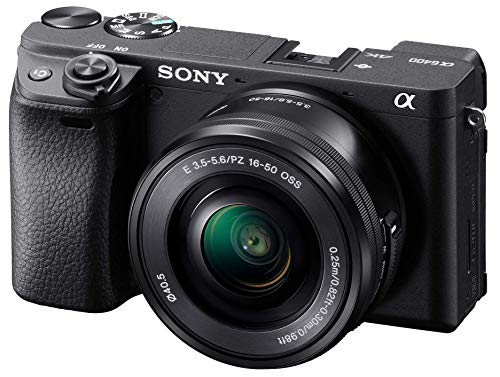
Sony Alpha a6400 with 16-50mm Lens
Best for: compact vlogging and hybrid shooting
- Lens Mount
- Sony E
- Sensor Format
- APS-C
- Sensor Resolution
- 24.2 MP
- Max Video Resolution
- 4K
- Continuous Shooting Speed
- Up to 11Fps
- Configuration
- with 16-50mm Lens
The Sony a6400 is a compact APS-C mirrorless camera with a Sony E lens mount. It features a 24.2 MP sensor and shoots 4K video. The kit includes a 16-50mm lens. You get 11 fps continuous shooting and a tiltable LCD screen. This setup suits vloggers and hybrid shooters who need portability and fast autofocus for stills or video.
- 24.2 MP APS-C sensor for high-resolution images
- 4K video recording capability
- 11 fps continuous shooting speed
- Tiltable LCD screen for flexible angles
- Sony E mount for wide lens options
- APS-C sensor format is smaller than full-frame models
- 11 fps burst rate is lower than 30 fps competitors
- Included 16-50mm lens has a limited focal range
- You want a lightweight camera with a Sony E mount
- You need 4K video and fast autofocus for vlogging
- You prefer a compact body with a tiltable screen
- You require full-frame sensor resolution
- You need burst shooting speeds above 11 fps
- You prefer a fixed lens camera
Verdict: Sony a6400 APS-C Mirrorless Camera offers a balanced mix of speed and portability for content creators. It fits users who prioritize the Sony E ecosystem and need a reliable tool for both video and stills without the bulk of larger bodies.

Nikon Z 30 Compact Mirrorless Camera Body
Best for: vloggers and live streamers
- Lens Mount
- Nikon Z
- Max Video Resolution
- 4K
- Configuration
- Body Only
- Color
- Black
- Intended Use
- Video
- Dimensions
- 5.01 × 2.89 × 2.34 inches
The Nikon Z 30 is a body-only mirrorless camera built for vloggers and streamers. It records crisp 4K video and features a flip-out touchscreen selfie monitor. The camera includes a built-in stereo microphone with adjustable sensitivity. You can stream Full HD 60p via USB-C or 4K 30p over HDMI. It uses the Nikon Z lens mount, allowing you to expand your setup with NIKKOR Z lenses over time.
- Records 4K resolution video
- Flip-out touchscreen selfie monitor
- Built-in stereo microphone with adjustable sensitivity
- Full HD 60p streaming over USB-C
- Compatible with Nikon Z lens mount
- Max video resolution is 4K, which is lower than the 8K or higher options found on other cameras in this guide
- Body-only configuration requires you to purchase a lens separately
- Dimensions are 2.89 x 2.34 x 5.01 inches, making it bulkier than the Sony a6400
- You need a dedicated video camera with a flip-out screen
- You want to stream directly from the camera via USB-C
- You already own Nikon Z lenses or plan to build a Z system
- You need a camera with a built-in lens for immediate use
- You require higher video resolution than 4K
- You prefer a smaller APS-C body like the Sony a6400
Verdict: The Nikon Z 30 Compact Video Camera fits creators who prioritize video specs and streaming features. It is a solid choice for vloggers who need a flip-out screen and USB-C streaming capabilities.
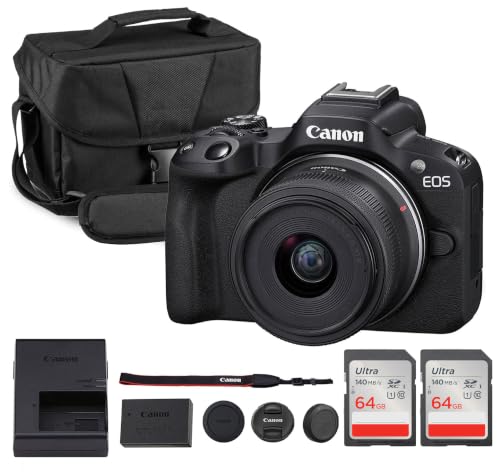
Canon EOS R50 with 18-45mm Lens
Best for: beginner vloggers and social creators
- Lens Mount
- Canon RF
- Sensor Format
- APS-C
- Max Video Resolution
- 4K
- Configuration
- Kit with 18-45mm Lens
- Autofocus Technology
- Dual Pixel AF
- Color
- Black
The Canon EOS R50 is an APS-C mirrorless camera with a Canon RF mount. It records oversampled 4K video using Dual Pixel AF II for subject tracking. The kit includes an 18-45mm lens and a touchscreen display. This setup suits beginners who need vertical video support and creative assist tools for social media content creation.
- APS-C sensor with Canon RF mount
- 4K video with Dual Pixel AF II
- Includes 18-45mm zoom lens
- Touchscreen display with vertical video support
- APS-C sensor limits resolution compared to full-frame rivals
- 2-pound weight is heavier than compact competitors
- 18-45mm lens offers limited zoom range
- You want a beginner-friendly Canon RF system
- You need 4K video with reliable autofocus
- You shoot vertical content for social media
- You require full-frame sensor resolution
- You need a lightweight body under 1 pound
- You prefer a longer native zoom range
Verdict: Canon EOS R50 APS-C Kit is a solid entry point for Canon RF users who prioritize 4K video and ease of use over compact size or full-frame resolution.

Sony Alpha 7 V with 24-70mm f/2.8
Best for: Full-frame Sony E mount users needing speed
- Lens Mount
- Sony E
- Sensor Format
- Full-Frame
- Sensor Resolution
- 33.0-megapixel
- Max Video Resolution
- 4K
- Continuous Shooting Speed
- 30 fps
- Image Processor
- BIONZ XR2
The Sony Alpha 7 V is a full-frame mirrorless camera with a 33.0-megapixel sensor and 30 fps continuous shooting. It uses the Sony E lens mount, giving you access to a wide range of compatible optics. The body-only configuration lets you pair it with lenses that match your specific needs. Its 4K video capability and AI autofocus support both stills and motion work.
- 30 fps blackout-free continuous shooting with AF/AE tracking
- 33.0-megapixel partially stacked Exmor RS CMOS sensor
- Sony E lens mount for broad lens compatibility
- 4K 120p video recording capability
- Up to 16 stops of dynamic range
- 33.0-megapixel resolution is lower than the 45.7-megapixel sensor in the Nikon Z 8
- APS-C crop mode reduces effective resolution to 19.4 megapixels
- Full-frame body is bulkier than the compact APS-C options like the Canon EOS R50
- You need a full-frame sensor for better low-light performance
- You want to use the extensive Sony E lens ecosystem
- You require high-speed 30 fps shooting for action
- You prefer a smaller APS-C sensor for lighter gear
- You want a higher resolution than 33.0 megapixels
- You are looking for a budget-friendly entry-level body
Verdict: The Sony Alpha 7 V Full-Frame Camera offers professional-grade speed and resolution for Sony E mount users. It suits photographers who prioritize high-speed shooting and full-frame image quality over compact size.

Nikon Z 8 Full-Frame Hybrid Camera
Best for: Professional video and high-resolution photography
- Lens Mount
- Nikon Z
- Sensor Format
- Full-Frame
- Sensor Resolution
- 45.7MP
- Max Video Resolution
- 8K
- Continuous Shooting Speed
- 120 fps
- Configuration
- Body Only
The Nikon Z 8 is a professional full-frame mirrorless camera with a 45.7MP stacked CMOS sensor. It supports internal 8K/60p and 4K/120p video recording. The body weighs 1.81 pounds and measures 5.67 by 4.67 by 1.5 inches. You get 120 fps continuous shooting and advanced autofocus detection. This model suits users needing high-resolution stills and high-frame-rate video in a robust Nikon Z mount system.
- 45.7MP stacked CMOS sensor for high detail
- Internal 8K/60p and 4K/120p video recording
- 120 fps continuous shooting speed
- EXPEED 7 processing engine for fast performance
- Heavier build at 1.81 pounds compared to lighter mirrorless options
- Larger dimensions (5.67 x 4.67 x 1.5 inches) than compact cameras
- Body-only configuration requires separate lens purchase
- You need high-resolution 45.7MP stills and 8K video
- You want fast 120 fps continuous shooting for action
- You prefer a professional full-frame Nikon Z mount system
- You prioritize a lightweight and compact camera body
- You want a kit with a lens included
- You need the smallest possible mirrorless form factor
Verdict: Nikon Z 8 Full-Frame Camera delivers professional-grade 8K video and 45.7MP resolution for users who prioritize image quality and speed over portability. It fits photographers and videographers who need robust Nikon Z mount performance and do not mind the heavier, larger body.

Canon EOS R50 White Mirrorless Camera
Best for: portable content creation and travel photography
- Lens Mount
- Canon RF
- Sensor Format
- APS-C
- Sensor Resolution
- 24.2 MP
- Max Video Resolution
- 4K
- Continuous Shooting Speed
- Up to 15 fps
- Configuration
- Body Only
The Canon EOS R50 is a compact APS-C mirrorless camera with a 24.2 MP sensor and RF mount. It shoots 4K video and offers 15 fps continuous shooting. This body-only model suits vloggers and content creators who need a lightweight tool. It features Dual Pixel CMOS AF II for reliable subject tracking. You get a practical hybrid camera for both photo and video work.
- 24.2 MP APS-C CMOS sensor
- 4K uncropped video at 30 fps
- 15 fps continuous shooting with electronic shutter
- Dual Pixel CMOS AF II with subject tracking
- Compact and lightweight at 13.3 ounces
- APS-C sensor is smaller than full-frame options
- 15 fps burst speed is lower than 30 fps competitors
- Body-only configuration excludes included lenses
- You want a lightweight RF mount camera
- You need reliable autofocus for video
- You prefer compact gear for travel
- You require full-frame sensor size
- You need high-speed 30 fps burst shooting
- You prefer a kit with included lenses
Verdict: The Canon EOS R50 APS-C Mirrorless Camera fits vloggers and photographers who prioritize portability and reliable autofocus over maximum resolution or speed.
Specifications side by side
| Spec | Sony Alpha a6400 with 16-50mm Lens | Nikon Z 30 Compact Mirrorless Camera Body | Canon EOS R50 with 18-45mm Lens | Sony Alpha 7 V with 24-70mm f/2.8 | Nikon Z 8 Full-Frame Hybrid Camera | Canon EOS R50 White Mirrorless Camera |
|---|---|---|---|---|---|---|
| Sensor Format | APS-C | – | APS-C | Full-Frame | Full-Frame | APS-C |
| Sensor Resolution | 24.2 MP | – | – | 33.0-megapixel | 45.7MP | 24.2 MP |
| Max Video Resolution | 4K | 4K | 4K | 4K | 8K | 4K |
| Continuous Shooting Speed | Up to 11Fps | – | – | 30 fps | 120 fps | Up to 15 fps |
| Lens Mount | E Mount | NIKKOR Z | – | – | – | RF Mount |
| Configuration | with 16-50mm Lens | Body Only | Kit with 18-45mm Lens | – | Body Only | Body Only |
| Image Processor | – | – | – | BIONZ XR2 | EXPEED 7 | DIGIC X |
| Video Resolution | 4K | – | 4K | – | – | 4K |
| Recommended Usage | – | – | – | – | – | Vlogging, Photography & Video, Content Creation |
| Included Lens | 16-50mm Lens | – | 18-45mm Lens | – | – | – |
| Autofocus Technology | – | – | Dual Pixel AF | – | – | – |
| Color | Black | Black | Black | – | Black | White |
| Sensor Size | APS-C Sensor | – | APS-C Sensor | – | – | APS-C Sensor |
| Display Feature | Flip Screen | – | Touch Screen | – | – | – |
| Focal Length | 50mm | – | – | 24-70mm | – | – |
| Maximum Aperture | – | – | – | f/2.8 | – | – |
| Intended Use | Video | Video | Video | – | Video | Video |
| Features | – | – | Touchscreen | – | – | – |
| Recommended Use | – | – | – | – | – | Photo |
| Dimensions | 6.2 × 9.2 × 4.55 inches | 5.01 × 2.89 × 2.34 inches | 8 × 7 × 6 inches | – | 5.67 × 1.5 × 4.67 inches | 2.71 × 4.58 × 3.37 inches |
| Weight | 1.14 pounds | – | 2 pounds | – | 1.81 pounds | 13.3 ounces |
| Size | 6.2 x 9.2 x 4.55 inches | 4.90 | – | – | Body Only | – |
| Model | ILCE6400L/B | Z 30 | IPROEDI5811C012 | ILCE-7M5 | Z 8 FX | 5812C002 |
Frequently asked questions
Can I use Canon EF lenses on a Canon RF camera?
You can use Canon EF lenses on Canon RF bodies with an adapter. The Canon EOS R50 and R50 White models use the Canon RF mount. An adapter maintains autofocus and aperture control. This allows you to utilize your existing EF glass while shooting with modern mirrorless bodies like the R50.
What is the difference between Sony E and Nikon Z mounts?
Sony E and Nikon Z are distinct physical interfaces that do not share compatibility. Sony E supports APS-C and full-frame sensors, as seen in the Alpha a6400 and Alpha 7 V. Nikon Z is used in bodies like the Z 30 and Z 8. You must buy lenses specific to your chosen mount system.
Does the lens mount affect video quality?
The mount itself does not change video resolution or sensor size. However, it determines which lenses you can use. The Sony Alpha 7 V with Sony E mount offers 4K video. The Nikon Z 8 with Nikon Z mount records 8K video. Your lens choice impacts image quality, not the mount interface.
Is the Canon RF mount compatible with Nikon Z lenses?
No. The Canon RF mount and Nikon Z mount are not compatible. The Canon EOS R50 uses the Canon RF mount. The Nikon Z 30 and Z 8 use the Nikon Z mount. These mounts have different flange distances and electronic contacts. You cannot attach a Nikon lens directly to a Canon body.
Which mount is best for beginners?
The Canon RF mount is a strong option for beginners. The Canon EOS R50 offers a 24.2 MP APS-C sensor and Dual Pixel AF. It is lightweight at 13.3 ounces. The Sony E mount is also popular, with the a6400 providing 4K video and a flip screen. Both systems offer user-friendly controls and compact bodies.
Can I switch between Sony E and Canon RF mounts?
You cannot switch mounts on a single camera body. The Sony Alpha 7 V uses the Sony E mount. The Canon EOS R50 uses the Canon RF mount. These are fixed physical interfaces. To change systems, you need a new camera body and a new set of lenses for the new mount.