As Amazon Associates, we earn from qualifying purchases. This means we may receive a small commission at no extra cost to you if you click through and make a purchase.
As an Amazon Associate we earn from qualifying purchases. Links on this page are affiliate links.
When you compare the Insta360 vs DJI camcorder options, you find two distinct approaches to vlogging. Both cameras feature a 1-inch sensor and a 2-inch touchscreen display, ensuring sharp images and easy framing. The main difference lies in their video capabilities and stabilization. Insta360 offers 8K resolution with optical zoom, while DJI provides 4K at 120fps with mechanical gimbal stabilization. You must choose based on whether you prioritize resolution or motion smoothness.
Video Resolution
8K
4K
Maximum Frame Rate
60fps
120fps
Stabilization
not listed
3-Axis Mechanical
Zoom Capability
15× Zoom (6× lossless)
not listed
Sensor Size
1-inch
1-inch
Display Size
2-inch
2-inch
Choose the first if
- You need ultra-high resolution for detailed cropping or large displays.
- You want optical zoom to get closer to distant subjects without losing quality.
- You prioritize dynamic range and low-light noise reduction features.
Choose the second if
- You film active scenes like hiking or dancing and need smooth, shake-free footage.
- You want to capture slow-motion video at 120fps for dramatic effect.
- You need advanced autofocus tracking to keep yourself in frame while moving.
Verdict
Choose the Insta360 Luna Ultra if your priority is maximum resolution and optical zoom for static or distant shots. Select the DJI Osmo Pocket 3 if you need mechanical stabilization for handheld movement and high frame rates for slow-motion. Both cameras share similar sensor and display sizes, so your decision rests on stabilization and resolution needs.
Insta360 vs DJI Camcorder Specs
Video resolution
Edge: Insta360 Luna Ultra 8K Dual-Lens Camcorder
The Insta360 Luna Ultra records in 8K resolution at 30fps with HDR and Dolby Vision support. This high resolution allows for significant cropping and detail retention. The DJI Osmo Pocket 3 records in 4K resolution. It supports up to 120fps for smooth slow-motion footage. While the DJI offers higher frame rates, the Insta360 provides a much higher pixel count for static clarity and future-proofing. You get sharper stills from the Insta360, but the DJI handles fast motion better.
Zoom capabilities
Edge: Insta360 Luna Ultra 8K Dual-Lens Camcorder
Insta360 Luna Ultra features dual Leica lenses with up to 15x zoom range. It offers 6x lossless zoom on the telephoto lens for natural background blur. The DJI Osmo Pocket 3 does not list optical zoom capabilities in its specifications. It relies on digital zoom and its fixed lens. If you need to capture distant subjects or portraits with optical clarity, the Insta360 has a clear advantage. The DJI focuses on close-up vlogging without zoom flexibility.
Stabilization technology
Edge: DJI Osmo Pocket 3 4K Gimbal Camcorder
The DJI Osmo Pocket 3 includes advanced 3-axis mechanical stabilization. This hardware gimbal ensures smooth footage while you are moving, dancing, or hiking. The Insta360 Luna Ultra does not list mechanical gimbal stabilization in its key specs. It likely relies on electronic stabilization or its fixed lens design. If you plan to shoot while walking or in motion, the DJI offers superior physical stability. The Insta360 is better for static or tripod shots.
Color depth
Edge: DJI Osmo Pocket 3 4K Gimbal Camcorder
The DJI Osmo Pocket 3 supports 10-bit color depth and D-Log M. This allows for over one billion colors and advanced color grading in post-production. The Insta360 Luna Ultra supports HDR and Dolby Vision for rich colors and contrast. It does not specify 10-bit color depth in the provided data. If you need professional color grading flexibility, the DJI is the better choice. The Insta360 prioritizes in-camera HDR processing for immediate viewing.
Low-light performance
Edge: Insta360 Luna Ultra 8K Dual-Lens Camcorder
The Insta360 Luna Ultra captures up to 14 stops of dynamic range. It uses AI noise reduction for clear low-light results and features 4K60fps PureVideo for night scenes. The DJI Osmo Pocket 3 also has a 1-inch sensor for good low-light clarity. However, it does not specify dynamic range stops or AI noise reduction in the data. The Insta360 provides more detailed specifications for handling shadows and highlights in dark environments.
Physical dimensions
Edge: DJI Osmo Pocket 3 4K Gimbal Camcorder
The DJI Osmo Pocket 3 is described as pocket-sized and compact. Its height is 1.66 inches and width is 5.5 inches. The Insta360 Luna Ultra is larger, with a height of 6.07 inches and width of 1.99 inches. The DJI is more portable and easier to carry for travel. The Insta360 is bulkier due to its dual lens and zoom mechanism. If portability is your priority, the DJI is more convenient.
Which camcorder suits your vlogging style
You need maximum detail and zoom range
Our pick: Insta360 Luna Ultra 8K Dual-Lens Camcorder
The Insta360 Luna Ultra records in 8K resolution. This provides significantly more pixel data than 4K, allowing you to crop footage later without losing sharpness. It also features a 15x zoom range with 6x lossless zoom. The 1-inch sensor captures up to 14 stops of dynamic range. This helps preserve details in both bright highlights and dark shadows, making it ideal for complex lighting conditions.
You want smooth motion and slow motion
Our pick: DJI Osmo Pocket 3 4K Gimbal Camcorder
The DJI Osmo Pocket 3 features 3-axis mechanical stabilization. This hardware system keeps your footage steady while you move, hike, or dance. It also records 4K video at 120fps. This high frame rate allows you to create smooth slow-motion effects. The ActiveTrack 6.0 keeps your subject in focus automatically. This combination of stabilization and frame rate is best for action-heavy vlogging.
You need versatile color grading options
Our pick: DJI Osmo Pocket 3 4K Gimbal Camcorder
The DJI Osmo Pocket 3 supports D-Log M color profile with 10-bit color depth. This captures up to one billion colors. You get greater flexibility for color grading in post-production. The 1-inch CMOS sensor enhances clarity in low light. This setup is practical for creators who shoot sunrises or sunsets and want precise control over the final visual look of their videos.

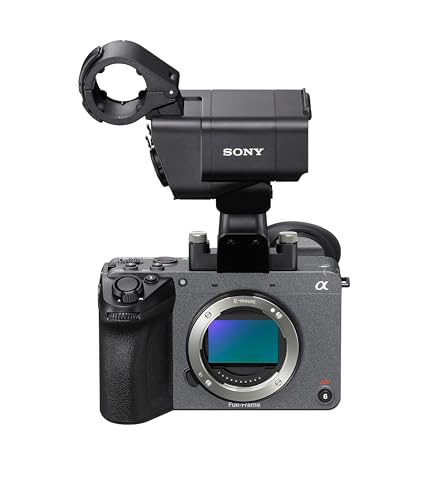
Insta360 Luna Ultra 8K Dual-Lens Camcorder
Best for: High-resolution vlogging with optical zoom
- Video Resolution
- 8K
- Sensor Size
- 1"
- Maximum Frame Rate
- 60fps
- Dynamic Range
- Up to 14 stops
- Display Size
- 2"
- Recommended Usage
- Photography, Vlogging
The Insta360 Luna Ultra is a vlogging camera featuring a 1-inch sensor and 8K video resolution. It includes a detachable 2-inch touchscreen and offers up to 15x zoom with a 14-stop dynamic range. You get 4K60fps for smooth motion and AI noise reduction for low-light clarity. This compact unit measures 1.99 by 1.3 by 6.07 inches. It suits creators who need high-resolution detail and optical zoom for portraits or distant subjects.
- 8K video resolution with HDR and Dolby Vision support
- 1-inch CMOS sensor for improved low-light performance
- Up to 15x zoom range with 6x lossless capability
- Up to 14 stops of dynamic range
- Detachable 2-inch touchscreen display
- Maximum frame rate is 60fps, which is lower than the 120fps capability of the DJI Osmo Pocket 3
- Physical dimensions are 6.07 inches in height, making it bulkier than the pocket-sized DJI Osmo Pocket 3
- You need 8K resolution for maximum detail in your vlogs
- You require optical zoom for portraits or distant subjects
- You shoot in low-light conditions and need AI noise reduction
- You prioritize high frame rates for slow-motion footage
- You want the most compact and pocketable form factor available
- You prefer a fixed screen over a detachable one
Verdict: The Insta360 Luna Ultra 1" 8K Vlogging Camera fits creators who prioritize resolution and zoom over portability. You should choose this if you need 8K clarity and optical zoom for professional-looking vlogs.
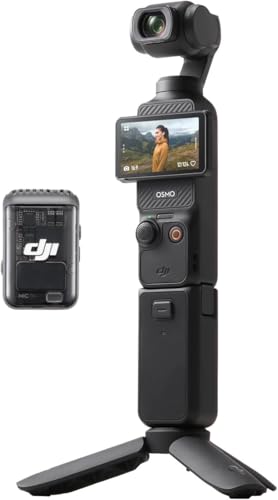
DJI Osmo Pocket 3 4K Gimbal Camcorder
Best for: portable vlogging and travel video
- Video Resolution
- 4K
- Sensor Size
- 1-inch
- Maximum Frame Rate
- 120fps
- Display Size
- 2-inch
- Recommended Usage
- Photography, Vlogging
- Color
- Black
The DJI Osmo Pocket 3 Creator Combo is a compact vlogging camera featuring a 1-inch CMOS sensor. It records 4K video at up to 120fps with 3-axis mechanical stabilization. The device includes a 2-inch rotating touchscreen and supports D-Log M color grading. Its small form factor, weighing 6.31 ounces, makes it portable for travel or daily use.
- 1-inch CMOS sensor for enhanced clarity
- 4K video resolution at 120fps
- 3-axis mechanical stabilization for smooth footage
- 2-inch rotating touchscreen display
- D-Log M and 10-bit color depth
- Max video resolution is 4K, lower than the 8K option on the Insta360 Luna Ultra
- Single stereo microphone limits audio capture compared to multi-mic setups
- You need a portable camera for vlogging
- You want 4K video with high frame rates
- You value mechanical stabilization for handheld shots
- You require 8K video resolution
- You need a larger sensor than 1-inch
- You prefer a camera with a removable lens system
Verdict: DJI Osmo Pocket 3 Creator Combo fits vloggers who prioritize portability and stabilization over maximum resolution. It delivers smooth 4K footage in a pocket-sized body.
Specifications side by side
| Spec | Insta360 Luna Ultra 8K Dual-Lens Camcorder | DJI Osmo Pocket 3 4K Gimbal Camcorder |
|---|---|---|
| Video Resolution | 8K | 4K |
| Sensor Size | 1" | 1-inch |
| Maximum Frame Rate | 60fps | 120fps |
| Dynamic Range | Up to 14 stops | – |
| Display Size | 2" | 2-inch |
| Recommended Usage | Photography, Vlogging | Photography, Vlogging |
| Color | Cosmic Black | Black |
| Display Feature | Touch Screen | – |
| Features | Touchscreen | – |
| Number of Axes | – | 3-Axis |
| Dimensions | 1.3 × 1.99 × 6.07 inches | 1.32 × 5.5 × 1.66 inches |
| Weight | – | 6.31 ounces |
| Model | CINSABTA | 6941565969903 |
| Size | – | DJI Osmo Pocket 3 Creator Combo |
Frequently asked questions
Which camcorder is better for travel vlogging?
The DJI Osmo Pocket 3 is the better choice for travel. It features a compact design that fits easily into a pocket. Its 3-axis gimbal stabilization ensures smooth footage while you walk. The Insta360 Luna Ultra is larger and heavier, making it less convenient for on-the-go shooting.
Does the Insta360 Luna Ultra have optical zoom?
Yes, the Insta360 Luna Ultra includes optical zoom capabilities. This allows you to get closer to your subject without losing image quality. Optical zoom is distinct from digital zoom, which crops the sensor. This feature is useful for vlogging where you need to maintain distance from your background.
What sensor size do both cameras share?
Both the Insta360 Luna Ultra and the DJI Osmo Pocket 3 use a 1-inch sensor. A larger sensor generally captures more light and produces better image quality in low-light conditions. This shared specification means both cameras can deliver sharp images with good dynamic range for their respective resolutions.
Is the DJI Osmo Pocket 3 heavy to carry?
No, it is quite light. The DJI Osmo Pocket 3 weighs only 6.31 ounces. This lightweight build makes it comfortable to hold for extended periods. You can easily carry it in a bag or pocket without adding significant bulk to your travel gear compared to larger camcorders.
Which camera records in 8K resolution?
The Insta360 Luna Ultra records in 8K resolution. This provides significantly more detail than 4K, allowing you to crop video in post-production while retaining sharpness. The DJI Osmo Pocket 3 records in 4K, which is sufficient for most standard sharing platforms but offers less flexibility for heavy editing.
Does the Insta360 Luna Ultra have a touchscreen?
Yes, the Insta360 Luna Ultra features a touchscreen display. This allows you to tap to focus or change settings quickly while framing your shot. The touch interface makes it easier to operate the camera without needing to navigate through complex menus using physical buttons alone.