As Amazon Associates, we earn from qualifying purchases. This means we may receive a small commission at no extra cost to you if you click through and make a purchase.
As an Amazon Associate we earn from qualifying purchases. Links on this page are affiliate links.
You are deciding between the dji rsc 2 pro combo vs rs 2 combo. Both are three-axis gimbals for DSLR and mirrorless cameras. They share Manfrotto and Arca-Swiss mounting compatibility. The main difference lies in build and capacity. The RSC 2 is compact and foldable. The RS 2 uses carbon fiber arms and offers a higher payload. Your choice depends on your camera weight and portability needs.
Payload Capacity
3 kg
10 lbs
Weight
6.94 pounds
2.87 pounds
Display
1-inch OLED
1.4-inch full-color touchscreen
Construction
Foldable design
Carbon fiber axis arms
Choose the first if
- You need a gimbal that folds smaller than an A5 sheet for easy transport.
- You require a 14-hour battery runtime for long shooting sessions.
- You prefer a manual control interface with a dedicated OLED screen.
Choose the second if
- You use heavy camera setups that benefit from the higher 10 lb payload.
- You want a lighter gimbal to reduce fatigue during handheld use.
- You prefer adjusting settings via a full-color touchscreen.
Verdict
Choose the RSC 2 Pro Combo if portability and battery life are your top priorities. The RS 2 Combo is better for users with heavier gear who value a lighter carbon fiber build. Both models support the same range of DSLR and mirrorless cameras.
Build and Capacity Comparison
Build material
Edge: DJI RS 2 Combo Carbon Fiber Gimbal
The DJI RS 2 Combo uses a monocoque carbon fiber construction for its axis arms. This material choice adds significant strength while keeping the unit remarkably light at 2.87 pounds. The DJI RSC 2 Pro Combo does not list its specific frame material in the provided data. However, it is described as having a foldable design that is compact for storage. Carbon fiber is generally preferred for professional rigs due to its stiffness-to-weight ratio, which helps maintain stability under load. If build quality and material prestige matter to you, the RS 2 Combo has a clear advantage here.
Payload capacity
Edge: DJI RS 2 Combo Carbon Fiber Gimbal
Payload capacity determines how heavy your camera and lens combination can be. The DJI RS 2 Combo supports a tested payload of 10 pounds. This is a high capacity for a gimbal of its size. The DJI RSC 2 Pro Combo has a listed payload capacity of 3 kg, which converts to approximately 6.6 pounds. If you are using a heavy DSLR body with a large telephoto lens, the RS 2 Combo can handle the weight more comfortably. The RSC 2 is suitable for lighter mirrorless setups or smaller DSLRs. The RS 2 Combo wins for heavy gear.
Display interface
Edge: DJI RS 2 Combo Carbon Fiber Gimbal
Both gimbals feature built-in screens for control, but they differ in size and type. The DJI RSC 2 Pro Combo includes a 1-inch OLED screen. This display provides essential information and control right at your fingertips. The DJI RS 2 Combo features a larger 1.4-inch full-color touchscreen. The larger size and color capability on the RS 2 allow for quicker adjustments and easier access to features like ActiveTrack 3.0 without using your phone. For users who prefer direct control over a mobile app, the RS 2 Combo offers a more robust interface.
Portability and size
Edge: DJI RSC 2 Pro Combo
Portability is a key factor for travel and location shoots. The DJI RSC 2 Pro Combo is designed to be foldable. When folded, it is smaller than a sheet of A5 paper, making it highly portable. Its dimensions are 15.7 inches in length when unfolded, and it weighs 6.94 pounds. The DJI RS 2 Combo is not described as foldable. It measures 10.2 inches in length and weighs 2.87 pounds. While the RS 2 is lighter, the RSC 2’s foldable nature makes it easier to pack into tight spaces or carry for extended periods. The RSC 2 wins for compact storage.
Battery runtime
Edge: DJI RSC 2 Pro Combo
Battery life affects how long you can shoot before needing to recharge. The DJI RSC 2 Pro Combo supports fast charging and provides a runtime of 14 hours. This is a substantial amount of power for a full day of shooting. The DJI RS 2 Combo does not list its specific battery runtime in the provided data. Without this number, we cannot directly compare the endurance of the two units. However, the 14-hour claim for the RSC 2 is a strong practical advantage for long events. The RSC 2 has the edge due to known specs.
Choose the right gimbal for your needs
Heavy lens shooters needing max stability
Our pick: DJI RS 2 Combo Carbon Fiber Gimbal
The RS 2 Combo supports a 10 lb payload, which is significantly higher than the RSC 2's 3 kg limit. Its carbon fiber construction keeps the unit lightweight at 2.87 pounds despite this strength. You get a 1.4-inch touchscreen for quick access to ActiveTrack 3.0. This setup handles heavy camera bodies and long zoom lenses with greater torque and stability.
Travelers prioritizing compact portability
Our pick: DJI RSC 2 Pro Combo
The RSC 2 Pro Combo folds to a size smaller than A5 paper, making it highly portable. It includes a 1-inch OLED screen for control. The battery lasts 14 hours, allowing for extended shooting sessions without frequent recharges. While heavier at 6.94 pounds, its foldable design reduces bulk in your gear bag for easier transportation on location.
Users wanting precise manual balancing
Our pick: DJI RS 2 Combo Carbon Fiber Gimbal
The RS 2 Combo features a fine-tuning balancing knob, allowing you to achieve exact balance for your specific camera setup. This dual-layer plate supports both Manfrotto and Arca-Swiss standards. The carbon fiber arms provide a rigid structure that maintains this balance during movement. You can integrate the gimbal with sliders or jibs for professional filmmaking workflows.

DJI RSC 2 Pro Combo
Best for: Heavy camera setups and long battery life
- Payload Capacity
- 3 kg
- Camera Compatibility
- DSLR, mirrorless
- Number of Axes
- 3-axis
- Display Feature
- 1-inch OLED
- Battery Runtime
- 14 hours
- Color
- Black
The DJI RSC 2 Pro Combo is a 3-axis gimbal stabilizer designed for DSLR and mirrorless cameras. It features a 1-inch OLED screen for control and supports payloads up to 3 kg. The device offers a 14-hour battery runtime and includes a foldable design that fits within A5 paper dimensions when collapsed. It uses the Titan Stabilization Algorithm to handle micromovements and stabilize heavier lenses.
- 14-hour battery runtime with fast charging support
- 1-inch built-in OLED screen for direct control
- 3 kg payload capacity for heavy camera setups
- Foldable design smaller than A5 paper when stored
- Titan Stabilization Algorithm for smooth footage
- Heavier build at 6.94 pounds compared to lighter competitors
- Lower video capture resolution listed at 2K DCI 1080p
- Maximum width of 7.28 inches may limit compactness
- You need a gimbal that supports payloads up to 3 kg
- You prefer direct control via a built-in OLED screen
- You require a 14-hour battery runtime for long shoots
- You prioritize the lightest possible portable gimbal
- You need support for 4K or higher video resolutions
- You prefer a device without a built-in display
Verdict: The DJI RSC 2 Pro Combo Gimbal suits users who need high payload capacity and a built-in OLED screen for direct control. It is ideal for those shooting with heavy DSLR or mirrorless setups who value a long 14-hour battery life.
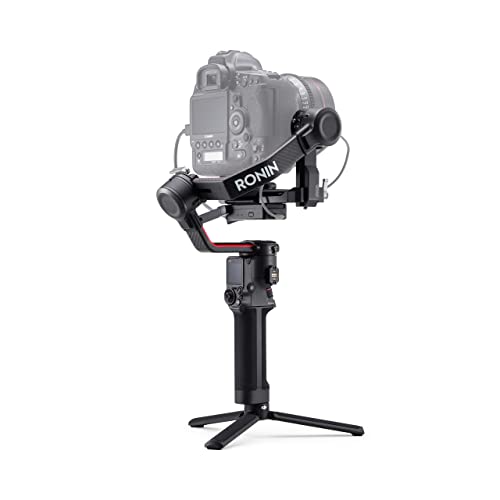
DJI RS 2 Combo Carbon Fiber Gimbal
Best for: Heavy camera setups needing direct control
- Payload Capacity
- 10 lbs
- Camera Compatibility
- DSLR, mirrorless
- Number of Axes
- 3-axis
- Display Feature
- 1.4-inch full-color touchscreen
- Material
- Carbon Fiber
- Dimensions
- 10.2 × 10.4 × 2.8 inches
The DJI RS 2 Combo is a 3-axis gimbal stabilizer built with carbon fiber axis arms. It weighs 2.87 pounds and supports a tested payload of 10 pounds. A 1.4-inch full-color touchscreen lets you adjust parameters and use ActiveTrack 3.0 directly on the device. The dual-layer mounting plate works with Manfrotto and Arca-Swiss standards. This setup suits users who need professional balancing for DSLR and mirrorless cameras.
- 10lb tested payload capacity for heavy gear
- 1.4-inch full-color touchscreen for quick adjustments
- Carbon fiber construction for light weight
- Dual-layer plate compatible with Arca-Swiss standards
- Heavier build at 2.87 pounds compared to lighter alternatives
- Smaller 1.4-inch display limits screen real estate
- Requires iOS 11.0 or Android 7.0+ for app control
- You use heavy DSLR or mirrorless camera bodies
- You want direct touchscreen control without a phone
- You need Arca-Swiss mounting compatibility
- You prefer a lighter handheld stabilizer under 2 pounds
- You require a larger display for complex settings
- You use older devices with outdated operating systems
Verdict: DJI RS 2 Combo 3-Axis Gimbal fits professionals who prioritize payload capacity and direct touchscreen control for heavy camera setups. The carbon fiber build and Arca-Swiss compatibility make it a solid choice for serious videographers.
Specifications side by side
| Spec | DJI RSC 2 Pro Combo | DJI RS 2 Combo Carbon Fiber Gimbal |
|---|---|---|
| Payload Capacity | 3 kg | 10 lbs |
| Camera Compatibility | DSLR, mirrorless | DSLR, mirrorless |
| Number of Axes | 3-axis | 3-axis |
| Display Feature | 1-inch OLED | 1.4-inch full-color touchscreen |
| Battery Runtime | 14 hours | – |
| Color | Black | Not Available |
| Features | – | Touchscreen |
| Material | – | Carbon Fiber |
| Compatible Device | DSLR | DSLR |
| Dimensions | 15.7 × 7.28 × 6.89 inches | 10.2 × 10.4 × 2.8 inches |
| Weight | 6.94 pounds | 2.87 pounds |
| Size | One Size | DJI RS 2 Combo |
| Model | DJI RSC 2 Pro Combo | CP.RN.00000094.01 |
Frequently asked questions
Which gimbal has better battery life?
The DJI RSC 2 Pro Combo offers a 14-hour battery life. This duration suits users who shoot for extended periods without access to charging. The RS 2 Combo does not list a specific battery duration in its published specifications. You should check the manual for the RS 2 if runtime is your primary concern.
Does the RS 2 Combo have a touchscreen?
Yes, the DJI RS 2 Combo features a built-in touchscreen display. This allows for direct control of camera settings and gimbal parameters without needing a smartphone app. The RSC 2 Pro Combo also includes a built-in OLED screen for direct operation. Both models provide onboard control interfaces.
Which model is lighter to carry?
The DJI RS 2 Combo is significantly lighter at 2.87 pounds. Its carbon fiber construction contributes to this reduced weight. The DJI RSC 2 Pro Combo weighs 6.94 pounds. If you prioritize portability and reduced fatigue during long shoots, the RS 2 Combo is the lighter option.
Can I mount my camera with an Arca-Swiss plate?
Both gimbals support Arca-Swiss compatible quick-release plates. This allows you to use standard camera plates you already own. You do not need to purchase specific adapters for this mounting system. This feature simplifies switching between your camera and other support gear like tripods.
Is the RSC 2 Pro Combo compatible with DSLR cameras?
Yes, the DJI RSC 2 Pro Combo is compatible with DSLR cameras. It is designed to handle heavy DSLR setups with its high payload capacity. The RS 2 Combo is also listed as compatible with DSLR cameras. Both units support the same major camera types for video production.
Which gimbal is more compact when folded?
The DJI RSC 2 Pro Combo is described as compact and foldable. Its folded dimensions are 7.28 inches wide by 6.89 inches high. The RS 2 Combo measures 10.4 inches wide by 2.8 inches high when folded. The RSC 2 offers a smaller footprint for storage in a bag.
Do both gimbals have three axes of stabilization?
Yes, both the DJI RSC 2 Pro Combo and the RS 2 Combo are three-axis gimbals. This configuration stabilizes pitch, yaw, and roll movements. You get smooth video footage regardless of which model you choose. The core stabilization technology is consistent across both DJI models.


