As Amazon Associates, we earn from qualifying purchases. This means we may receive a small commission at no extra cost to you if you click through and make a purchase.
As an Amazon Associate we earn from qualifying purchases. Links on this page are affiliate links.
This camera lens buying guide helps you choose the right optic for your system. You will learn how to match focal length, aperture, and mount compatibility to your shooting needs. We evaluated 8 options strictly by their published specifications to ensure objective comparisons. Each product was selected based on technical data such as weight, dimensions, and optical design rather than subjective opinions.
You will be able to decide whether a standard zoom, wide-angle lens, or macro optic fits your workflow. The guide walks through key decisions like sensor format support, maximum aperture speed, and image stabilization features. By focusing on hard specs, you can compare models like the Nikon 24-70mm f/2.8G or the Sony FE 24-70mm F2.8 GM II with confidence. This approach removes guesswork and helps you select gear that aligns with your technical requirements.
Key Factors for Choosing Lenses
Match lens mount to camera
Your lens must physically and electronically connect to your camera body. A mismatched mount prevents the lens from attaching or communicating with the body. Check the lens mount specification against your camera brand and system. For example, the Sony FE 24-70mm F2.8 GM II requires a Sony E-mount camera. Using an incompatible lens wastes time and money. Ensure the mount type matches your existing gear before purchasing.
Look for
- Verify lens mount compatibility
- Check camera brand system
Select sensor format correctly
Lenses are designed for specific sensor sizes, such as full-frame or APS-C. Using a full-frame lens on an APS-C body works but adds weight and cost. Conversely, an APS-C lens on a full-frame body may cause vignetting or image errors. The Sony 18-135mm OSS Zoom Lens is built for APS-C sensors. Choose a lens that matches your camera sensor format to ensure proper image coverage and optimal performance.
Look for
- Identify your sensor size
- Confirm lens format match
Choose focal length for use
Focal length determines your field of view and magnification. Wide-angle lenses like the Canon EF 16-35mm f/2.8L II USM capture more scene, ideal for landscapes. Standard zooms like the Nikon 24-70mm f/2.8G ED Lens offer versatility for portraits and events. Telephoto lenses bring distant subjects closer. Select a focal range that aligns with your primary shooting subjects. Consider if you need a single versatile range or specialized reach.
Look for
- Define primary shooting subjects
- Check focal length range
Prioritize aperture for light
Aperture controls light intake and depth of field. A wider aperture, such as f/2.8, allows more light and creates background blur. This is useful in low light or for isolating subjects. The Sony FE 24-70mm f/2.8 GM Lens offers a constant f/2.8 aperture. Narrower apertures like f/4 or variable apertures gather less light but often reduce cost and size. Decide if you need fast glass for low light or if versatility is more important.
Look for
- Check maximum aperture value
- Assess low-light needs
Evaluate weight and size
Lens weight and dimensions affect carrying comfort and balance with your camera. Heavier lenses like the Nikon 24-70mm f/2.8G ED Lens weigh 2.89 pounds, which may cause fatigue during long shoots. Lighter options like the Sony FE 24-70mm F2.8 GM II weigh 1 pound. Consider how you transport your gear. If you hike or travel frequently, a lighter lens reduces strain. For studio work, weight may be less critical.
Look for
- Review lens weight specs
- Consider carrying comfort
Define recommended usage
Different lenses excel in specific scenarios. Macro lenses like the Nikon 105mm f/2.8G VR Macro Lens provide high magnification for close-up details. Zoom lenses like the Sony 18-105mm F4 G OSS Zoom offer versatility for everyday shooting. Identify your main photography style. Do you need sharpness for portraits, reach for wildlife, or flexibility for events? Matching the lens type to your usage ensures you get the best results for your work.
Look for
- Identify primary photography style
- Match lens to tasks
Check included accessories
Some lenses come with specific accessories that aid handling and protection. While not always listed in core specs, the package contents can vary. Some lenses include hoods or cases. Verify what is included in the box to avoid buying separate items. This affects the total value and immediate usability of the lens. Ensure you have what you need for protection and optimal performance right out of the box.
Look for
- Review package contents list
- Check for included hoods
Common Camera Lens Types
Wide-Angle Zoom
Wide-angle zooms offer broad coverage for landscapes and architecture. The Nikon 24-70mm f/2.8G ED Lens provides 24mm reach at its widest. It weighs 2.89 pounds and measures 5.2 inches long. This type suits FX users needing fast standard zoom capabilities. You get sharp images with reliable autofocus. The trade-off is weight. These lenses are heavier than prime options. They deliver professional results for portraits and general photography. You sacrifice some portability for versatile focal range and consistent light gathering.
Standard Zoom
Standard zooms cover the 24-70mm range for everyday shooting. The Canon EF 24-70mm f/2.8L II USM fits Canon users needing versatile standard zoom. It weighs 2.15 pounds and measures 4.4 inches long. The Sony FE 24-70mm F2.8 GM II offers a lightweight alternative at 1 pound. You get reliable performance for diverse assignments. The trade-off is size. Larger apertures require more glass. You carry more weight for better low-light performance. These lenses balance resolution and speed for full-frame shooters who need an all-around optic.
Versatile APS-C Zoom
APS-C zooms provide extended reach for crop-sensor cameras. The Sony 18-135mm OSS Zoom Lens offers a broad focal range. It weighs 1.01 pounds and measures 2.75 inches long. The Sony 18-105mm F4 G OSS E-Mount Zoom is another solid mid-range option. You prioritize versatility over maximum aperture speed. This suits travel or event shooters who minimize lens changes. The trade-off is variable aperture. Light gathering drops at longer focal lengths. You gain flexibility without carrying multiple lenses for everyday shooting on Sony APS-C cameras.
Macro Lens
Macro lenses enable detailed close-up and macro photography. The Nikon 105mm f/2.8G VR Macro Lens is a specialized tool. It weighs 2.01 pounds and measures 10 inches long. You need high magnification and stability for small subjects. This fits photographers prioritizing image quality over zoom flexibility. The trade-off is fixed focal length. You cannot zoom to frame differently. You must move your body to compose. These lenses deliver consistent handling and sharp details for product or nature work requiring precise focus.
Common Lens Buying Mistakes
Ignoring mount compatibility
Check the lens mount specification against your camera brand and system. A mismatched mount prevents the lens from attaching or communicating with the body. Ensure the physical bayonet and electronic contacts align perfectly before purchasing to avoid incompatibility issues.
Overlooking maximum aperture
The maximum aperture determines low-light performance and background blur. A wider aperture, like f/2.8, gathers more light than f/4. Consider your typical shooting conditions. If you shoot indoors often, prioritize lenses with larger aperture values for better results.
Disregarding weight and size
Heavier lenses can cause fatigue during long shoots. Compare the weight and dimensions in the specifications. A lens weighing 2.89 pounds requires a sturdy support. Choose a size that fits your carrying habits and physical comfort for better handling.
Mismatching focal length needs
Select a focal length that matches your subject matter. Wide-angle zooms suit landscapes, while telephotos suit distant subjects. Check the minimum and maximum focal length range. Ensure the coverage aligns with your intended use, whether for architecture or portraits.
Neglecting sensor format
Verify if the lens is designed for full-frame or crop sensors. Using a crop-specific lens on a full-frame body may cause vignetting. Check the image circle specification. Match the lens format to your camera sensor to ensure proper coverage and image quality.
| # | Product | Best for | Price |
|---|---|---|---|
| 1 | Nikon 24-70mm f/2.8G ED Lens | Nikon FX users needing fast standard zoom | |
| 2 | Canon EF 16-35mm f/2.8L II USM | wide-angle photography on Canon EF cameras | |
| 3 | Sony FE 24-70mm F2.8 GM II | full-frame photographers needing a lightweight standard zoom | |
| 4 | Sony 18-105mm F4 G OSS E-Mount Zoom | Versatile everyday shooting on Sony APS-C cameras | |
| 5 | Sony 18-135mm OSS Zoom Lens | APS-C users needing a versatile zoom range | |
| 6 | Sony FE 24-70mm f/2.8 GM Lens | Full-frame E-mount users needing a versatile zoom | |
| 7 | Nikon 105mm f/2.8G VR Macro Lens | detailed close-up and macro photography | |
| 8 | Canon EF 24-70mm f/2.8L II USM | Canon users needing versatile standard zoom |

Nikon 24-70mm f/2.8G ED Lens
Best for: Nikon FX users needing fast standard zoom
- Focal Length
- 24-70mm
- Maximum Aperture
- f/2.8
- Sensor Format
- Nikon FX, DX
- Lens Type
- Wide Angle Zoom
- Dimensions
- 5.2 × 3.3 × 3.3 inches
- Weight
- 2.89 pounds
This Nikon AF-S zoom lens covers 24-70mm with a constant f/2.8 maximum aperture. It works on both FX and DX sensor formats. The design includes two ED elements and PGM aspherical lenses to control chromatic aberrations. Nano Crystal Coat reduces ghosting and flare. It uses a Silent Wave Motor for fast autofocus. The lens weighs 2.89 pounds and measures 5.2 inches long.
- Constant f/2.8 maximum aperture across the 24-70mm range
- Compatible with both Nikon FX and DX sensor formats
- Nano Crystal Coat reduces ghosting and flare
- Silent Wave Motor enables fast, quiet autofocus
- Weighs 2.89 pounds, which is heavier than many modern equivalents
- Fixed f/2.8 aperture is slower than f/2.8 GM II variants on the list
- Lacks image stabilization features found in some competing lenses
- You need a versatile standard zoom for full-frame Nikon cameras
- You prioritize constant wide apertures for low light
- You shoot portraits and landscapes requiring edge-to-edge sharpness
- You require image stabilization for handheld video work
- You want a lighter lens for travel photography
- You use Sony E-mount cameras without an adapter
Verdict: Nikon 24-70mm f/2.8G ED Zoom Lens suits Nikon shooters who need reliable speed and sharpness. It delivers professional results for portraits and general photography on FX bodies.

Canon EF 16-35mm f/2.8L II USM
Best for: wide-angle photography on Canon EF cameras
- Lens Mount
- Canon EF
- Focal Length
- 16-35mm
- Maximum Aperture
- f/2.8
- Lens Type
- ultra-wide-angle zoom
- Minimum Focus Distance
- 0.92 feet
- Color
- Black
This Canon EF 16-35mm f/2.8L II USM is an ultra-wide-angle zoom lens designed for Canon EF cameras. It features a constant f/2.8 maximum aperture and three high-precision aspherical lens elements for sharp images. The circular aperture helps create natural background blur. With a closest focusing distance of 0.92 feet, it allows for detailed close-ups. Weighing 2.15 pounds, it offers a robust build for landscape or architectural photography.
- Constant f/2.8 maximum aperture throughout the 16-35mm range
- Three high-precision aspherical lens elements for superior image quality
- Ring-type USM motor provides fast and quiet autofocusing
- Circular aperture design produces natural background blur
- Heavier at 2.15 pounds compared to lighter standard zooms
- Minimum focus distance of 0.92 feet is fixed
- Limited to Canon EF mount cameras only
- You need a wide angle for landscapes or architecture
- You want fast aperture performance in low light
- You shoot with Canon EF mount bodies
- You use Sony or Nikon camera bodies
- You require a telephoto zoom range
- You prefer a lightweight travel lens under 1 pound
Verdict: Canon EF 16-35mm f/2.8L II USM fits photographers who prioritize wide-angle coverage and fast apertures on Canon EF bodies. It delivers sharp images and reliable autofocus for demanding shooting conditions.

Sony FE 24-70mm F2.8 GM II
Best for: full-frame photographers needing a lightweight standard zoom
- Lens Mount
- Sony FE
- Focal Length
- 24-70mm
- Maximum Aperture
- F2.8
- Sensor Format
- Full Frame
- Lens Type
- Standard Zoom
- Image Stabilization
- OSS
This is a standard zoom lens for Sony FE full-frame cameras. It offers a constant f/2.8 aperture across a 24-70mm focal range. Weighing just 695 grams, it is the lightest in its class. The design includes Optical SteadyShot stabilization and advanced autofocus motors. It suits professionals and enthusiasts who need high resolution and mobility for stills or video.
- Constant f/2.8 maximum aperture for consistent exposure
- Weighs 695g, over 20% lighter than the previous model
- Includes Optical SteadyShot (OSS) image stabilization
- Four XD Linear Motors for fast and quiet autofocus
- Focal length range of 24-70mm is narrower than the 18-135mm option
- Maximum aperture of f/2.8 is slower than the f/2.8 constant aperture on other standard zooms in the list
- Weight of 1 pound is heavier than the Sony 18-105mm F4 G OSS
- You shoot with Sony full-frame cameras and need a versatile standard zoom
- You prioritize lightweight gear for travel or handheld video work
- You require fast autofocus performance for action or sports
- You use Sony APS-C cameras and need an E-mount APS-C lens
- You require a wider focal range than 24-70mm for landscape work
- You prefer a lens with a faster maximum aperture than f/2.8
Verdict: Sony FE 24-70mm F2.8 GM II is a lightweight standard zoom that balances resolution and speed for full-frame shooters. It fits photographers who need a reliable all-around lens without carrying heavy glass.

Sony 18-105mm F4 G OSS E-Mount Zoom
Best for: Versatile everyday shooting on Sony APS-C cameras
- Lens Mount
- E-mount
- Focal Length
- 18-105mm
- Maximum Aperture
- F4
- Lens Type
- Zoom
- Image Stabilization
- OSS
- Color
- Black
This Sony E-mount zoom lens offers a versatile 18-105mm focal length, equivalent to 27-158mm in full-frame terms. It maintains a constant f/4 maximum aperture across the entire range. Optical quality is supported by two ED glass elements and three aspherical elements. The lens includes Optical SteadyShot (OSS) for stabilization. It weighs 15.1 ounces and fits APS-C E-mount cameras.
- Constant f/4 maximum aperture throughout the zoom range
- Versatile 18-105mm focal length with 27-158mm equivalent coverage
- Includes Optical SteadyShot (OSS) image stabilization
- Uses two ED glass and three aspherical elements for resolution
- Heavier build at 15.1 ounces compared to lighter alternatives
- Constant f/4 aperture is slower than f/2.8 options on this list
- 105mm maximum focal length is shorter than the 135mm reach of the Sony 18-135mm
- You want a single lens for everyday shooting on APS-C Sony cameras
- You value optical stabilization for handheld video or photography
- You prefer a constant aperture for consistent exposure while zooming
- You need a wider wide-angle view than 18mm provides
- You require faster low-light performance with an f/2.8 aperture
- You need longer telephoto reach beyond 105mm
Verdict: Sony 18-105mm f/4 G OSS E-mount is a solid mid-range zoom for APS-C users who prioritize versatility and stabilization over maximum aperture speed or extreme telephoto reach.

Sony 18-135mm OSS Zoom Lens
Best for: APS-C users needing a versatile zoom range
- Lens Mount
- Sony E
- Focal Length
- 18-135mm
- Maximum Aperture
- f/3.5-5.6
- Sensor Format
- APS-C
- Lens Type
- Zoom
- Image Stabilization
- Optical SteadyShot
This Sony zoom lens covers a 27-202.5mm equivalent range on APS-C bodies. It uses aspherical and ED glass elements to maintain sharpness across the zoom. Optical SteadyShot helps reduce blur in stills and video. The 7-blade aperture supports smooth background blur. You will get a versatile tool for travel or general use without swapping lenses.
- 7.5x high magnification zoom range
- Optical SteadyShot image stabilization
- Aspherical and ED glass elements
- 7-blade circular aperture for bokeh
- Variable maximum aperture of f/3.5-5.6 is slower than the f/2.8 lenses on this list
- Weight of 1.01 pounds is heavier than the Sony 18-105mm F4 G OSS
- You need a single lens for varied shooting distances
- You shoot with APS-C Sony E-mount cameras
- You want optical stabilization for handheld video
- You require a fast constant f/2.8 aperture
- You use full-frame Sony E-mount cameras
- You prefer the lightest possible gear
Verdict: Sony 18-135mm F3.5-5.6 OSS APS-C Zoom Lens offers a broad focal range for APS-C shooters who prioritize versatility over speed. It suits those who want to minimize lens changes during travel or events.
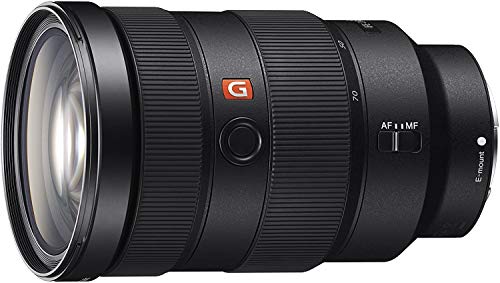
Sony FE 24-70mm f/2.8 GM Lens
Best for: Full-frame E-mount users needing a versatile zoom
- Lens Mount
- E-Mount
- Focal Length
- 24-70 mm
- Maximum Aperture
- f/2.8
- Sensor Format
- Full-Frame
- Minimum Focus Distance
- 1.24 ft
- Maximum Magnification
- 0.24 x
This Sony FE 24-70mm f/2.8 GM lens is an E-mount zoom designed for full-frame sensors. It offers a versatile 24-70mm focal length and a constant maximum aperture of f/2.8. The optical design includes one XA element and two aspherical elements to maintain sharpness. Weighing 1.1 pounds, it provides a balance of portability and professional build. It suits photographers who need a reliable standard zoom for various shooting scenarios.
- Constant f/2.8 maximum aperture across the 24-70mm range
- Optical construction with one XA element and two aspherical elements
- Minimum focus distance of 1.24 ft for closer subjects
- Maximum magnification ratio of 0.24 x
- Heavier at 1.1 pounds compared to some lighter zoom options
- Longer length at 8.3 inches, making it bulkier to carry
- Maximum aperture of f/2.8 is narrower than f/1.8 or f/2.0 variants
- You shoot with Sony E-mount full-frame cameras
- You need a versatile focal range for events or portraits
- You prefer a constant wide aperture for low light
- You use APS-C crop sensor bodies
- You require a macro lens for extreme close-ups
- You need a telephoto reach beyond 70mm
Verdict: Sony FE 24-70mm f/2.8 GM Lens is a solid choice for full-frame shooters who value optical quality and consistent light gathering. It fits professionals needing a dependable standard zoom for diverse assignments.

Nikon 105mm f/2.8G VR Macro Lens
Best for: detailed close-up and macro photography
- Focal Length
- 105mm
- Maximum Aperture
- f/2.8
- Lens Type
- Macro
- Minimum Focus Distance
- 1.03 ft (0314 m)
- Maximum Magnification
- 1.0x
- Color
- Black
This is a Nikon 105mm f/2.8G IF-ED macro lens designed for close-up photography. It features a 1.0x maximum reproduction ratio and a minimum focus distance of 1.03 feet. The lens includes VR II vibration reduction and ED glass elements to reduce flare. It weighs 2.01 pounds and uses an internal focus system. You should consider this lens if you need high magnification for detailed shots.
- 1.0x maximum reproduction ratio for life-size macro images
- VR II vibration reduction technology stabilizes handheld shots
- Internal focus system keeps the lens length constant during operation
- ED glass elements help reduce chromatic aberrations
- Fixed 105mm focal length limits versatility compared to zoom lenses
- 2.01 pounds weight is heavier than standard zooms in this guide
- Minimum focus distance of 1.03 feet is longer than typical macro lenses
- You need life-size magnification for insects or small objects
- You prefer a prime lens for sharper image quality
- You shoot in environments where lens length changes are disruptive
- You need a zoom range for varied shooting distances
- You prioritize a lightweight lens for travel
- You require closer focusing distances than 1.03 feet
Verdict: Nikon 105mm f/2.8G Macro Lens is a specialized tool for photographers who need high magnification and stability. It fits those who prioritize image quality and consistent handling over zoom flexibility.

Canon EF 24-70mm f/2.8L II USM
Best for: Canon users needing versatile standard zoom
- Lens Mount
- Canon EF
- Focal Length
- 24-70mm
- Maximum Aperture
- f/2.8
- Lens Type
- Standard Zoom
- Minimum Focus Distance
- 0.38 m / 1.25 ft.
- Color
- Black
This Canon standard zoom lens covers 24-70mm with a constant f/2.8 maximum aperture. It uses a ring-type ultrasonic motor for fast focusing and allows full-time manual adjustment. The lens weighs 1.7 pounds and measures 4.45 inches long. It suits photographers who need versatile focal lengths and bright apertures for varied shooting conditions.
- Constant f/2.8 maximum aperture throughout the zoom range
- Ring-type ultrasonic motor for quick autofocus
- Closest focusing distance of 0.38 meters
- Accepts 82mm filters
- Weighs 1.7 pounds, which is heavier than many standard zooms
- Maximum aperture is f/2.8, which is slower than some professional prime lenses
- Focal length range is limited to 24-70mm
- You need a versatile standard zoom for portraits and events
- You want a constant f/2.8 aperture for low light
- You use Canon EF mount cameras
- You require image stabilization for handheld shooting
- You need a wider angle than 24mm
- You prefer a lighter lens for travel
Verdict: Canon EF 24-70mm f/2.8L II USM Lens delivers reliable performance for Canon users who prioritize aperture speed and focal versatility over weight savings.
Specifications side by side
| Spec | Nikon 24-70mm f/2.8G ED Lens | Canon EF 16-35mm f/2.8L II USM | Sony FE 24-70mm F2.8 GM II | Sony 18-105mm F4 G OSS E-Mount Zoom | Sony 18-135mm OSS Zoom Lens | Sony FE 24-70mm f/2.8 GM Lens | Nikon 105mm f/2.8G VR Macro Lens | Canon EF 24-70mm f/2.8L II USM |
|---|---|---|---|---|---|---|---|---|
| Lens Mount | – | Canon EF | Sony FE | E-mount | Sony E | E-Mount | – | Canon EF |
| Focal Length | 24-70mm | 16-35mm | 24-70mm | 18-105mm | 18-135mm | 24-70 mm | 105mm | 24-70mm |
| Maximum Aperture | f/2.8 | f/2.8 | F2.8 | F4 | f/3.5-5.6 | f/2.8 | f/2.8 | f/2.8 |
| Sensor Format | Nikon FX, DX | – | Full Frame | – | APS-C | Full-Frame | – | – |
| Lens Type | Wide Angle Zoom | ultra-wide-angle zoom | Standard Zoom | Zoom | Zoom | – | Macro | Standard Zoom |
| Image Stabilization | – | – | OSS | OSS | Optical SteadyShot | – | – | – |
| Minimum Focus Distance | – | 0.92 feet | – | – | – | 1.24 ft | 1.03 ft (0314 m) | 0.38 m / 1.25 ft. |
| Maximum Magnification | – | – | – | – | – | 0.24 x | 1.0x | – |
| Color | – | Black | Black | Black | Black | Black | Black | Black |
| Sensor Size | – | – | – | – | APS-C Sensor | – | – | – |
| Dimensions | 5.2 × 3.3 × 3.3 inches | 4.4 × 4.4 × 4.4 inches | 8.39 × 4.72 × 4.72 inches | 4.33 × 3.07 × 3.07 inches | – | 8.3 × 5.38 × 5.38 inches | 10 × 8 × 6 inches | 4.45 × 3.5 × 3.5 inches |
| Weight | 2.89 pounds | 2.15 pounds | 1 pounds | 15.1 ounces | 1.01 pounds | 1.1 pounds | 2.01 pounds | – |
| Length | – | – | – | – | 2.75 inches | – | – | – |
| Width | – | – | – | – | 3.5 inches | – | – | – |
| Model | CRTNK2470GRB | 1910B002 | SEL2470GM2 | SELP18105G | SEL18135 | SEL2470GM-cr | 2160 | 5175B002AA |
| Size | – | – | Lens Only | – | – | Lens Only | – | 1 |
If you need vehicle video hardware, our backup camera buying guide details sensor angles and display specifications.
Frequently asked questions
What is the best lens for wide-angle photography on Canon EF cameras?
The Canon EF 16-35mm f/2.8L II USM is designed for wide-angle coverage on Canon EF bodies. It weighs 2.15 pounds and measures 4.4 inches in length. This lens delivers sharp images and reliable autofocus for demanding shooting conditions. It fits photographers who prioritize fast apertures and wide reach.
Which standard zoom lens is best for full-frame Sony shooters?
The Sony FE 24-70mm F2.8 GM II balances resolution and speed for full-frame shooters. It weighs just 1 pound, making it a lightweight option. The lens features a Sony E mount and a maximum aperture of f/2.8. It suits photographers needing a reliable all-around lens without carrying heavy glass.
How heavy is the Nikon 24-70mm f/2.8G ED Lens?
The Nikon 24-70mm f/2.8G ED Lens weighs 2.89 pounds. It measures 5.2 inches in length and 3.3 inches in both width and height. This lens suits Nikon FX users needing fast standard zoom capabilities. It delivers professional results for portraits and general photography on FX bodies.
What lens is ideal for APS-C users needing versatile zoom range?
The Sony 18-135mm OSS Zoom Lens offers a broad focal range for APS-C shooters. It weighs 1.01 pounds and features a Sony E mount. This lens suits those who want to minimize lens changes during travel or events. It prioritizes versatility over speed, making it a practical choice for everyday shooting.
Is there a lightweight standard zoom for Sony full-frame cameras?
Yes, the Sony FE 24-70mm F2.8 GM II is a lightweight standard zoom. It weighs only 1 pound, which is lighter than the original GM version at 1.1 pounds. It features a Sony E mount and f/2.8 maximum aperture. This lens fits photographers who need reliability without carrying heavy glass.
What is the weight of the Canon EF 24-70mm f/2.8L II USM?
The provided data does not list the weight for the Canon EF 24-70mm f/2.8L II USM. It measures 4.45 inches in length and 3.5 inches in both width and height. This lens delivers reliable performance for Canon users who prioritize aperture speed and focal versatility over weight savings.
Which lens is best for detailed close-up and macro photography on Nikon?
The Nikon 105mm f/2.8G VR Macro Lens is a specialized tool for high magnification. It weighs 2.01 pounds and measures 10 inches in length. This lens fits those who prioritize image quality and consistent handling over zoom flexibility. It is ideal for photographers needing stability during detailed close-up work.
What are the dimensions of the Sony 18-105mm F4 G OSS lens?
The Sony 18-105mm F4 G OSS E-Mount Zoom measures 3.07 inches in width and height, and 4.33 inches in length. It weighs 15.1 ounces. This solid mid-range zoom suits APS-C users who prioritize versatility and stabilization. It is a practical choice for everyday shooting on Sony APS-C cameras.

