As Amazon Associates, we earn from qualifying purchases. This means we may receive a small commission at no extra cost to you if you click through and make a purchase.
As an Amazon Associate we earn from qualifying purchases. Links on this page are affiliate links.
This camera gimbal buying guide helps you choose the right stabilizer for your specific workflow. You will learn how to match payload capacity, axis count, and weight distribution to your equipment. We selected each recommendation by comparing published specifications, ensuring the data aligns with your practical needs. The list covers options for everything from lightweight mirrorless setups to heavy cinema rigs.
You can decide whether a handheld unit or a body vest suits your shooting style. The guide walks through key decisions like touchscreen availability, material durability, and battery performance. Each product was chosen based on its technical specs rather than subjective impressions. Whether you need vertical shooting support or integrated lighting, the data clarifies which model fits your camera weight and operational demands.
Key Specs for Choosing Gimbals
Payload capacity
Payload capacity defines the maximum weight a gimbal can stabilize. You must match this limit to your heaviest camera and lens combination. If you exceed the limit, the motors struggle, causing jitter or failure to balance. Heavy DSLR rigs require high capacity units like the DJI RS 2 Combo, which supports up to 10 lbs. Lighter mirrorless setups fit well with mid-range options like the DJI RS 5. Always leave a small margin above your actual gear weight to ensure smooth operation during long shoots.
Look for
- Maximum weight in pounds or kg
- Weight of your heaviest camera setup
Axis configuration
Most modern gimbals use three axes for full stabilization. This setup corrects pitch, roll, and yaw movements for smooth video. Some units offer specialized features. The ZHIYUN Crane 4 supports vertical shooting, which is vital for social media content. The DJI RS 4 Pro also excels in vertical formats. Standard 3-axis gimbals like the DJI RSC 2 Pro are ideal for traditional horizontal framing. Choose based on whether you need standard cinematic shots or vertical video capabilities.
Look for
- Number of stabilization axes
- Support for vertical shooting mode
Gimbal weight
The weight of the gimbal itself affects your mobility. Heavier units provide more power but cause arm fatigue over time. The DJI RS 2 Pro weighs nearly 7 pounds, making it cumbersome for handheld use. Lighter options like the DJI RS 2 Combo weigh under 3 pounds. For heavy rigs, consider body mounts like the FLYCAM Galaxy Arm Vest to distribute weight. Balance the gimbal weight against your need for stability and comfort during extended filming sessions.
Look for
- Unit weight in pounds
- Availability of body mounts
Display and control
Integrated displays allow you to adjust settings without a phone. Touchscreens on the DJI RS 2 Combo and RS 5 provide direct control. This is useful when your camera is mounted on a rig. Units without screens require companion apps for full functionality. The DJI RS 4 Pro lacks a visible display in the data, relying on other controls. Decide if you prefer standalone operation or if you are comfortable using a smartphone app for adjustments.
Look for
- Presence of a touchscreen display
- Compatibility with mobile apps
Material and build
Build materials impact durability and weight. Carbon fiber construction, seen in the DJI RS 2 Combo and RS 3 Pro, offers strength with reduced weight. This is crucial for maintaining balance. Plastic or metal alloys may be heavier but durable. The DF Digitalfoto Thanos Pro Vest uses robust materials for heavy loads. Check the material type to ensure the gimbal can withstand your shooting environment while keeping the total load manageable.
Look for
- Carbon fiber or metal construction
- Overall build quality indicators
Integrated features
Some gimbals include extra tools like fill lights or automated locks. The ZHIYUN Crane 4 features a built-in fill light, helpful for low-light scenes. Automated locks simplify setup time. The DJI RS 5 uses automated locks for quick balancing. These features add convenience but may increase cost or complexity. Evaluate if you need integrated lighting or if external accessories suffice. Simple setups without extras may be easier to maintain and repair.
Look for
- Built-in fill light or tools
- Automated locking mechanism presence
Types of Camera Stabilizers
Body-Mount Vest Systems
These vests transfer rig weight from your arms to your torso. The FLYCAM Galaxy Arm Vest weighs 5 pounds and spans 31.5 inches. It suits operators handling rigs over 5kg. You gain endurance for long shoots. The trade-off is reduced mobility. You cannot move as freely as with handheld units. This system is best for heavy stabilizer setups where arm fatigue is the primary concern.
3-Axis Handheld Gimbals
These devices stabilize pitch, roll, and yaw. The DJI RS 2 Pro Combo weighs 6.94 pounds. It fits DSLR and mirrorless cameras under 3 kg. You get smooth motion for medium-weight setups. The DJI RS 3 Pro handles cinema cameras with a 3.84-pound frame. You benefit from carbon fiber construction. The trade-off is learning curve and balance time. These are the standard for most video creators.
Specialized Hybrid Gimbals
These units offer unique features for specific workflows. The ZHIYUN Crane 4 includes a built-in fill light. It weighs 3.31 pounds and supports 6K video. You can switch between horizontal and vertical formats easily. The DJI RS 4 Pro aids vertical content creators. You get precise focus assistance. The trade-off is higher cost and complexity. These suits hybrid shooters who need integrated tools beyond basic stabilization.
Common Mistakes When Choosing Gimbals
Ignoring maximum payload limits
Exceeding the rated payload causes motor strain and image jitter. You must weigh your entire setup, including batteries and lenses. Select a gimbal with a capacity at least 20% higher than your heaviest rig. This margin ensures smooth operation and prevents overheating during long shoots.
Overlooking axis count
Three-axis gimbals stabilize pitch, roll, and yaw. Two-axis models only handle pitch and roll, leaving horizontal shake. Check your specific needs. If you shoot handheld video, you need full three-axis stabilization. Two-axis units are only suitable for simple vertical adjustments or specific mechanical mounts.
Neglecting battery life specs
Check the advertised runtime under load. Heavy cameras drain power faster than light mirrorless bodies. Verify if the battery is removable or built-in. Removable units allow you to swap spares quickly. Plan your shoot schedule around the minimum runtime, not the maximum advertised figure, to avoid dead gear.
Mismatching control interfaces
Ensure the gimbal supports your camera brand via a dedicated cable. Generic mounts may not allow focus or zoom control. Check for compatibility lists in the specifications. Without proper integration, you lose remote functionality. This forces you to manually adjust settings, breaking your workflow and reducing shot efficiency significantly.
Skipping balance procedure
Improper balancing reduces motor efficiency and increases power consumption. You must adjust all three axes before powering on. Use the provided tools to center the camera. A well-balanced rig moves smoothly with minimal effort. Skipping this step leads to jittery footage and premature wear on the gimbal motors.
| # | Product | Best for | Price |
|---|---|---|---|
| 1 | FLYCAM Galaxy Arm Vest | heavy stabilizer rigs over 5kg | |
| 2 | DJI RSC 2 Pro Combo | DSLR and mirrorless cameras under 3 kg | |
| 3 | DF Digitalfoto Thanos Pro Vest System | Heavy gimbal rigs over 10 lbs | |
| 4 | DJI RS 2 Combo Carbon Fiber Gimbal | Heavy DSLR camera stabilization | |
| 5 | DJI RS 5 3-Axis Gimbal | mid-weight camera stabilization and quick setup | |
| 6 | DJI RS 3 Pro Carbon Fiber Gimbal | heavy cinema camera stabilization | |
| 7 | ZHIYUN Crane 4 3-Axis Gimbal | Hybrid shooters needing built-in lighting | |
| 8 | DJI RS 4 Pro Gimbal | heavy cinema and vertical content creators |

FLYCAM Galaxy Arm Vest
Best for: heavy stabilizer rigs over 5kg
- Payload Capacity
- 10kg/22lb
- Color
- Black
- Dimensions
- 31.5 × 10.6 × 4.53 inches
- Weight
- 5 pounds
This vest-mounted support system shifts the load of heavy stabilizers from your hands to your body. It features a 10kg/22lb payload capacity, allowing you to use heavier rigs without arm fatigue. The unit includes interchangeable blue and red springs to tune tension for setups ranging from 2kg to 10kg. It weighs 5 pounds and reconfigures for left or right-handed use, distributing weight across your torso for longer shoots.
- 10kg/22lb maximum payload capacity supports heavy camera rigs
- Dual spring options (blue for 2-5kg, red for 5-10kg) allow precise tension tuning
- Reconfigurable arm design works for both left and right-handed operators
- 16mm post mounts accommodate standard handheld stabilizers with included bushings
- 5-pound unit weight adds bulk to your gear load
- Requires manual spring swapping to adjust for different rig weights
- Limited to 10kg capacity compared to higher-end gimbal systems
- You need to stabilize rigs exceeding 5kg for extended periods
- You want to reduce hand and shoulder strain during long takes
- You operate both left and right-handed setups on the same production
- You prefer a compact handheld stabilizer without additional body gear
- You require automatic electronic stabilization rather than mechanical counterbalancing
- You only shoot lightweight mirrorless cameras under 2kg
Verdict: FLYCAM Galaxy Arm Vest Body Mount distributes heavy stabilizer weight across your torso, making it ideal for operators handling rigs above 5kg who need to maintain steady shots without arm fatigue.

DJI RSC 2 Pro Combo
Best for: DSLR and mirrorless cameras under 3 kg
- Payload Capacity
- 3 kg
- Camera Compatibility
- DSLR, mirrorless
- Number of Axes
- 3-axis
- Display Feature
- 1-inch OLED
- Battery Runtime
- 14 hours
- Color
- Black
The DJI RSC 2 Pro Combo is a 3-axis gimbal stabilizer for DSLR and mirrorless cameras. It features a 3 kg payload capacity and a 14-hour battery runtime. A 1-inch OLED screen provides control on the device. Its foldable design makes it compact for travel. This model suits videographers needing reliable stabilization for medium-weight camera setups without excessive bulk.
- 3-axis stabilization with SuperSmooth algorithm
- 14-hour battery runtime with fast charging
- 1-inch built-in OLED screen
- Foldable design smaller than A5 paper
- 3 kg payload capacity
- 3 kg payload is lower than heavier pro models on the list
- 6.94 pounds weight is higher than lighter handheld gimbals
- Maximum video resolution listed is 2K DCI 1080p
- You shoot with DSLR or mirrorless cameras under 3 kg
- You need long battery life for extended shoots
- You value a compact, foldable design for portability
- You need to carry payloads heavier than 3 kg
- You require 4K or higher resolution capture on the device
- You prefer a lighter gimbal for all-day handheld use
Verdict: DJI RSC 2 Pro 3-Axis Gimbal fits creators who need a reliable, foldable stabilizer for medium-weight cameras and long shooting sessions. It is a solid choice for those prioritizing battery life and screen control over maximum payload capacity.

DF Digitalfoto Thanos Pro Vest System
Best for: Heavy gimbal rigs over 10 lbs
- Payload Capacity
- 5.5-19.8 lbs (2.5-9kg)
- Color
- Black
- Intended Use
- Video
- Dimensions
- 23.6 × 15.7 × 7.87 inches
- Weight
- 8.82 pounds
This vest redistributes gimbal weight from your hands to your body. It supports payloads from 5.5 to 19.8 lbs. The system uses dual spring-loaded arms to dampen vertical shake. You can mount most single-handle gimbals using standard threads. It fits various body types with adjustable straps. This gear helps you shoot longer without arm fatigue.
- Supports payloads up to 19.8 lbs
- Distributes weight to waist and back
- Dampens vertical bobbing via dual springs
- Fits DJI, Zhiyun, and Moza gimbals
- Weighs 8.82 lbs itself
- Limited to 19.8 lbs max payload
- Requires separate gimbal purchase
- You shoot long documentary or wedding events
- You carry heavy camera rigs over 10 lbs
- You need to reduce arm fatigue while walking
- You prefer lightweight mirrorless setups under 5 lbs
- You want an all-in-one handheld stabilizer
- You need payload capacity above 20 lbs
Verdict: DF Digitalfoto Thanos Pro Vest provides essential weight relief for heavy rigs. It suits professionals who prioritize comfort during long handheld shoots.
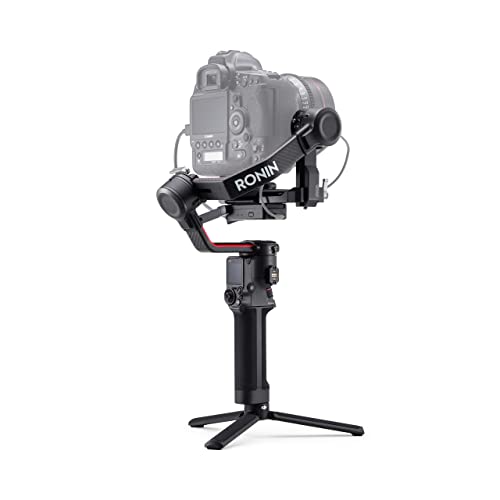
DJI RS 2 Combo Carbon Fiber Gimbal
Best for: Heavy DSLR camera stabilization
- Payload Capacity
- 10 lbs
- Camera Compatibility
- DSLR, mirrorless
- Number of Axes
- 3-axis
- Display Feature
- 1.4-inch full-color touchscreen
- Material
- Carbon Fiber
- Dimensions
- 10.2 × 10.4 × 2.8 inches
The DJI RS 2 Combo is a 3-axis gimbal stabilizer built with carbon fiber axis arms. It supports a tested payload of 10 lbs while weighing 2.87 pounds. You get a 1.4-inch full-color touchscreen to adjust settings and use ActiveTrack 3.0 directly. It fits DSLR and mirrorless cameras from major brands. This balance of light weight and high capacity suits serious videographers.
- 10 lb tested payload capacity
- Lightweight 2.87 lb carbon fiber build
- 1.4-inch full-color touchscreen display
- Dual-layer mounting plate for Arca-Swiss and Manfrotto
- Heavier than the DJI RS 4 Pro at 2.87 lbs
- Lower payload capacity than the DJI RS 4 Pro's 4.5 kg limit
- Smaller touchscreen than the RS 3 Pro Combo
- You need to stabilize heavy DSLR setups up to 10 lbs
- You want direct access to ActiveTrack 3.0 via a touchscreen
- You prefer a carbon fiber build for reduced weight
- You require a payload capacity exceeding 10 lbs
- You need a larger display than 1.4 inches
- You want the lightest possible gimbal under 2.5 lbs
Verdict: The DJI RS 2 Combo 3-Axis Gimbal offers a strong 10 lb payload in a manageable form factor. It fits creators who prioritize payload capacity and direct touchscreen control over the absolute minimum weight.

DJI RS 5 3-Axis Gimbal
Best for: mid-weight camera stabilization and quick setup
- Payload Capacity
- 3 kg (6.6 lbs)
- Number of Axes
- 3-axis
- Display Feature
- 1.8-inch OLED touchscreen
- Axis Locks
- Automated
- Color
- Black
- Dimensions
- 14.3 × 7.36 × 6.69 inches
The DJI RS 5 is a 3-axis gimbal stabilizer with a 3 kg payload capacity. It weighs 3.26 pounds and includes a 1.8-inch OLED touchscreen. Automated axis locks simplify setup and storage. Bluetooth shutter control removes the need for cables. This model suits photographers and videographers who need reliable stabilization for medium-weight camera setups.
- 3 kg (6.6 lbs) payload capacity
- Automated axis locks for fast setup
- 1.8-inch OLED touchscreen interface
- Bluetooth shutter button support
- 3 kg payload is lower than the 4.5 kg capacity of the RS 4 Pro
- 3.26 pound weight is higher than the 1.3 kg base weight of the RS 3
- 1.8-inch display is smaller than typical larger screens on pro models
- You need a 3-axis stabilizer for cameras under 3 kg
- You want automated axis locks to speed up transitions
- You prefer wireless shutter control via Bluetooth
- You carry camera gear heavier than 3 kg
- You require a payload capacity above 4.5 kg
- You need a body-mount vest for heavy stabilization
Verdict: The DJI RS 5 3-Axis Gimbal offers solid stabilization for mid-range cameras with convenient automated locks and a touchscreen. It fits users who prioritize ease of use and moderate payload capacity over maximum load handling.

DJI RS 3 Pro Carbon Fiber Gimbal
Best for: heavy cinema camera stabilization
- Payload Capacity
- 4.5 kg (10 lbs)
- Camera Compatibility
- DSLR, cinema
- Number of Axes
- 3-axis
- Axis Locks
- Automated
- Color
- Black
- Material
- Carbon Fiber
The DJI RS 3 Pro is a 3-axis gimbal stabilizer for DSLR and cinema cameras. It features automated axis locks and extended carbon fiber arms. The tested payload capacity is 4.5 kg. The unit weighs 3.84 pounds. It includes long-range video transmission. This setup suits professionals needing high capacity and quick operation.
- Automated axis locks for fast transitions
- 4.5 kg tested payload capacity
- Extended carbon fiber axis arms
- Long-range O3 Pro video transmission
- Heavier build at 3.84 pounds compared to lighter handheld options
- Lower payload capacity than the 10kg vest mounts on this list
- You need to stabilize heavy cinema camera rigs
- You want automated axis locks for quick setup
- You require long-range wireless control
- You prefer a lightweight handheld stabilizer under 2 pounds
- You need to carry payloads exceeding 4.5 kg
- You want a vest-mounted solution for heavy loads
Verdict: The DJI RS 3 Pro 3-Axis Gimbal fits cinematographers who prioritize payload capacity and automated locking. It is a solid choice for heavy DSLR and cinema camera combinations.

ZHIYUN Crane 4 3-Axis Gimbal
Best for: Hybrid shooters needing built-in lighting
- Camera Compatibility
- DSLR, mirrorless, compact cinema
- Number of Axes
- 3-axis
- Display Feature
- 1.22-inch color touchscreen
- Vertical Shooting
- Horizontal and vertical lock structures
- Battery Runtime
- Up to 12 hours
- Video Resolution
- 6K
The ZHIYUN Crane 4 is a 3-axis gimbal stabilizer designed for DSLR, mirrorless, and compact cinema cameras. It features a 1.22-inch color touchscreen and Bluetooth control for intuitive operation. A built-in 10W fill light with 3200 Lux illuminance aids low-light shooting. The unit supports vertical shooting and offers up to 12 hours of runtime via PD fast charging. It weighs 3.31 pounds and includes balance indicator lights for precise calibration.
- Built-in 10W fill light with 95+ CRI
- 1.22-inch color touchscreen for settings
- Up to 12 hours battery runtime
- Bluetooth shutter control support
- Vertical shooting lock structure
- 3.31-pound weight is heavier than some competitors
- 1.22-inch display is smaller than larger professional screens
- 12-hour runtime is lower than extended-use models
- You need a built-in fill light for video work
- You shoot in both landscape and portrait orientations
- You prefer touchscreen controls for quick adjustments
- You require a payload capacity above 4.5kg
- You need a lighter gimbal under 3 pounds
- You prefer a larger display for complex menus
Verdict: The ZHIYUN Crane 4 3-Axis Gimbal suits creators who value integrated lighting and touchscreen control. It is a solid choice for hybrid shooters who switch between horizontal and vertical formats frequently.

DJI RS 4 Pro Gimbal
Best for: heavy cinema and vertical content creators
- Payload Capacity
- 4.5 kg (10 lbs)
- Camera Compatibility
- DSLR, mirrorless, cinema
- Vertical Shooting
- 2nd-Gen Native Vertical Shooting
- Battery Runtime
- Up to 29 hours (with BG70)
- Color
- Black
- Dimensions
- 10.6 × 7.95 × 16.3 inches
The DJI RS 4 Pro is a 3-axis gimbal stabilizer designed for DSLR, mirrorless, and cinema cameras. It supports a 4.5 kg payload and features second-generation native vertical shooting. The unit includes LiDAR focusing with 76,800 ranging points within 20 meters. You get up to 29 hours of runtime when using the separate BG70 battery grip. This system suits creators who need precise motor control and vertical content capabilities.
- 4.5 kg (10 lbs) payload capacity
- 2nd-Gen Native Vertical Shooting
- LiDAR Focusing with 76,800 ranging points
- Up to 29-hour battery runtime with BG70
- Remote Dual Focus & Zoom Motor Control
- 4.06 pounds unit weight
- BG70 battery grip sold separately
- 16.3 inches height in vertical mode
- You shoot vertical content for social media
- You use heavy cinema camera setups
- You need precise LiDAR autofocus
- You want a lighter handheld stabilizer
- You prefer a lower payload capacity
- You need native horizontal shooting only
Verdict: The DJI RS 4 Pro Gimbal Stabilizer fits professionals who require high payload capacity and vertical shooting. It delivers precise focus assistance for cinema and mirrorless cameras.
Specifications side by side
| Spec | FLYCAM Galaxy Arm Vest | DJI RSC 2 Pro Combo | DF Digitalfoto Thanos Pro Vest System | DJI RS 2 Combo Carbon Fiber Gimbal | DJI RS 5 3-Axis Gimbal | DJI RS 3 Pro Carbon Fiber Gimbal | ZHIYUN Crane 4 3-Axis Gimbal | DJI RS 4 Pro Gimbal |
|---|---|---|---|---|---|---|---|---|
| Payload Capacity | 10kg/22lb | 3 kg | 5.5-19.8 lbs (2.5-9kg) | 10 lbs | 3 kg (6.6 lbs) | 4.5 kg (10 lbs) | – | 4.5 kg (10 lbs) |
| Camera Compatibility | – | DSLR, mirrorless | – | DSLR, mirrorless | – | DSLR, cinema | DSLR, mirrorless, compact cinema | DSLR, mirrorless, cinema |
| Number of Axes | – | 3-axis | – | 3-axis | 3-axis | 3-axis | 3-axis | – |
| Display Feature | – | 1-inch OLED | – | 1.4-inch full-color touchscreen | 1.8-inch OLED touchscreen | – | 1.22-inch color touchscreen | – |
| Vertical Shooting | – | – | – | – | – | – | Horizontal and vertical lock structures | 2nd-Gen Native Vertical Shooting |
| Axis Locks | – | – | – | – | Automated | Automated | – | – |
| Battery Runtime | – | 14 hours | – | – | – | – | Up to 12 hours | Up to 29 hours (with BG70) |
| Video Resolution | – | – | – | – | – | – | 6K | – |
| Color | Black | Black | Black | Not Available | Black | Black | Black | Black |
| Intended Use | – | – | Video | – | – | – | – | – |
| Features | – | – | – | Touchscreen | Touchscreen | – | Fill Light | – |
| Material | – | – | – | Carbon Fiber | – | Carbon Fiber | – | – |
| Compatible Device | – | DSLR | – | DSLR | – | DSLR | DSLR | DSLR |
| Dimensions | 31.5 × 10.6 × 4.53 inches | 15.7 × 7.28 × 6.89 inches | 23.6 × 15.7 × 7.87 inches | 10.2 × 10.4 × 2.8 inches | 14.3 × 7.36 × 6.69 inches | 10.2 × 2.76 × 10.4 inches | 13.4 × 2.76 × 11 inches | 10.6 × 7.95 × 16.3 inches |
| Weight | 5 pounds | 6.94 pounds | 8.82 pounds | 2.87 pounds | 3.26 pounds | 3.84 pounds | 3.31 pounds | 4.06 pounds |
| Model | GLXY-AV | DJI RSC 2 Pro Combo | Thanos Pro 3S | CP.RN.00000094.01 | CP.RN.00000216.01 | CP.RN.00000218.01 | A-CR122-EU | RS4004 |
| Size | – | One Size | – | DJI RS 2 Combo | – | 6.25 | Standard | RS 4 Pro |
If you use compact setups with internal stabilization, see the action camera buying guide for standalone alternatives.
Frequently asked questions
What is the maximum payload for the DJI RS 2 Combo?
The DJI RS 2 Combo handles cameras under 3 kg. It fits DSLR and mirrorless bodies that stay within this weight limit. The unit itself weighs 6.94 pounds. You get a 3-axis stabilization system for smooth video. It includes a touchscreen for direct control during operation.
Does the ZHIYUN Crane 4 have built-in lighting?
Yes, the ZHIYUN Crane 4 includes a built-in fill light. This feature helps hybrid shooters who need extra illumination without adding external gear. It supports 6K video resolution. The gimbal weighs 3.31 pounds and features a touchscreen for easy adjustments while filming.
How much weight can the DJI RS 3 Pro hold?
The DJI RS 3 Pro is designed for heavy cinema and DSLR cameras. It uses carbon fiber construction to manage substantial loads. The gimbal weighs 3.84 pounds. It offers automated locking mechanisms to simplify setup. You get precise 3-axis stabilization for professional-grade footage.
Is the FLYCAM Galaxy Vest suitable for heavy rigs?
The FLYCAM Galaxy Arm Vest is ideal for rigs over 5 kg. It distributes weight across your torso to reduce arm fatigue. The vest weighs 5 pounds and measures 31.5 inches in length. It allows you to maintain steady shots during long shooting sessions without physical strain.
Can the DJI RS 4 Pro shoot in vertical mode?
The DJI RS 4 Pro supports vertical shooting for content creators. It handles heavy cinema and DSLR cameras with high payload capacity. The gimbal weighs 4.06 pounds. It provides precise focus assistance. You get a robust 3-axis system for stable vertical video capture.
What is the weight of the DF Digitalfoto Thanos Pro Vest?
The DF Digitalfoto Thanos Pro Vest weighs 8.82 pounds. It provides essential weight relief for rigs over 10 lbs. The vest measures 23.6 inches in length. It is intended for video production. You gain comfort and endurance during long handheld shoots with heavy equipment.
Does the DJI RS 5 have a touchscreen?
The DJI RS 5 features a touchscreen for convenient control. It offers solid stabilization for mid-range cameras. The gimbal weighs 3.26 pounds. It includes automated locks for quick setup. You get a 3-axis system that prioritizes ease of use and moderate payload capacity.
What material is the DJI RS 2 made from?
The DJI RS 2 Combo does not list its specific construction material in the provided data. It weighs 6.94 pounds and measures 15.7 inches in length. It features a 3-axis stabilization system. You get a foldable design for portability and reliable performance with cameras under 3 kg.

