As Amazon Associates, we earn from qualifying purchases. This means we may receive a small commission at no extra cost to you if you click through and make a purchase.
As an Amazon Associate we earn from qualifying purchases. Links on this page are affiliate links.
You are looking for the best sony 70-200mm camera lens, and we have compared 2 options based strictly on published specifications. The Sony 70-200mm F2.8 GM OSS II leads because its f/2.8 maximum aperture offers professional-grade speed for sports and events. This guide helps you decide between the lighter GM II and the compact f/4 Macro G II based on your specific needs for aperture, weight, and macro capability.
Choose based on aperture and weight
Your main decision rests on the maximum aperture and physical weight. The f/2.8 GM OSS II provides faster light gathering but weighs 3.95 pounds. The f/4 Macro G OSS II offers a compact 1.7 pound design with macro capabilities. Select the wider aperture for professional sports. Choose the lighter f/4 model for portable shooting with close-up detail.
| # | Product | Best for | Price |
|---|---|---|---|
| 1 | Sony 70-200mm F2.8 GM OSS II Best overall | Professional sports and event photography | |
| 2 | Sony FE 70-200mm f/4 Macro G OSS II Best black | compact telephoto shooting with macro detail |
The best fit for you
- You need professional speed and stabilization for sports – Sony 70-200mm F2.8 GM OSS II – Its f/2.8 maximum aperture and OSS stabilization suit active shooting.
- You want the most compact model on the list – Sony FE 70-200mm f/4 Macro G OSS II – It weighs 1.7 pounds and measures 5.87 inches long.
- You require close-up detail for macro photography – Sony FE 70-200mm f/4 Macro G OSS II – Its macro lens type allows for unique close-up capabilities.
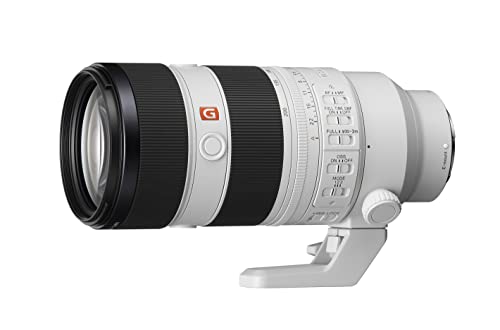
Sony 70-200mm F2.8 GM OSS II
Best for: Professional sports and event photography
- Focal Length
- 70-200mm
- Lens Mount
- Sony FE
- Maximum Aperture
- F2.8
- Sensor Format
- Full-Frame
- Lens Type
- telephoto Zoom
- Image Stabilization
- OSS
This Sony telephoto zoom delivers constant f/2.8 aperture across its 70-200mm range. It features four XD Linear Motors for fast autofocus and Optical SteadyShot image stabilization. The lens weighs 2.3 lb, making it the lightest in its class. You get high resolution with specialized glass elements. It suits photographers who need speed and reach in a manageable package.
- Constant f/2.8 maximum aperture for consistent exposure
- Four XD Linear Motors boost AF speed by up to 4x
- Optical SteadyShot (OSS) image stabilization reduces camera shake
- Weighs just 2.3 lb for improved balance and handling
- Reduces focus breathing and axis shift for video work
- Maximum aperture is f/2.8, which is wider than the f/4 alternative on this list
- Weighs 2.3 lb, which is heavier than lenses with slower maximum apertures
- You need a fast constant aperture for low-light sports or events
- You shoot both stills and video and need smooth focus transitions
- You want a lightweight telephoto zoom that reduces arm fatigue
- You prefer a smaller f/4 aperture to save weight and cost
- You need macro capabilities at close distances
- You use a camera body without in-body stabilization
Verdict: Sony FE 70-200mm f/2.8 GM OSS II offers professional-grade speed and stabilization in a lighter body. It fits photographers who prioritize autofocus performance and video features over the smallest possible size.

Sony FE 70-200mm f/4 Macro G OSS II
Best for: compact telephoto shooting with macro detail
- Focal Length
- 70-200mm
- Lens Mount
- E Mount
- Maximum Aperture
- f/4
- Sensor Format
- Full-frame
- Lens Type
- Telephoto Zoom, Macro
- Image Stabilization
- OSS
This Sony telephoto zoom lens offers a constant f/4 aperture and full-frame compatibility. It features Optical SteadyShot image stabilization and half-macro capability throughout the zoom range. The lens weighs 1.7 pounds and measures 5.87 inches in length. It is designed for users who value a compact form factor and close-up performance. You get sharp corner-to-corner resolution with reduced chromatic aberration.
- Constant f/4 maximum aperture
- Half-macro capability across the zoom range
- Optical SteadyShot (OSS) image stabilization
- Compatible with 1.4x and 2.0x teleconverters
- Lightweight 1.7-pound build
- Smaller f/4 maximum aperture compared to f/2.8 alternatives
- Lower magnification than life-size 1:1 macro lenses
- Heavier than some f/4 competitors at 1.7 pounds
- You need a compact telephoto zoom for travel
- You want close-up macro capabilities without changing lenses
- You prioritize weight savings over maximum light gathering
- You require a wider f/2.8 aperture for low light
- You need life-size 1:1 macro magnification
- You prefer a lighter lens under 1.5 pounds
Verdict: Sony 70-200mm f/4 Macro G OSS II suits photographers who need a versatile, compact telephoto zoom with unique macro features. It is ideal for those who value portability and close-up detail over the widest possible aperture.
Specifications side by side
| Spec | Sony 70-200mm F2.8 GM OSS II | Sony FE 70-200mm f/4 Macro G OSS II |
|---|---|---|
| Lens Mount | Sony FE | E Mount |
| Focal Length | 70-200mm | 70-200mm |
| Maximum Aperture | F2.8 | f/4 |
| Sensor Format | Full-Frame | Full-frame |
| Lens Type | telephoto Zoom | Telephoto Zoom, Macro |
| Image Stabilization | OSS | OSS |
| Maximum Magnification | – | half-macro |
| Color | White | Black |
| Dimensions | 13.8 × 13.1 × 14.6 inches | 5.87 × 3.24 × 3.24 inches |
| Weight | 3.95 pounds | 1.7 pounds |
| Model | SEL70200GM2 | SEL70200G2 |
How to choose the right lens
Check sensor format compatibility
You must ensure the lens supports your camera's sensor size. Both options listed here are designed for full-frame sensors. This means they cover the entire image area without cropping. If you use an APS-C body, the field of view will change. The effective focal length increases, making the lens act like a longer telephoto. Verify that your camera body accepts the Sony E mount. This mount is standard for Sony’s mirrorless lineup. Matching the sensor format to the lens design ensures you get the intended image quality and coverage without vignetting or unexpected zoom factors.
Compare maximum aperture values
The maximum aperture determines how much light reaches the sensor. The top pick offers an f/2.8 opening, which allows more light than the f/4 option. This wider aperture helps in low-light conditions and creates a shallower depth of field. You can isolate subjects more easily with f/2.8. The second lens stops down to f/4, which is still capable but requires more light or higher ISO settings. Decide if you need that extra stop of light for fast-moving subjects or dim environments. This spec directly impacts your shutter speed choices and background blur potential.
Evaluate physical weight and size
Weight affects your ability to hold the lens steady for long periods. The f/2.8 model weighs 3.95 pounds and measures 13.8 inches in length. This is substantial for handheld shooting. The f/4 macro version weighs only 1.7 pounds and is much shorter. You will feel less fatigue when carrying the lighter lens all day. Consider your typical shooting style. If you shoot from a tripod often, the heavier lens may be acceptable. For handheld event work, the compact design offers significant practical advantages for mobility and balance.
Assess lens type and features
The lens type defines its primary optical characteristics. The first option is a standard telephoto zoom. The second is a macro lens, which allows for closer focusing distances. If you need to photograph small details or insects, the macro designation is critical. It provides a unique capability that standard telephotos lack. The f/2.8 version prioritizes speed and stabilization for distance. The f/4 version prioritizes versatility and close-up work. Check if macro functionality is a requirement for your projects. This feature expands your creative options beyond distant subjects to intimate, detailed compositions.
Review color and build design
The exterior color can influence your preference and identification in the field. The f/2.8 lens is white, a traditional color for professional telephoto zooms. This color reflects sunlight and helps keep the lens barrel cooler during outdoor use. The f/4 lens is black, which may blend better with certain camera bodies or environments. Some photographers prefer black for discretion. Others prefer white for heat management. Consider how the lens looks on your specific camera body. The visual design does not change optical performance, but it affects your comfort and the lens's interaction with its environment during long shoots.
Frequently asked questions
Which Sony 70-200mm lens is best for sports photography?
The Sony FE 70-200mm f/2.8 GM OSS II is the top choice for professional sports and event photography. Its f/2.8 maximum aperture allows for faster shutter speeds in low light. This model also includes Optical SteadyShot stabilization to help freeze action. It is designed for photographers who prioritize autofocus performance and video features over a smaller size.
Is there a compact 70-200mm option for Sony cameras?
Yes, the Sony FE 70-200mm f/4 Macro G OSS II is the most compact option on this list. It weighs only 1.7 pounds and measures 5.87 inches in length. This lens is ideal for photographers who value portability and close-up detail. It suits those who need a versatile telephoto zoom without the bulk of the heavier f/2.8 models.
What is the difference between the f/2.8 and f/4 versions?
The primary difference is the maximum aperture and weight. The f/2.8 version gathers more light, making it better for low-light sports. It weighs 3.95 pounds. The f/4 version offers a wider range of macro capabilities and is significantly lighter at 1.7 pounds. You choose the f/2.8 for speed and the f/4 for compactness and macro detail.
Do these lenses support macro photography?
Only the Sony FE 70-200mm f/4 Macro G OSS II supports macro photography. It is specifically designed as a macro lens, allowing for unique close-up detail. The Sony FE 70-200mm f/2.8 GM OSS II is a standard telephoto zoom and does not feature macro capabilities. If close-up shooting is important, the f/4 model is the correct choice.
Are these lenses compatible with full-frame sensors?
Yes, both listed lenses are designed for full-frame sensors. They cover the entire image area without cropping on compatible bodies. This ensures you get the full resolution and field of view specified for the 70-200mm focal length. You must ensure your camera body supports full-frame sensors to utilize these lenses as intended.
Which lens weighs less for travel?
The Sony FE 70-200mm f/4 Macro G OSS II weighs significantly less at 1.7 pounds. The Sony FE 70-200mm f/2.8 GM OSS II II weighs 3.95 pounds. If you are traveling or need to carry the lens for long periods, the f/4 model is much easier to manage. Its smaller dimensions also make it easier to pack.
What mount do these Sony lenses use?
Both lenses use the Sony E mount. This mount is standard for Sony mirrorless cameras. You can attach these lenses directly to any Sony E-mount body that supports the focal length. The mount type ensures full electronic communication for autofocus and aperture control. Check your camera model to confirm it uses the Sony E mount.


