As Amazon Associates, we earn from qualifying purchases. This means we may receive a small commission at no extra cost to you if you click through and make a purchase.
As an Amazon Associate we earn from qualifying purchases. Links on this page are affiliate links.
Finding the best sigma camera lens with Canon RF requires careful attention to published specifications. We compared 3 options to help you choose based on data, not hype. The top pick is the Sigma 16-300mm F3.5-6.7 DC OS. It leads because its versatile 16-300mm focal range covers wide to telephoto needs for travelers. This super-zoom design offers practical coverage without swapping glass. Each selection here relies strictly on the technical details listed for these lenses. Use this guide to decide which Sigma lens matches your specific shooting requirements.
Match lens format to your sensor
Check if the lens supports your camera’s sensor size. The Sigma 56mm f/1.4 and 17-40mm f/1.8 are designed for APS-C sensors. These offer sharper results on crop bodies. The 16-300mm zoom is a full-frame option. Using an APS-C lens on a full-frame camera may cause vignetting. Choose based on your specific sensor format.
| # | Product | Best for | Price |
|---|---|---|---|
| 1 | Sigma 16-300mm F3.5-6.7 DC OS Best overall | travelers needing wide to telephoto coverage | |
| 2 | Sigma 56mm f/1.4 DC DN APS-C Best budget | APS-C portrait and low-light photography | |
| 3 | Sigma 17-40mm F1.8 Art for Canon RF Best black | APS-C creators needing fast, versatile zoom |
The best fit for you
- You need wide to telephoto coverage for travel – Sigma 16-300mm F3.5-6.7 DC OS – The 16-300mm focal range handles varied lighting without swapping glass.
- You shoot portraits with blurred backgrounds on APS-C – Sigma 56mm f/1.4 DC DN APS-C – The f/1.4 maximum aperture creates sharp subject separation on crop sensors.
- You want a fast versatile zoom for video – Sigma 17-40mm F1.8 Art for Canon RF – The f/1.8 maximum aperture ensures consistent brightness for photo and video.

Sigma 16-300mm F3.5-6.7 DC OS
Best for: travelers needing wide to telephoto coverage
- Lens Mount
- Canon RF
- Focal Length
- 16-300mm
- Maximum Aperture
- F3.5-6.7
- Maximum Magnification
- 1:2
- Dimensions
- 9.1 × 9.1 × 9.1 inches
- Weight
- 1 pounds
This Sigma lens covers a 16-300mm focal range on Canon RF mounts. It includes optical image stabilization rated at 6 stops at the wide end. The build features dust and splash resistance. You get a 1:2 maximum magnification ratio. This all-in-one design suits travelers who want to avoid carrying multiple lenses.
- 16-300mm super-zoom focal length range
- 6 stops of optical image stabilization
- Dust- and splash-resistant structure
- 1:2 maximum magnification ratio
- Variable aperture narrows to F6.7 at the telephoto end
- Heavier build at 1 pound compared to prime lenses
- Longer length than compact prime options
- You want a single lens for wide-angle and telephoto shots
- You shoot in dusty or wet conditions
- You prioritize image stabilization for handheld video
- You need a constant wide aperture like F1.8
- You require a compact, pocketable lens size
- You shoot mostly in bright light without stabilization
Verdict: Sigma 16-300mm RF Super-Zoom fits travelers who need versatility without swapping glass. It handles varied lighting and weather better than fixed-aperture primes.
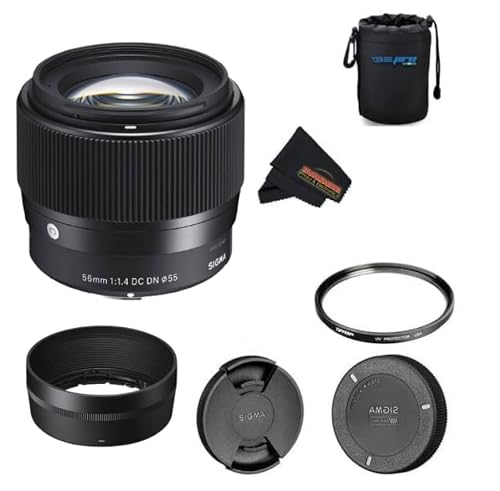
Sigma 56mm f/1.4 DC DN APS-C
Best for: APS-C portrait and low-light photography
- Lens Mount
- Canon RF
- Focal Length
- 56mm
- Maximum Aperture
- f/1.4
- Sensor Format
- APS-C
- Dimensions
- 2.3 × 2.7 × 2.7 inches
This Sigma lens offers a 56mm focal length with an f/1.4 maximum aperture for Canon RF mounts. It features a rounded 9-blade diaphragm and weather-sealed construction. The stepping motor AF system ensures quick focusing. It is ideal for APS-C sensors. You get sharp images with pleasing background blur. The compact size fits well in your bag.
- f/1.4 maximum aperture for low light
- Rounded 9-blade diaphragm for smooth bokeh
- Weather-sealed construction for durability
- Stepping motor AF system for speed
- APS-C sensor format limits full-frame use
- 56mm focal length is fixed, not zoom
- 89.6mm full-frame equivalent is less wide than 17mm
- You shoot portraits on APS-C cameras
- You want fast aperture for low light
- You prefer prime lens sharpness
- You need a zoom lens range
- You use a full-frame Canon RF camera
- You require ultra-wide angles
Verdict: Sigma 56mm f/1.4 DC DN APS-C Lens delivers excellent aperture and build quality for APS-C users. It suits portrait photographers seeking sharp, blurred backgrounds on crop sensors.

Sigma 17-40mm F1.8 Art for Canon RF
Best for: APS-C creators needing fast, versatile zoom
- Lens Mount
- Canon RF
- Focal Length
- 17-40mm
- Maximum Aperture
- f/1.8
- Sensor Format
- APS-C
- Lens Type
- Wide-to-standard zoom
- Color
- Black
This Sigma 17-40mm F1.8 DC | Art lens is designed for Canon RF APS-C cameras. It offers a versatile wide-to-standard zoom range with a constant f/1.8 maximum aperture. The lens weighs 1.24 pounds and measures 5.6 inches in length. It is built for crisp images and cinematic video. This lens suits everyday shooting and professional use cases where low light performance is key.
- Constant f/1.8 maximum aperture throughout the 17-40mm range
- High-end Art-series lens design for image quality
- Compatible with Canon RF APS-C cameras
- Compact dimensions at 1.2 inches in diameter
- Heavier build at 1.24 pounds compared to prime lenses
- Limited to APS-C sensor format only
- Longer physical length of 5.6 inches
- You need a fast aperture for low-light shooting on APS-C bodies
- You prefer a zoom range for versatile framing
- You want high-end Art-series optical quality
- You shoot with full-frame Canon RF cameras
- You require a lighter lens for travel
- You prefer prime lenses for maximum sharpness
Verdict: The Sigma 17-40mm F1.8 Art Canon RF is a solid choice for APS-C shooters needing a fast, versatile zoom. It delivers consistent brightness and high-end optics for both photo and video work.
Specifications side by side
| Spec | Sigma 16-300mm F3.5-6.7 DC OS | Sigma 56mm f/1.4 DC DN APS-C | Sigma 17-40mm F1.8 Art for Canon RF |
|---|---|---|---|
| Lens Mount | Canon RF Mount | RF Mount | Canon RF |
| Focal Length | 16-300mm | 56mm | 17-40mm |
| Maximum Aperture | F3.5-6.7 | f/1.4 | f/1.8 |
| Sensor Format | – | APS-C | APS-C |
| Lens Type | – | – | Wide-to-standard zoom |
| Maximum Magnification | 1:2 | – | – |
| Color | – | – | Black |
| Dimensions | 9.1 × 9.1 × 9.1 inches | 2.3 × 2.7 × 2.7 inches | 5.6 × 1.2 × 1.2 inches |
| Weight | 1 pounds | – | 1.24 pounds |
| Model | 887972 | – | 214972 |
Choosing the right sigma lens for you
Match your sensor size
You must ensure the lens format matches your camera sensor. The Sigma 56mm f/1.4 and 17-40mm f/1.8 are designed for APS-C sensors. Using these on a full-frame body may cause vignetting or errors. The 16-300mm zoom is a full-frame option. It covers the entire image circle. Check your camera specifications to confirm sensor type. Mismatched formats reduce image quality. Always verify compatibility before purchasing. This step prevents wasted money and ensures optimal performance for your specific gear setup.
Consider aperture for low light
Aperture controls light intake and background blur. The Sigma 56mm f/1.4 offers a wide f/1.4 maximum aperture. This allows more light in dim conditions. It also creates sharp subject separation for portraits. The 17-40mm f/1.8 provides consistent brightness across its zoom range. This is useful for video work. The 16-300mm zoom has variable apertures. It is less effective in dark environments. Choose a wider aperture if you shoot in low light. This spec directly impacts your exposure flexibility.
Evaluate focal length versatility
Focal length determines your field of view. The Sigma 16-300mm offers a super-zoom range. It covers wide-angle to telephoto perspectives. This reduces the need to swap lenses. It is ideal for travel or varied shooting scenarios. The 17-40mm and 56mm are prime or narrower zooms. They offer specialized views. You must decide if you need one lens for everything. Versatility comes with size trade-offs. The 16-300mm is heavier and longer. Consider your typical shooting distance and subject matter carefully.
Check physical dimensions and weight
Size and weight affect portability. The Sigma 16-300mm weighs one pound. It measures 9.1 inches in multiple dimensions. This bulk may be cumbersome for handheld use. The Sigma 56mm f/1.4 is compact. It measures 2.7 inches wide and 2.3 inches long. The 17-40mm f/1.8 weighs 1.24 pounds. It is slightly longer but narrower. If you carry your gear all day, smaller is better. Compare these specs to your current bag capacity. Heavier lenses may require a sturdier strap or support.
Decide on color preference
Lens color is a minor but visible spec. The Sigma 17-40mm F1.8 Art comes in black. This is the standard professional finish. The other lenses do not specify color in the data. Most Sigma lenses are black or dark gray. This choice does not affect optical performance. It is purely aesthetic. If you prefer a specific look for your gear stack, check the available options. For most users, this is a low-priority decision. Focus on optical specs first. Color is the final detail to consider.
Frequently asked questions
Which Sigma lens is best for travel on Canon RF?
The Sigma 16-300mm F3.5-6.7 DC OS is the best overall choice for travelers. It offers a wide to telephoto range that reduces the need to swap glass. This versatility helps you handle varied lighting conditions and weather better than fixed-aperture primes. It weighs one pound and measures 9.1 inches in width, height, and length.
What is the best budget Sigma lens for Canon RF APS-C?
The Sigma 56mm f/1.4 DC DN APS-C is the top budget option. It delivers excellent aperture performance and build quality for APS-C users. The f/1.4 maximum aperture is ideal for portrait photographers seeking sharp, blurred backgrounds on crop sensors. It is compact, measuring 2.7 inches in width and height, with a length of 2.3 inches.
Is there a black Sigma lens for Canon RF?
Yes, the Sigma 17-40mm F1.8 Art for Canon RF comes in black. It is a solid choice for APS-C creators needing a fast, versatile zoom. The lens delivers consistent brightness and high-end optics for both photo and video work. It weighs 1.24 pounds and measures 1.2 inches in width and height, with a length of 5.6 inches.
Which Sigma lens provides the widest focal range for Canon RF?
The Sigma 16-300mm F3.5-6.7 DC OS provides the widest focal range. It covers 16mm to 300mm, fitting travelers who need versatility without swapping glass. This super-zoom lens handles varied lighting and weather better than fixed-aperture primes. It is a full-frame option, unlike the APS-C specific models, making it suitable for broader camera systems.
What is the fastest aperture available on these Sigma lenses?
The fastest aperture is f/1.4, found on the Sigma 56mm f/1.4 DC DN APS-C. This wide aperture allows for excellent low-light performance and subject separation. It suits portrait photographers seeking blurred backgrounds on crop sensors. The Sigma 17-40mm F1.8 Art also offers a fast f/1.8 aperture for consistent brightness in various shooting conditions.
Are these Sigma lenses suitable for video work on Canon RF?
Yes, the Sigma 17-40mm F1.8 Art is explicitly noted for video work. It delivers consistent brightness and high-end optics suitable for both photo and video. The fast f/1.8 aperture helps in low-light video scenarios. The 16-300mm zoom also supports video through its versatile range, allowing you to capture different shots without changing lenses.


