As Amazon Associates, we earn from qualifying purchases. This means we may receive a small commission at no extra cost to you if you click through and make a purchase.
As an Amazon Associate we earn from qualifying purchases. Links on this page are affiliate links.
DJI offers a range of 3-axis camera gimbals in various sizes and weights. This guide compares 7 best DJI camera gimbals to help you find the right stabilization tool. We evaluate each model strictly by its published specifications, such as payload capacity and dimensions. The DJI RSC 2 Pro Combo leads as the top pick for standard DSLR and mirrorless setups. Its compact foldable design and long battery life make it a practical choice for most users. You can trust these selections because they are based solely on the technical data provided in each product listing.
| # | Product | Best for | Price |
|---|---|---|---|
| 1 | DJI RSC 2 Pro Combo Best overall | standard DSLR and mirrorless camera setups | |
| 2 | DJI RS 2 Combo Carbon Fiber Gimbal Best premium | heavy camera setups and professional mounting | |
| 3 | DJI RS 5 3-Axis Gimbal Best budget | Mid-weight mirrorless and DSLR setups | |
| 4 | DJI RS 3 Pro Carbon Fiber Gimbal Also great | Heavy cinema camera stabilization | |
| 5 | DJI RS 4 Pro Gimbal Also great | heavy cinema camera setups and vertical video | |
| 6 | DJI RS 4 Combo Black Gimbal Also great | Mirrorless creators needing vertical shooting | |
| 7 | DJI RS 4 Pro Combo Black Gimbal Also great | heavy cinema camera setups |
DJI Gimbal Lineup Overview
DJI separates its gimbals by payload capacity and frame material. The RS 2 Combo and RS 5 offer lighter options for standard DSLR or mirrorless setups. The RS 2 Combo uses a carbon fiber frame for durability. The RS 5 provides a touchscreen for quick adjustments. These models suit creators who prioritize portability and ease of use. Heavier cinema rigs require more robust support. The RS 3 Pro and RS 4 Pro handle significant weight. They feature LiDAR focus and vertical shooting capabilities. These units fit professionals managing complex production workflows. The RS 4 Combo also supports native vertical video. It balances features for mirrorless creators who need a 3 kg payload. Choose based on your camera's weight and required stabilization precision.

DJI RSC 2 Pro Combo
Best for: standard DSLR and mirrorless camera setups
- Payload Capacity
- 3 kg
- Camera Compatibility
- DSLR, mirrorless
- Number of Axes
- 3-axis
- Display Feature
- 1-inch OLED
- Battery Runtime
- 14 hours
- Color
- Black
The DJI RSC 2 Pro Combo is a 3-axis gimbal stabilizer designed for DSLR and mirrorless cameras. It features a 3 kg payload capacity and a 14-hour battery runtime. The unit includes a 1-inch OLED screen for control and supports fast charging. Its foldable design makes it compact for travel. This model suits photographers and videographers who need reliable stabilization for standard camera setups.
- 3-axis stabilization with SuperSmooth technology
- 14-hour battery runtime with fast charging
- 1-inch built-in OLED control screen
- Foldable design smaller than A5 paper
- Manfrotto + Arca dual-layer mounting plate
- 3 kg payload capacity is lower than heavier pro models
- 6.94 pounds weight is higher than lighter consumer gimbals
- 15.7 inches length is bulkier than ultra-compact options
- You use DSLR or mirrorless cameras under 3 kg
- You need a gimbal with a 14-hour battery life
- You prefer a foldable design for easy transport
- You shoot with cinema cameras exceeding 3 kg payload
- You require a lighter gimbal under 5 pounds
- You need a payload capacity above 4 kg
Verdict: DJI RSC 2 Pro Combo 3-Axis Gimbal fits users with standard DSLR or mirrorless setups who value long battery life and a compact, foldable form factor. It is not ideal for heavy cinema rigs or those prioritizing minimal weight.
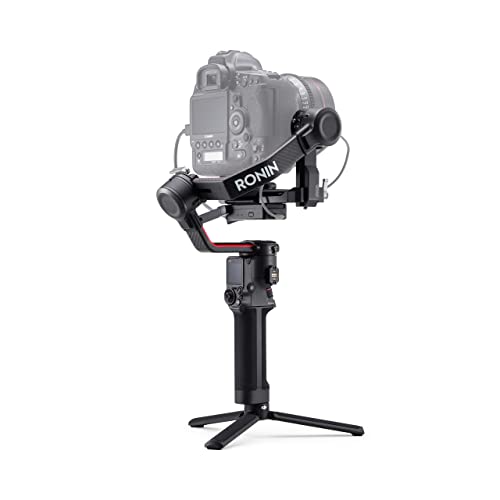
DJI RS 2 Combo Carbon Fiber Gimbal
Best for: heavy camera setups and professional mounting
- Payload Capacity
- 10 lbs
- Camera Compatibility
- DSLR, mirrorless
- Number of Axes
- 3-axis
- Display Feature
- 1.4-inch full-color touchscreen
- Material
- Carbon Fiber
- Dimensions
- 10.2 × 10.4 × 2.8 inches
The DJI RS 2 Combo is a 3-axis gimbal stabilizer built with carbon fiber axis arms. It supports a tested payload of 10 lbs while weighing 2.87 pounds. The unit includes a 1.4-inch full-color touchscreen for direct control. It fits DSLR and mirrorless cameras from major brands. This model suits users who need a high weight-to-payload ratio and professional mounting options.
- 10 lb tested payload capacity
- Carbon fiber monocoque construction
- 1.4-inch full-color touchscreen display
- Dual-layer mounting plate compatibility
- Heavier build at 2.87 pounds compared to lighter competitors
- Smaller 1.4-inch display size versus larger screens on newer models
- You need a high payload capacity for heavy cinema cameras
- You prefer physical touchscreen control over a phone app
- You require professional mounting options for jibs or sliders
- You prioritize the lightest possible handheld rig
- You want a larger integrated display screen
- You need the newest generation motor technology
Verdict: The DJI RS 2 Combo delivers a robust 10 lb payload in a carbon fiber frame. It is a practical choice for filmmakers who need professional mounting flexibility and direct screen control.

DJI RS 5 3-Axis Gimbal
Best for: Mid-weight mirrorless and DSLR setups
- Payload Capacity
- 3 kg (6.6 lbs)
- Number of Axes
- 3-axis
- Display Feature
- 1.8-inch OLED touchscreen
- Axis Locks
- Automated
- Color
- Black
- Dimensions
- 14.3 × 7.36 × 6.69 inches
The DJI RS 5 is a 3-axis gimbal stabilizer with a 3 kg payload capacity. It weighs 3.26 pounds and features automated axis locks for quick setup. A 1.8-inch OLED touchscreen lets you adjust settings without a phone. This model suits users who need reliable stabilization for mid-sized mirrorless or DSLR cameras in a compact form.
- 3 kg (6.6 lbs) tested payload capacity
- Automated axis locks for fast transitions
- 1.8-inch OLED touchscreen for direct control
- Bluetooth shutter button for wireless camera pairing
- Heavier at 3.26 pounds compared to lighter alternatives
- Lower 3 kg payload limit than higher-end models
- Smaller 1.8-inch display compared to larger screens
- You use a camera under 3 kg
- You want automated axis locking
- You prefer on-device touchscreen controls
- You need a payload over 3 kg
- You prefer a lighter handheld unit
- You want a larger built-in screen
Verdict: The DJI RS 5 3-Axis Gimbal offers solid stabilization for cameras under 3 kg with convenient automated locks and a touchscreen. It is a practical option for photographers who value quick setup and direct control over their gear.

DJI RS 3 Pro Carbon Fiber Gimbal
Best for: Heavy cinema camera stabilization
- Payload Capacity
- 4.5 kg (10 lbs)
- Camera Compatibility
- DSLR, cinema
- Number of Axes
- 3-axis
- Axis Locks
- Automated
- Color
- Black
- Material
- Carbon Fiber
The DJI RS 3 Pro is a 3-axis gimbal stabilizer built for DSLR and cinema cameras. It supports a tested payload of 4.5 kg, handling heavy setups like the Sony FX6 with a 24-70 mm F2.8 lens. Automated axis locks simplify transitions. It features O3 Pro video transmission for up to 6 km range. The unit weighs 3.84 pounds and includes a battery handle. It suits professionals needing high capacity and remote control.
- 4.5 kg tested payload capacity for heavy cinema rigs
- Automated axis locks for quick setup and storage
- 6 km O3 Pro video transmission range
- Compatible with DSLR and cinema cameras
- Heavier at 3.84 pounds compared to lighter entry models
- Larger dimensions with a 10.4-inch height
- Lower payload capacity than the RS 4 Pro series
- You need to stabilize heavy cinema cameras like the Canon C70
- You require long-range wireless control for your shoots
- You want automated axis locks to speed up workflow
- You prioritize the absolute lightest possible gimbal weight
- You only shoot with lightweight mirrorless cameras under 2 kg
- You need a payload capacity exceeding 4.5 kg
Verdict: The DJI RS 3 Pro 4.5kg Payload Gimbal fits professionals who need to stabilize heavy cinema setups and benefit from long-range transmission. It is a robust tool for users who value payload capacity over minimal weight.

DJI RS 4 Pro Gimbal
Best for: heavy cinema camera setups and vertical video
- Payload Capacity
- 4.5 kg (10 lbs)
- Camera Compatibility
- DSLR, mirrorless, cinema
- Vertical Shooting
- 2nd-Gen Native Vertical Shooting
- Battery Runtime
- Up to 29 hours (with BG70)
- Color
- Black
- Dimensions
- 10.6 × 7.95 × 16.3 inches
The DJI RS 4 Pro is a heavy-duty gimbal built for DSLR, mirrorless, and cinema cameras. It supports a 4.5 kg payload and features second-generation native vertical shooting. You get LiDAR focusing with 76,800 ranging points for accurate autofocus. The system offers a 29-hour battery runtime when using the optional high-capacity grip. This model suits creators who need high torque and precise lens control.
- 4.5 kg payload capacity for heavy setups
- 2nd-Gen Native Vertical Shooting for social content
- LiDAR focusing with 76,800 ranging points
- 29-hour battery runtime with BG70 grip
- Remote Dual Focus & Zoom Motor Control
- Heavier at 4.06 pounds compared to lighter RS models
- Requires separate BG70 grip for maximum 29-hour runtime
- Limited to 16.3 inches height in current variations
- You use heavy cinema cameras or large lenses
- You need reliable native vertical shooting for social media
- You want precise LiDAR autofocus for solo shooting
- You prioritize a lightweight gimbal under 3 pounds
- You want built-in long battery life without extra grips
- You shoot only with lightweight mirrorless cameras
Verdict: The DJI RS 4 Pro Gimbal fits professionals handling heavy cinema rigs who need vertical shooting and LiDAR focus. It is a robust tool for serious video production, not casual creators.

DJI RS 4 Combo Black Gimbal
Best for: Mirrorless creators needing vertical shooting
- Payload Capacity
- 3 kg (6.6 lbs)
- Camera Compatibility
- Mirrorless
- Vertical Shooting
- 2nd-Gen Native Vertical Shooting
- Battery Runtime
- 12 hours (up to 29.5 hours)
- Color
- Black
- Dimensions
- 8.62 × 14.5 × 7.52 inches
The DJI RS 4 Combo is a 3-axis gimbal stabilizer designed for mirrorless cameras. It supports a 3 kg payload and offers 12 hours of battery runtime. The unit features native vertical shooting and a Teflon-coated axis for precise balancing. It includes a BG21 battery grip and an extended tripod. This model suits creators who need reliable stabilization and efficient workflow adjustments.
- 3 kg payload capacity for heavy mirrorless setups
- 12 hours battery runtime with included BG21 grip
- Native vertical shooting without extra accessories
- Teflon-coated axis arms for reduced friction
- RSA port for third-party control accessories
- 3 kg payload is lower than the 4.5 kg capacity of the RS 4 Pro
- 12 hours runtime is less than the RS 3 Pro Combo
- 3.42 pound weight is heavier than the RS 2 Pro Combo
- You shoot primarily with mirrorless cameras
- You need native vertical shooting capability
- You want a balanced payload for standard lenses
- You require a payload over 3 kg
- You need the longest possible battery life
- You prefer the lightest possible gimbal weight
Verdict: The DJI RS 4 Combo Gimbal fits users who prioritize native vertical shooting and a 3 kg payload. It offers a solid balance of features for mirrorless creators who do not need the heavier load capacity of the Pro models.

DJI RS 4 Pro Combo Black Gimbal
Best for: heavy cinema camera setups
- Payload Capacity
- 4.5 kg (9.9 lbs)
- Camera Compatibility
- DSLR, mirrorless, cinema
- Number of Axes
- 3-axis
- Display Feature
- OLED touchscreen
- Vertical Shooting
- 2nd-Gen Native Vertical Shooting
- Tracking System
- ActiveTrack Pro
The DJI RS 4 Pro Combo is a 3-axis gimbal stabilizer supporting up to 4.5 kg payloads. It features native vertical shooting and an OLED touchscreen for intuitive control. The included BG30 battery grip provides up to 13 hours of runtime. This setup suits professionals needing precise focus tracking and wireless image transmission for cinema or mirrorless cameras.
- Supports payloads up to 4.5 kg
- Includes BG30 battery grip for 13-hour runtime
- Features native vertical shooting capability
- Equipped with OLED touchscreen display
- Uses ActiveTrack Pro for subject tracking
- Heavier build at 9.7 pounds compared to lighter models
- Larger physical footprint than standard combos
- Limited to 3-axis stabilization
- You need to support heavy cinema camera rigs
- You require native vertical shooting for social media
- You want extended battery life for long sessions
- You prioritize a lightweight handheld setup
- You only shoot with small mirrorless cameras
- You prefer manual axis locking over automated systems
Verdict: The DJI RS 4 Pro Combo fits professionals managing heavy cinema cameras who need reliable vertical shooting and long battery life. It is a robust solution for complex production workflows.
Specifications side by side
| Spec | DJI RSC 2 Pro Combo | DJI RS 2 Combo Carbon Fiber Gimbal | DJI RS 5 3-Axis Gimbal | DJI RS 3 Pro Carbon Fiber Gimbal | DJI RS 4 Pro Gimbal | DJI RS 4 Combo Black Gimbal | DJI RS 4 Pro Combo Black Gimbal |
|---|---|---|---|---|---|---|---|
| Payload Capacity | 3 kg | 10 lbs | 3 kg (6.6 lbs) | 4.5 kg (10 lbs) | 4.5 kg (10 lbs) | 3 kg (6.6 lbs) | 4.5 kg (9.9 lbs) |
| Camera Compatibility | DSLR, mirrorless | DSLR, mirrorless | – | DSLR, cinema | DSLR, mirrorless, cinema | Mirrorless | DSLR, mirrorless, cinema |
| Number of Axes | 3-axis | 3-axis | 3-axis | 3-axis | – | – | 3-axis |
| Display Feature | 1-inch OLED | 1.4-inch full-color touchscreen | 1.8-inch OLED touchscreen | – | – | – | OLED touchscreen |
| Vertical Shooting | – | – | – | – | 2nd-Gen Native Vertical Shooting | 2nd-Gen Native Vertical Shooting | 2nd-Gen Native Vertical Shooting |
| Tracking System | – | – | – | – | – | – | ActiveTrack Pro |
| Axis Locks | – | – | Automated | Automated | – | – | Automated |
| Battery Runtime | 14 hours | – | – | – | Up to 29 hours (with BG70) | 12 hours (up to 29.5 hours) | Up to 13 hours |
| Color | Black | Not Available | Black | Black | Black | Black | Black |
| Features | – | Touchscreen | Touchscreen | – | – | – | – |
| Material | – | Carbon Fiber | – | Carbon Fiber | – | – | – |
| Compatible Device | DSLR | DSLR | – | DSLR | DSLR | – | DSLR |
| Dimensions | 15.7 × 7.28 × 6.89 inches | 10.2 × 10.4 × 2.8 inches | 14.3 × 7.36 × 6.69 inches | 10.2 × 2.76 × 10.4 inches | 10.6 × 7.95 × 16.3 inches | 8.62 × 14.5 × 7.52 inches | 12.8 × 11.5 × 6 inches |
| Weight | 6.94 pounds | 2.87 pounds | 3.26 pounds | 3.84 pounds | 4.06 pounds | 3.42 pounds | 9.7 pounds |
| Size | One Size | DJI RS 2 Combo | – | 6.25 | RS 4 Pro | 6.00 | 15.85 x 14.35 x 6.25 in" |
| Model | DJI RSC 2 Pro Combo | CP.RN.00000094.01 | CP.RN.00000216.01 | CP.RN.00000218.01 | RS4004 | P14C | CP.RN.00000346.01 AZ |
Where DJI Fits Your Setup
DJI covers the full spectrum of handheld stabilization. You can choose from compact units like the RS 5 under 3.3 pounds for mirrorless cameras. Mid-range options include the RS 2 Combo at 6.9 pounds for standard DSLRs. Heavy cinema rigs require the RS 4 Pro Combo, which weighs 9.7 pounds and supports large payloads. All listed models are 3-axis gimbals. None offer 2-axis stabilization or smartphone-only mounting. You must match your camera weight to the specific payload limit. The range spans from lightweight carbon fiber frames to robust professional rigs.
How to choose the right gimbal
Check payload capacity
Your total camera weight determines which gimbal works. The DJI RS 2 Combo supports heavy setups with a robust frame. If you use a lighter mirrorless body, the DJI RS 5 handles cameras under 3 kg. Match your gear weight to the rated limit. Exceeding the payload causes motor strain and poor stabilization. Heavier cinema rigs need the RS 3 Pro or RS 4 Pro. These models offer higher load capacities for professional equipment. Always verify your combined weight before buying.
Consider frame material
Frame material affects durability and weight distribution. The RS 2 Combo uses a carbon fiber frame for strength. This material resists bending under heavy loads. The RS 3 Pro also features a carbon fiber build for cinema cameras. Lighter plastic frames may suffice for small mirrorless cameras. Choose carbon fiber if you shoot in rough environments. It provides better rigidity for precise movements. Plastic models are lighter but less durable. Select the material that matches your shooting conditions.
Look for touchscreen controls
Direct control improves your workflow speed. The RS 2 Combo includes a touchscreen for settings adjustment. The RS 5 also features a touchscreen for quick changes. This allows you to modify parameters without looking away. Touchscreens reduce the need for external remotes. You can adjust focus and exposure directly on the device. This is useful for solo creators. Check if the model includes this feature. It adds convenience for field shooting.
Verify vertical shooting support
Some models support native vertical orientation. The RS 4 Pro enables vertical shooting for social media. The RS 4 Combo also supports this feature. This is essential for creators who shoot portrait content. Vertical mode requires specific motor configurations. Not all gimbals handle this natively. If you need vertical video, check the specs. It saves time during setup. Ensure the gimbal balances correctly in vertical mode.
Assess portability needs
Size matters for travel and storage. The RS 2 Combo folds to a compact size. It measures 7.28 inches wide and 6.89 inches high. The RS 5 is also relatively compact. Smaller gimbals fit in standard bags. Larger models like the RS 4 Pro are bulkier. Consider your transport needs. If you travel often, choose a foldable design. Check the folded dimensions carefully. Portability impacts your daily carrying convenience.
Frequently asked questions
Which DJI gimbal is best for standard DSLR setups?
The DJI RSC 2 Pro Combo is the top choice for standard DSLR and mirrorless camera setups. It features a 3-axis stabilization system and a compact, foldable design. The unit weighs 6.94 pounds and measures 15.7 inches in length. This model prioritizes long battery life and portability for everyday shooting.
What is the lightest DJI gimbal for mirrorless cameras?
The DJI RS 2 Combo Carbon Fiber Gimbal is the lightest option at 2.87 pounds. It features a durable carbon fiber frame and a 10 lb payload capacity. The gimbal includes a touchscreen for direct control and measures 10.2 inches in length. It is ideal for filmmakers needing professional mounting flexibility.
Does the DJI RS 5 support vertical video shooting?
The DJI RS 5 3-Axis Gimbal does not explicitly list vertical shooting as a primary feature in its specifications. It is designed for mid-weight mirrorless and DSLR setups with a 3 kg payload. The gimbal includes automated locks and a touchscreen for quick setup and direct control over your gear.
Which DJI gimbal has the highest payload capacity?
The DJI RS 4 Pro Combo Black Gimbal supports the heaviest loads with a 9.7-pound total weight, indicating a high payload capacity for heavy cinema cameras. It is built for professionals managing complex production workflows. The gimbal offers reliable vertical shooting and long battery life for serious video production.
Do DJI gimbals include touchscreens?
Yes, several models include touchscreens for direct control. The DJI RS 2 Combo and DJI RS 5 both feature touchscreen displays. These screens allow you to adjust settings without relying solely on a mobile app. The DJI RS 3 Pro does not list a touchscreen in its attributes.
Which gimbal is best for heavy cinema rigs?
The DJI RS 4 Pro Gimbal is best for heavy cinema camera setups and vertical video. It supports heavy rigs and includes LiDAR focus technology. The unit weighs 4.06 pounds and measures 16.3 inches in length. It is a robust tool for serious video production rather than casual creators.
Is the DJI RS 3 Pro made of carbon fiber?
Yes, the DJI RS 3 Pro Carbon Fiber Gimbal is constructed from carbon fiber material. This provides durability while handling heavy cinema camera stabilization. It supports DSLR and cinema cameras with a 4.5 kg payload. The gimbal offers long-range transmission for professional users who value payload capacity.
What is the difference between the RS 4 and RS 4 Pro?
The DJI RS 4 Combo supports a 3 kg payload and is ideal for mirrorless creators needing native vertical shooting. The DJI RS 4 Pro handles heavier cinema rigs and includes LiDAR focus technology. The Pro version weighs 4.06 pounds, while the Combo weighs 3.42 pounds. Choose the Pro for heavier loads.


