As Amazon Associates, we earn from qualifying purchases. This means we may receive a small commission at no extra cost to you if you click through and make a purchase.
As an Amazon Associate we earn from qualifying purchases. Links on this page are affiliate links.
When you choose between a ball head vs fluid head tripod, you are selecting a mechanism that controls camera movement. Both the Vortex Radian and the Sirui SVS75 use carbon fiber legs for strength and portability. They share twist-lock leg systems and black finishes. The main difference lies in the head type. One offers precise, locked positioning for still photography or glassing. The other provides smooth, dampened panning for video work. Your choice depends on whether you prioritize stability or motion fluidity.
Head Type
Ball Head
Fluid Head
Intended Use
Not listed
Video
Weight
7.3 pounds
9.04 pounds
Payload Capacity
55 lb.
Not listed
Leg Lock Type
Twist Lock
One-step twist-lock
Choose the first if
- You need a lighter setup under 7.5 pounds for hiking.
- You require a known payload capacity of 55 lb. for heavy optics.
- You prefer a head that locks firmly in place for still images or spotting scopes.
Choose the second if
- You shoot video and need smooth, dampened panning motion.
- You want a tripod specifically designed for video recording.
- You do not mind a slightly heavier kit for better motion control.
Verdict
The Vortex Radian is the practical choice for photographers and shooters who need a lightweight, high-capacity platform with precise locking. The Sirui SVS75 is the better option for videographers who require fluid head movement and a design optimized for video production.
Ball vs Fluid Head Tripods Compared
Head Type and Control
Edge: Vortex Radian Carbon Tripod
The Vortex Radian Carbon Tripod uses a ball head mechanism. This design allows for independent pan movement and tension control. You get 45 degrees of tilt with notches for up to 90 degrees of adjustment. This setup is ideal for precise positioning and static shooting. The Sirui SVS75 Video Tripod features a fluid head. This mechanism is designed for smooth, continuous panning and tilting motions. It is built specifically for video work where fluid motion is critical. The ball head offers quick locking and angular adjustments, while the fluid head provides damping for cinematic camera moves. You choose based on whether you prioritize static precision or moving video.
Payload Capacity
Edge: Vortex Radian Carbon Tripod
Load capacity determines how heavy your gear can be. The Vortex Radian Carbon Tripod supports a maximum load of 55 pounds. This high capacity makes it suitable for large binoculars, spotting scopes, or heavy rifle setups. The Sirui SVS75 Video Tripod does not list a specific payload capacity in its published specifications. Without this data, you cannot confirm if it can safely support heavy video cameras or lenses. The Vortex Radian provides a clear advantage here due to its stated 55-pound limit. You should verify the Sirui weight limits elsewhere if you plan to carry substantial equipment.
Weight and Portability
Edge: Vortex Radian Carbon Tripod
Weight affects how easy the tripod is to carry. The Vortex Radian Carbon Tripod weighs 7.3 pounds. This lighter weight makes it easier to pack and transport for long hikes or travel. The Sirui SVS75 Video Tripod weighs 9.04 pounds. This is heavier than the Vortex option. The extra weight may come from the fluid head mechanism and robust construction. For users who prioritize minimal carry weight, the Vortex Radian is the better choice. You will notice the difference in your pack or bag. The Sirui is still manageable but requires more effort to move.
Intended Use and Versatility
Edge: Sirui SVS75 Video Tripod
Both tripods serve different primary purposes. The Vortex Radian is described as a kit for shooting, glassing, or rifle stands. It includes interchangeable rubber and spiked feet for stability in various terrains. The Sirui SVS75 is explicitly intended for video and travel. It features a modular design that converts to a monopod or mini tripod. This versatility allows you to adapt to fast-paced shoots or tight spaces. The Sirui offers more configuration options for video creators. The Vortex is more specialized for static observation or shooting. You should choose the Sirui if you need modular adaptability.
Height Adjustment System
Edge: Sirui SVS75 Video Tripod
How you change height impacts setup speed. The Vortex Radian uses standard twist-lock leg locks. You adjust the height by unlocking and extending each leg section manually. The Sirui SVS75 features a one-step twist-lock rapid system. This innovative mechanism allows you to switch shooting heights in seconds. You can extend or retract the legs effortlessly. This speed is crucial for videographers who need to change angles quickly. The Vortex offers precision but requires more time. The Sirui provides a significant advantage for users who value rapid height changes during shoots.
Material Construction
Edge: Tie
Build materials affect durability and weight. Both tripods use carbon fiber legs. The Vortex Radian combines carbon fiber legs with aluminum construction. This mix provides a high strength-to-weight ratio. The Sirui SVS75 is made from high-strength carbon fiber material. It is described as rugged and lightweight. Both options offer the benefits of carbon fiber, such as vibration dampening and light weight. The Vortex adds aluminum components, which may add some weight but also structural rigidity. The Sirui relies primarily on carbon fiber. Both are solid choices for outdoor use, but the Vortex offers a mixed material approach.
Choose based on your head needs
Photographers needing fast height changes
Our pick: Sirui SVS75 Video Tripod
The Sirui SVS75 features a one-step twist-lock system for rapid height adjustment. This allows you to switch shooting heights in seconds, which is ideal for fast-paced videography or travel. The modular design also converts to a monopod, offering versatility that the Vortex Radian does not provide in its specifications.
Users supporting heavy optics
Our pick: Vortex Radian Carbon Tripod
The Vortex Radian Carbon Tripod supports a maximum load of 55 lbs. This high payload capacity makes it suitable for large binos, spotting scopes, or rifle stands. The carbon fiber and aluminum construction ensures a high strength-to-weight ratio, allowing you to carry heavy gear without compromising the stability of your setup.
Shooters preferring precise tilt control
Our pick: Vortex Radian Carbon Tripod
The Vortex Radian includes a ball head with 45 degrees of tilt and notches for up to 90 degrees. This mechanism offers independent pan movement and tension control. If you need specific angle adjustments for shooting at high or low elevations, this precise mechanical control provides the stability and repeatability required for your work.
| # | Product | Best for | Price |
|---|---|---|---|
| 1 | Vortex Radian Carbon Tripod | heavy optics and static observation | |
| 2 | Sirui SVS75 Video Tripod | travel videography and fluid panning |

Vortex Radian Carbon Tripod
Best for: heavy optics and static observation
- Head Type
- Ball Head
- Payload Capacity
- 55 lb.
- Material
- Carbon Fiber, Aluminum
- Leg Lock Type
- Twist Lock
- Weight
- 7.3 pounds
- Color
- Black
The Vortex Radian Carbon Tripod Kit uses carbon fiber legs and aluminum construction to support a 55 lb. max load. It weighs 7.3 pounds and features a ball head with independent pan movement and tension control. The head offers 45° of tilt and an integrated level. This setup suits users needing a rock-solid platform for large binos, spotting scopes, or rifles, combining high strength with portability.
- 55 lb. payload capacity for heavy optics
- Carbon fiber legs keep weight at 7.3 pounds
- Ball head provides independent pan and 45° tilt
- Integrated level aids precise alignment
- 7.3 pounds is heavier than some carbon fiber competitors
- Twist locks require manual adjustment rather than lever locks
- Ball head limits smooth video panning compared to fluid heads
- You need a stable base for heavy spotting scopes or binos
- You prefer precise manual control over smooth video motion
- You want a lightweight carbon fiber build for field use
- You require fluid head smoothness for video recording
- You need a payload capacity exceeding 55 pounds
- You prefer quick lever locks over twist locks
Verdict: Vortex Radian Carbon Ball Head Tripod delivers high strength and precision for static observation. It fits users prioritizing load capacity and stability for heavy optics over fluid video motion.
Sirui SVS75 Video Tripod
Best for: travel videography and fluid panning
- Head Type
- Fluid Head
- Maximum Height
- 60"
- Material
- Carbon Fiber
- Leg Lock Type
- One-step twist-lock
- Weight
- 9.04 pounds
- Recommended Usage
- Travel
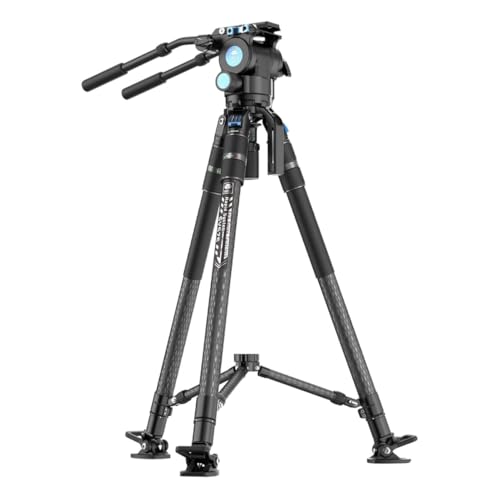
This Sirui carbon fiber tripod features a fluid head for smooth video panning. It reaches a maximum height of 60 inches and weighs 9.04 pounds. The one-step twist-lock legs allow for rapid height adjustments. You can convert the legs into a monopod for flexible shooting. The design supports DSLR cameras and includes a leveling bowl for precise angles on uneven terrain.
- Fluid head provides smooth video movement
- One-step twist-lock legs for fast setup
- Converts to a monopod for versatility
- Carbon fiber construction keeps weight at 9.04 pounds
- Maximum height is 60 inches, which is lower than the 55 lb load capacity competitor's typical travel range
- Weight of 9.04 pounds is heavier than standard ball head carbon kits
- One-step twist-lock locks may be slower to adjust than traditional four-stage locks
- You need smooth panning for video recording
- You want to convert your tripod to a monopod
- You shoot in rugged terrain with the included rubber feet
- You require a maximum height over 60 inches
- You prefer a ball head for still photography
- You need a lighter tripod under 9 pounds
Verdict: Sirui SVS75+SVH15 Carbon Video Tripod suits videographers who prioritize smooth fluid movement and modular versatility. It is a solid choice for travel video work where you need to switch between tripod and monopod modes quickly.
Specifications side by side
| Spec | Vortex Radian Carbon Tripod | Sirui SVS75 Video Tripod |
|---|---|---|
| Payload Capacity | 55 lb. | – |
| Maximum Height | – | 60" |
| Material | Carbon Fiber, Aluminum | Carbon Fiber |
| Head Type | Ball Head | Fluid Head |
| Leg Lock Type | Twist Lock | One-step twist-lock |
| Weight | 7.3 pounds | 9.04 pounds |
| Recommended Usage | – | Travel |
| Color | Black | Black |
| Intended Use | – | Video |
| Compatible Device | – | DSLR |
| Camera Compatibility | – | DSLR Cameras |
| Dimensions | 0.39 × 0.39 × 0.39 inches | – |
| Model | TR-RADB | SVS75+SVH15 |
| Size | – | Video Tripod with Fluid Head |
Frequently asked questions
Which tripod is better for shooting video?
Choose a fluid head tripod for video work. The Sirui SVS75 is designed for smooth panning and tilting motions. Its fluid head mechanism dampens movement to prevent jerky footage. This makes it ideal for travel videography where you need consistent, professional-looking camera motion.
Which tripod is better for photography?
Select a ball head tripod for still photography. The Vortex Radian Carbon Tripod offers high strength and precision for static observation. Its ball head allows you to quickly lock the camera in place at any angle. This setup prioritizes stability over fluid movement, which is essential for sharp images.
Can I use a ball head for panning?
Yes, you can pan with a ball head, but it may not be as smooth. The Vortex Radian Carbon Tripod allows for independent pan movement with tension control. You get 45 degrees of tilt with notches for up to 90 degrees of adjustment. However, it lacks the damping of a fluid head.
Which tripod is lighter to carry?
The Vortex Radian Carbon Tripod is lighter than the Sirui SVS75. It weighs 7.3 pounds, while the Sirui model weighs 9.04 pounds. Both use carbon fiber legs for strength and portability. If you prioritize a lighter load for hiking or long walks, the Vortex option is the better choice.
Is a fluid head tripod modular?
The Sirui SVS75 offers modular versatility for different shooting styles. It allows you to switch between tripod and monopod modes quickly. This adaptability is useful for travel videography where you might need to shoot handheld or on a tripod. The Vortex Radian focuses on static stability rather than modularity.
Which tripod supports heavy optics?
The Vortex Radian Carbon Tripod is built for heavy optics and static observation. It delivers high strength and precision, making it suitable for large telescopes or heavy camera setups. The Sirui SVS75 is designed for DSLR cameras and video work, focusing on smooth movement rather than maximum load capacity for static heavy gear.