As Amazon Associates, we earn from qualifying purchases. This means we may receive a small commission at no extra cost to you if you click through and make a purchase.
As an Amazon Associate we earn from qualifying purchases. Links on this page are affiliate links.
When you search for 201 mp vs 20 MP point and shoot camera options, you find two distinct tools. Both capture high-resolution video and offer compact designs for travel. The Sony RX100 IV uses a 1-inch sensor with a fixed lens, while the OM System E-M10 Mark IV uses a larger Micro Four Thirds sensor with an interchangeable lens kit. Your choice depends on whether you prioritize portability or system flexibility.
Sensor Resolution
20.1 MP
20 MP
Sensor Format
1-inch
Micro Four Thirds
Configuration
Fixed lens
Lens kit
Maximum Aperture
F1.8-F2.8
F3.5-5.6
Image Stabilization
not listed
5-Axis
Weight
9.56 ounces
1.1 pounds
Choose the first if
- You need a highly portable camera that fits easily in a pocket.
- You prefer a fixed lens setup with a fast maximum aperture for low light.
- You want a compact body that weighs under one pound.
Choose the second if
- You want interchangeable lenses for greater creative flexibility.
- You need in-body image stabilization for sharper handheld shots.
- You prefer a larger sensor format for potential depth-of-field control.
Verdict
Choose the Sony RX100 IV if your priority is a pocketable, fixed-lens camera with a fast aperture. Select the OM System E-M10 Mark IV if you value interchangeable lenses and built-in image stabilization. Both models deliver 4K video and high-resolution stills for your daily use.
Sensor Size and Lens Specs
Sensor Size
Edge: OM System E-M10 Mark IV with 14-42mm Lens
The Sony RX100 IV features a 1-inch Exmor RS stacked back-illuminated CMOS sensor. This sensor type allows for high resolution and fast readout speeds, supporting 4K movie recording with direct pixel readout. In contrast, the OM System E-M10 Mark IV uses a larger Micro Four Thirds Live MOS sensor. A larger sensor generally captures more light and offers better performance in low-light conditions compared to smaller sensors. The difference in physical size between a 1-inch sensor and a Micro Four Thirds sensor is significant, affecting image quality characteristics and depth of field control. You should consider which sensor format aligns with your specific needs for noise control and image clarity.
Included Lens
Edge: OM System E-M10 Mark IV with 14-42mm Lens
The Sony RX100 IV comes with a fixed ZEISS Vario-Sonar T* lens covering a 24-70mm focal length equivalent. This range is versatile for general photography but cannot be changed. The OM System E-M10 Mark IV is sold as a kit with an M.Zuiko Digital ED 14-42mm F3.5-5.6 EZ lens. This lens offers optical zoom capabilities, allowing you to change focal lengths beyond the fixed range of the Sony. The ability to swap lenses or use different zoom ranges with the OM System provides more flexibility for various shooting scenarios, such as distant subjects or wide landscapes, compared to the fixed lens on the Sony.
Maximum Aperture
Edge: Sony RX100 IV 1-inch Sensor Camera
The Sony RX100 IV has a maximum aperture range of F1.8 to F2.8. This wide aperture allows more light to reach the sensor, which is beneficial for shooting in dim environments and creating a shallow depth of field for subject isolation. The OM System E-M10 Mark IV kit lens has a maximum aperture of F3.5 to F5.6. These narrower apertures let in less light compared to the Sony, potentially requiring higher ISO settings or slower shutter speeds in low light. The wider aperture on the Sony provides an advantage for low-light performance and creative background blur.
Video Resolution
Edge: Sony RX100 IV 1-inch Sensor Camera
Both cameras support 4K video recording. The Sony RX100 IV offers 4K movie recording with direct pixel readout and no pixel binning, which can result in higher quality video with less aliasing. It also supports super slow-motion movie recording at up to 960 fps in HD. The OM System E-M10 Mark IV also records 4K video. While both achieve 4K resolution, the Sony provides additional high-frame-rate capabilities for slow-motion effects. If slow-motion video is important to you, the Sony offers more advanced features in this category.
Image Stabilization
Edge: OM System E-M10 Mark IV with 14-42mm Lens
The OM System E-M10 Mark IV includes in-body 5-axis image stabilization, capable of compensating for up to 4.5 shutter speed steps. This feature helps reduce blur from camera shake during handheld shooting, especially at slower shutter speeds. The Sony RX100 IV data does not explicitly list in-body image stabilization, though it may rely on lens-based stabilization or high-speed shutters. The dedicated 5-axis stabilization in the OM System provides a clear advantage for handheld video and still photography in situations where a tripod is not available.
Which camera fits your needs?
Travelers wanting high-quality video
Our pick: Sony RX100 IV 1-inch Sensor Camera
The Sony RX100 IV records 4K video with direct pixel readout. It captures super slow-motion at up to 960 fps. The 1-inch sensor and bright F1.8-2.8 lens help in low light. Its compact size fits easily in your bag. You get professional features in a small package.
Photographers needing interchangeable lenses
Our pick: OM System E-M10 Mark IV with 14-42mm Lens
The OM System E-M10 Mark IV uses a Micro Four Thirds sensor. It includes a 14-42mm lens with 3x optical zoom. You can swap lenses for different shots. The 5-axis image stabilization reduces blur. This system offers flexibility that fixed-lens cameras cannot match for varied shooting scenarios.
Vloggers and selfie takers
Our pick: OM System E-M10 Mark IV with 14-42mm Lens
The OM System E-M10 Mark IV features a flip-down monitor. It has a dedicated selfie mode that activates automatically. Bluetooth connectivity allows background connection to your phone. This setup makes framing shots easier. You can monitor your recording without needing an external viewfinder or complex setup.
| # | Product | Best for | Price |
|---|---|---|---|
| 1 | Sony RX100 IV 1-inch Sensor Camera | Compact 4K video and high-speed shooting | |
| 2 | OM System E-M10 Mark IV with 14-42mm Lens | handheld video and selfie shooters |
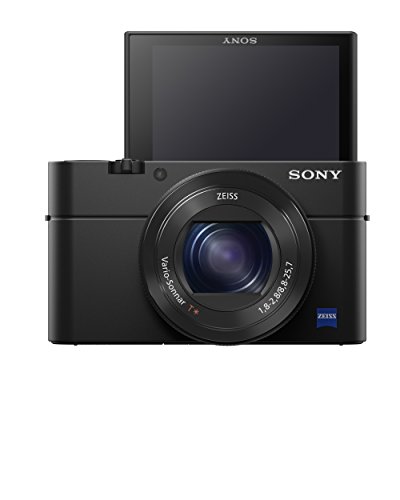
Sony RX100 IV 1-inch Sensor Camera
Best for: Compact 4K video and high-speed shooting
- Resolution
- 20.1 MP
- Sensor Resolution
- 20.1 MP
- Sensor Size
- 1-inch
- Focal Length Equivalent
- 24-70mm
- Maximum Aperture
- F18- F28
- Video Resolution
- 4K
The Sony RX100 IV features a 20.1 MP 1-inch Exmor RS stacked CMOS sensor. It records 4K video and captures super slow-motion at up to 960 fps. The lens covers a 24-70mm equivalent range with an F1.8-2.8 aperture. It includes a retractable OLED viewfinder and a 3-inch multi-angle LCD. This compact camera suits you if you need high-resolution stills and advanced video capabilities in a portable body.
- 20.1 MP 1-inch Exmor RS stacked back illuminated CMOS sensor
- 4K movie recording with direct pixel readout
- High frame rate video up to 960 fps
- ZEISS Vario-Sonnar T* lens with F1.8-2.8 aperture
- Retractable XGA OLED Tru-Finer viewfinder
- F1.8-2.8 maximum aperture is narrower than the f/2.8 option on the OM SYSTEM Olympus E-M10 Mark IV
- 20.1 MP resolution is slightly higher than the 20 MP baseline but offers diminishing returns for standard output
- You need a pocketable camera with a 1-inch sensor for better low-light performance
- You require 4K video recording and high frame rate slow-motion capabilities
- You want a retractable electronic viewfinder for bright sunlight shooting
- You prefer interchangeable lenses for maximum focal length flexibility
- You need a larger Micro Four Thirds sensor for shallower depth of field
- You want a camera with a fixed optical viewfinder that does not retract
Verdict: The Sony RX100 IV 20.1 MP Compact Camera fits you if you prioritize 4K video and a 1-inch sensor in a pocketable body. It delivers high-speed shooting and a versatile zoom range for travelers who need advanced features without bulk.

OM System E-M10 Mark IV with 14-42mm Lens
Best for: handheld video and selfie shooters
- Resolution
- 20 MP
- Sensor Resolution
- 20 MP
- Sensor Size
- Micro Four Thirds
- Optical Zoom
- 3.0 multiplier_x
- Maximum Aperture
- F3.5-5.6
- Video Resolution
- 4K
The OM System E-M10 Mark IV is a 20 MP Micro Four Thirds camera. It records 4K video and includes a 14-42mm lens. The body has 5-axis image stabilization. You get a flip-down monitor for selfies. Bluetooth keeps your phone connected. This kit suits you if you want manual control and portable gear.
- 20 MP Live MOS sensor
- 4K video resolution
- 5-axis in-body stabilization
- Flip-down monitor for selfies
- Bluetooth connectivity
- 20 MP resolution is lower than the 20.1 MP competitor
- 1.1 pound weight is heavier than typical point-and-shoots
- 3.0x optical zoom is limited compared to superzooms
- You want interchangeable lenses for creative control
- You shoot handheld video and need stabilization
- You take frequent selfies with a flip screen
- You need higher resolution than 20 MP
- You want a compact point-and-shoot form factor
- You prefer a lighter camera for travel
Verdict: OM System E-M10 Mark IV 20 MP Mirrorless fits photographers who prioritize image stabilization and selfie usability over maximum resolution and minimal weight.
Specifications side by side
| Spec | Sony RX100 IV 1-inch Sensor Camera | OM System E-M10 Mark IV with 14-42mm Lens |
|---|---|---|
| Sensor Resolution | 20.1 MP | 20 MP |
| Sensor Size | 1-inch | Micro Four Thirds |
| Optical Zoom | – | 3.0 multiplier_x |
| Focal Length Equivalent | 24-70mm | – |
| Maximum Aperture | F18- F28 | F3.5-5.6 |
| Video Resolution | 4K | 4K |
| Display Size | 3" | – |
| Image Stabilization | – | 5-Axis |
| Sensor Format | – | Micro Four Thirds |
| Configuration | – | Lens Kit |
| Color | Black | Silver |
| Resolution | 20.1 MP | 20 MP |
| Connectivity | – | Wi-Fi |
| Intended Use | – | Video |
| Dimensions | 4 × 1.6 × 2.8 inches | 4.8 × 2.6 × 3.3 inches |
| Weight | 9.56 ounces | 1.1 pounds |
| Size | 4 x 1.6 x 2.8 inches | – |
| Model | DSC-RX100M4 | V207132SU000 |
Frequently asked questions
Is 20.1 MP significantly better than 20 MP for photos?
The difference is negligible for most users. Both resolutions capture nearly identical detail levels in standard prints. You will not notice a visible quality gap between 20.1 MP and 20 MP in daily use. The choice should depend on other features like sensor size or video capabilities instead of this tiny megapixel variance.
Which camera offers better video quality for travel?
The Sony RX100 IV is ideal for compact 4K video. It features a 1-inch sensor that aids low-light performance. The OM System E-M10 Mark IV also records 4K but includes lens stabilization. If you prioritize a pocketable body with high-speed shooting, the Sony is the stronger choice for handheld travel video.
How does the sensor size affect image quality?
Larger sensors generally capture more light and detail. The Sony RX100 IV uses a 1-inch sensor, which is larger than typical compact cameras. The OM System E-M10 Mark IV uses a Micro Four Thirds sensor. This larger format in the OM System can provide better dynamic range and low-light performance compared to smaller sensors.
Which point and shoot is lighter to carry?
The Sony RX100 IV is significantly lighter. It weighs 9.56 ounces, making it easy to slip into a pocket. The OM System E-M10 Mark IV weighs 1.1 pounds due to its mirrorless body and included lens. If minimal weight is your priority for long days out, the Sony offers superior portability.
Does the OM System camera support wireless connectivity?
Yes, the OM System E-M10 Mark IV includes Wi-Fi connectivity. This allows you to transfer images to your smartphone or remote control the camera. The Sony RX100 IV data does not explicitly list Wi-Fi in the provided attributes. Check the manual for Sony connectivity options if wireless transfer is essential for you.
What is the best camera for selfie shooters?
The OM System E-M10 Mark IV is designed with selfie usability in mind. It includes image stabilization for clearer handheld shots. The Sony RX100 IV is better for high-speed shooting and 4K video. If you frequently take self-portraits or vlogs, the OM System features and stabilization make it the more practical tool for you.
Are these cameras suitable for beginners?
Both cameras offer advanced features that may require learning time. The Sony RX100 IV focuses on compact 4K video and high-speed shooting. The OM System E-M10 Mark IV prioritizes image stabilization and lens kit versatility. Beginners might find the OM System easier to handle due to its interchangeable lens system and stabilization features.


